The debate over whether Washington’s powerful should be allowed to profit from the industries they regulate has a new and awkward test case, and this time it does not involve Donald Trump.
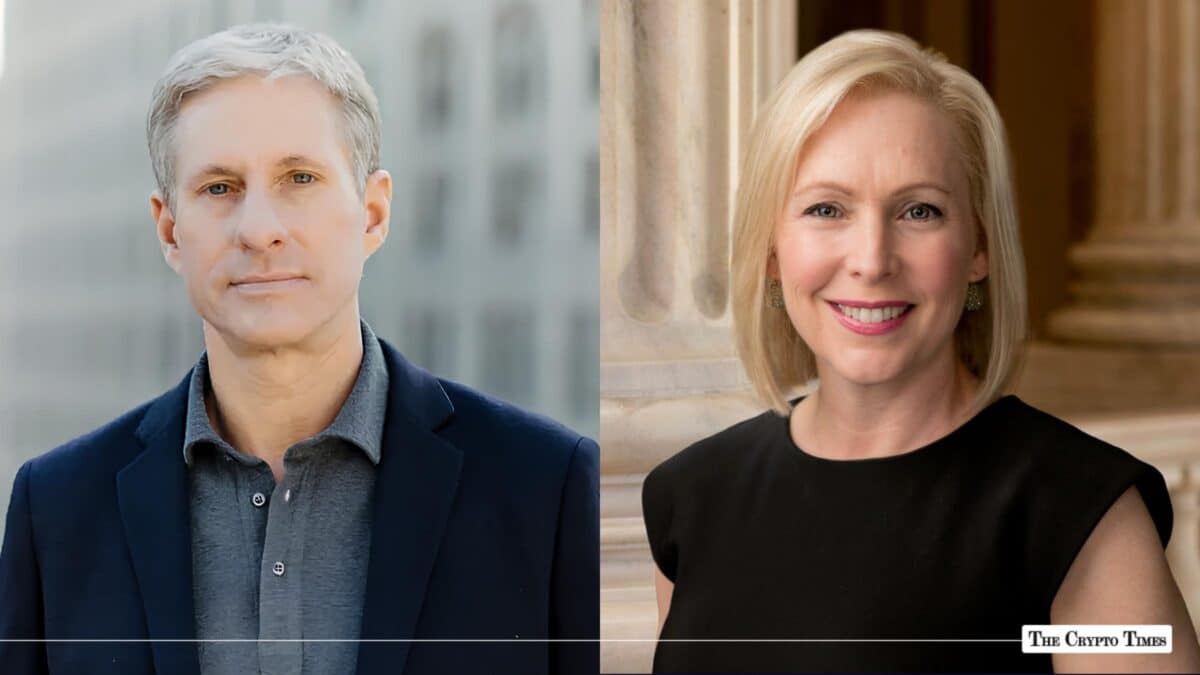
On July 2, Politico reported that Chris Larsen, the co-founder and executive chair of Ripple, is among the investors backing a derivatives exchange founded by the 22-year-old son of Senator Kirsten Gillibrand, one of Congress’s most influential crypto legislators, and a lead negotiator on the very ethics rules meant to prevent this kind of entanglement.
The revelation crystallizes a problem that has quietly metastasized across both parties: as crypto has moved to the center of American finance and policy, the line between those writing the rules and those profiting from them has grown perilously thin.
The venture
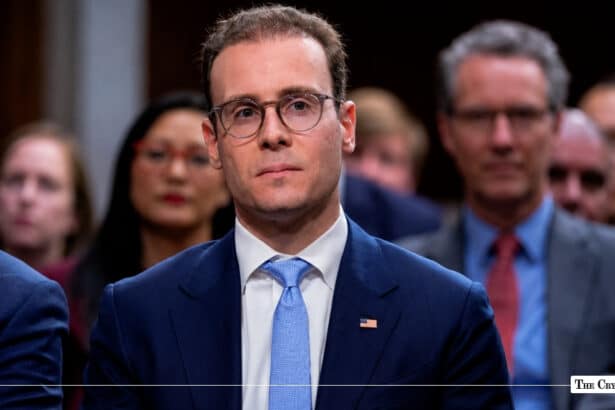
Theodore “Theo” Gillibrand, who graduated from Stanford in June, has raised $30 million for American Perpetuals Exchange Corp. (APEC), a startup valued at $300 million in a round led by the venture firm Lux Capital. APEC plans to offer perpetual futures, or perps contracts, popularized on offshore crypto exchanges like Hyperliquid, that let traders bet on an asset’s price indefinitely with no expiration date.
Notably, APEC’s perps will track US equities and stock indices rather than cryptocurrencies, and the platform is not built on blockchain; it plans to apply for a license from the Commodity Futures Trading Commission (CFTC). Before founding it, Theo held stints at the crypto venture fund Paradigm and at Andreessen Horowitz (a16z), two of the industry’s most powerful investors. He has framed the venture in patriotic terms, arguing the future of such markets lies in a “regulated and institutional American company” rather than offshore venues.
The investors, and the conflict
The July 2 report added the detail that sharpens the story: alongside a base of small backers who contributed roughly $5,000 to $10,000 each, Ripple’s Chris Larsen was among APEC’s investors. Ripple is not a bystander to Gillibrand’s legislative work, it is one of the crypto industry’s most active players in Washington and a direct stakeholder in the CLARITY Act she is helping negotiate. The optics are difficult: an industry figure with a vested interest in pending crypto legislation is now financially tied to the family of a senator shaping that legislation.
The regulatory dimension deepens the concern. Perpetual futures fall under the CFTC, the agency overseen by the Senate Agriculture Committee, on which Gillibrand sat until recently before moving to the Senate Banking Committee, another panel with sweeping financial-regulatory reach. Her son’s exchange will need that agency’s blessing to operate.
The irony
What makes the episode especially charged is that Gillibrand has been perhaps the most quotable Democratic voice against exactly this kind of arrangement. At Consensus Miami in May, she drew a hard line on the CLARITY Act, declaring that lawmakers could not “get rich off of these industries because of their insider status” and calling it “the worst form of pay for play.” She is also a co-sponsor of the End Crypto Corruption Act, a Democratic bill that would bar officials and their families from profiting off digital assets.
Her office has moved to draw a bright line between the senator and the startup. In a statement, Gillibrand said her son is “a grown adult starting his own independent business,” adding, “I have no involvement in it whatsoever.” That denial may be entirely accurate; there is no evidence she played any role in the venture or its fundraising. But ethics experts note that it does not address the harder questions of recusal or the appearance of a conflict, and it is precisely the “appearance” problem that ethics rules are designed to police. No wrongdoing has been alleged or established.
The laws senators want
Gillibrand’s situation lands in the middle of an active legislative campaign to curb office-holders from cashing in on crypto. The centerpiece is the End Crypto Corruption Act of 2025 (S.1668), introduced by Senator Jeff Merkley and co-sponsored by 19 Democrats — including Schumer, Warren, Wyden, and Gillibrand herself. The bill would prohibit the president, vice president, members of Congress, and Senate-confirmed appointees, along with their spouses and dependent children, from issuing, sponsoring, or endorsing cryptocurrencies, meme coins, tokens, NFTs, and stablecoins. Violations would trigger civil penalties and disgorgement of profits, with criminal penalties of up to five years for knowing breaches that cause large losses or personal enrichment.
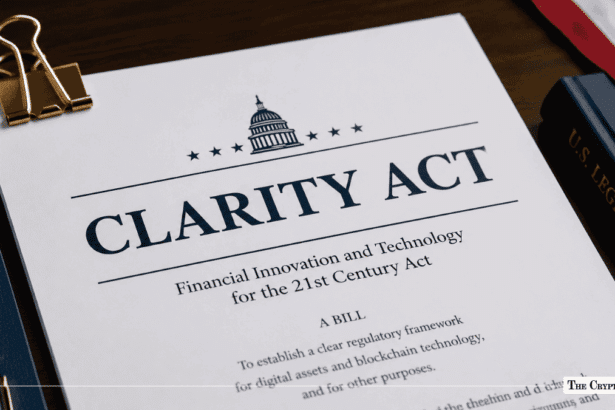
That standalone bill is unlikely to pass a Republican-controlled Congress on its own, so the real fight is over folding equivalent ethics language into the CLARITY Act, the market-structure bill nearing a Senate floor vote. Democrats including Elizabeth Warren, Angela Alsobrooks, Ruben Gallego, Adam Schiff, and Mark Warner have insisted the bill cannot pass without it. “We desperately need legislation that includes an agreement on ethics,” Alsobrooks said, calling the Trump family “the most corrupt we’ve ever seen in the White House.” Warren warned that without such language, the bill would “turbocharge Donald Trump’s brazen crypto corruption.” A separate GENIUS Act provision already bars members of Congress and their families from profiting off stablecoins — but pointedly does not extend to the president or vice president.
The Trump backdrop
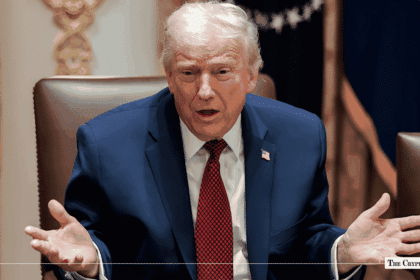
The reason the ethics fight exists at all is the scale of the sitting administration’s crypto interests. The Trump family has earned an estimated $1 billion to $1.4 billion from digital-asset ventures over the past year. That includes the $TRUMP memecoin, which generated roughly $635 million in royalties, and World Liberty Financial, the family-backed DeFi venture behind the USD1 stablecoin, from which Trump reported $57.35 million in token sales in an earlier disclosure. The president hosted a private dinner for top memecoin holders at his Virginia golf club, and World Liberty drew scrutiny over a $500 million stake taken by an Abu Dhabi-linked entity ahead of US arms and AI-chip deals to the UAE.
The pattern extends beyond the president. Vice President JD Vance disclosed holding up to $500,000 in Bitcoin, and FBI Director Kash Patel reported up to $250,000 in Strategy (MSTR), a leveraged Bitcoin proxy, which he failed to disclose for more than six months. Trump’s own July 2026 financial disclosure, showing the family’s nine-figure crypto haul, injected fresh urgency into the negotiations. The White House position, articulated by crypto adviser Patrick Witt, is that it will accept ethics rules applying “across the board, from the president all the way down to the brand new intern,” but will reject anything that singles out a particular office, official, or family.
The deadlock
That standoff is now the CLARITY Act’s most dangerous fault line. Democrats want binding language explicitly covering the president and his family; the White House refuses anything it sees as targeting Trump. Republican Senator Cynthia Lummis, a lead negotiator, has tried to bridge the gap, promising “strong ethics provisions” ensuring “no elected official, regardless of party, can use their position to profit from digital assets.” But a Van Hollen ethics amendment already failed 11-13 in committee, and the talks have snagged on details like whether state attorneys general can enforce the rules. With the Senate racing an August recess deadline and needing 60 votes, the ethics impasse could still sink the industry’s top legislative priority.
The Gillibrand episode complicates the picture in a way that cuts against her own party. Democrats have wielded the ethics issue as a cudgel against Trump; a story about a leading Democratic crypto legislator’s family drawing industry money blunts that moral high ground and hands Republicans a ready retort that conflicts are bipartisan.
The larger implications
Step back, and the through-line is unmistakable: crypto has become so entangled with political power that conflict-of-interest questions now touch figures across the spectrum: a Republican president’s billion-dollar memecoin empire, a Republican vice president’s Bitcoin, an FBI director’s Bitcoin-proxy stock, and a Democratic senator’s son’s industry-backed exchange. The bipartisan spread is itself the story. It makes the reform case both more urgent and harder to pass, because nearly everyone with power to write the rules now has some proximity to the money.
The stakes go beyond any single family. The crypto industry has become one of Washington’s biggest spenders, with Stripe, Paradigm, Circle, Coinbase, and a16z all lobbying heavily to shape the rules, and industry-aligned super PACs reshaping campaigns. When the people writing digital-asset law, the agencies approving digital-asset products, and the families profiting from digital-asset ventures increasingly overlap, the risk is not merely the appearance of impropriety but the erosion of public trust in whether the rules are being written for the public or for insiders. It is also fueling a parallel push to ban federal officials from trading individual stocks altogether, an idea gaining traction precisely because episodes like Patel’s late disclosure keep surfacing.
Whether Congress can agree on ethics guardrails that apply evenly, regardless of party or office, may prove as consequential as the market-structure rules themselves. For now, the CLARITY Act’s fate, and the credibility of everyone negotiating it, hangs on that unresolved question.
Also Read: Inside the Trump Family’s $1.2B Crypto Windfall: Who Paid the Price?