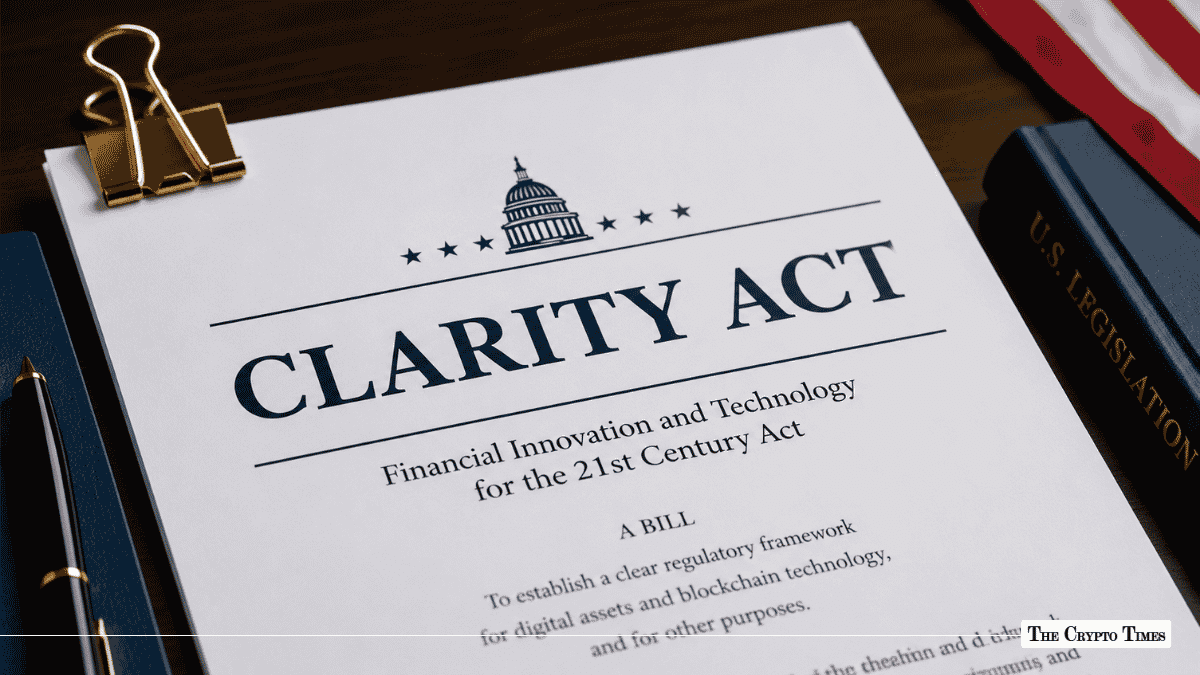
The crypto industry’s push to pass landmark market-structure legislation just picked up an influential and unexpected ally. On July 1, the National Organization of Black Law Enforcement Executives (NOBLE) formally endorsed the Digital Asset Market CLARITY Act, becoming the first major law enforcement organization to publicly back the bill; and, in doing so, undercutting one of the most potent arguments its opponents have deployed.
The endorsement, reported by journalist Eleanor Terrett, arrives at a pivotal moment. It lands directly against a June letter from four of the nation’s largest police and prosecutor coalitions, which had warned that a key provision of the same bill could hobble criminal investigations. NOBLE’s message to lawmakers is, in effect, that not all of law enforcement agrees.
The endorsement
In a letter addressed to Senate Majority Leader John Thune and Minority Leader Chuck Schumer, signed by NOBLE National President Reneé Hall, the organization said it had carefully reviewed the legislation and concluded that it “contains several provisions that would provide law enforcement with meaningful new capabilities while preserving longstanding criminal enforcement authorities.” The letter closed unambiguously: “This correspondence from NOBLE formally endorses the CLARITY Act.”
Founded in 1976, NOBLE represents Black law enforcement executives and command-level officers across the United States, and carries particular weight on questions of public safety and community trust. Notably, the letter openly acknowledged that “members of the law enforcement community have expressed differing perspectives” on the bill, a direct nod to the coalitions lined up against it.
What NOBLE says the bill does for police
Rather than treating the legislation as a threat, NOBLE framed it as a net gain for investigators. The organization highlighted provisions that expand regulatory obligations to more participants in the digital asset industry, enhance digital asset forfeiture authorities, establish new compliance and transparency expectations, and create oversight requirements for digital asset kiosks: the crypto ATMs that have become a notorious vector for scams. Collectively, NOBLE argued, those measures could “improve investigative visibility and provide law enforcement with additional tools to combat financial crime.”
The rebuttal to opposing groups
The heart of NOBLE’s letter is a direct answer to the objection that has become the bill’s biggest sticking point. Its review, the organization said, indicates that the legislation “does not alter the longstanding federal criminal authorities” that investigators and prosecutors rely on daily, expressly listing the statutes governing money laundering, unlicensed money transmitting businesses, conspiracy, aiding and abetting, and sanctions enforcement.
That is a pointed response. Just a week earlier, four major coalitions — the National District Attorneys Association, the National Association of Assistant United States Attorneys, the International Association of Chiefs of Police, and the National Sheriffs’ Association — wrote to Acting Attorney General Todd Blanche and White House crypto adviser Patrick Witt opposing Section 604, the provision drawn from the Blockchain Regulatory Certainty Act (BRCA). Those groups argued it could open oversight gaps exploitable for narcotics trafficking, fraud, child exploitation, sanctions evasion, and terrorist financing, warning that “regulatory certainty should not come at the expense of accountability, transparency, victim protection, or public safety.” NOBLE’s letter is the clearest sign yet that the law enforcement community is not monolithic on the question.
What the BRCA fight is actually about
At issue is Section 604, which codifies the BRCA’s core principle: that developers and infrastructure providers who write non-custodial software, and never control or move user funds, should not be classified as “money transmitters” subject to Bank Secrecy Act obligations. The provision aligns with FinCEN’s own 2019 guidance, which limits money-transmitter status to those with “total independent control” over user assets, and it enjoys near-unanimous industry support from groups including Coin Center, the Blockchain Association, and the DeFi Education Fund. Its sponsors, Representatives Tom Emmer and Ritchie Torres, have championed it as bipartisan.
Opponents counter that the carve-out is too broad, potentially shielding mixers, tumblers, and some DeFi services from know-your-customer and anti-money-laundering requirements. Proponents, including Witt, who has called the CLARITY Act a “pro-law enforcement bill,” and a letter from 160 former national security and law enforcement officials, argue the opposite: that keeping developers onshore makes their activity more visible to investigators, not less. It has become, as one outlet put it, a fight between cops and coders. NOBLE has now planted a flag on the coders’ side of that line.
Why the timing matters
The endorsement could hardly be better timed for the bill’s backers. The Senate is racing to move the CLARITY Act before its August recess, with Thune reportedly prepared to bring it to the floor in the coming weeks and Banking Committee Chairman Tim Scott pushing for a July vote. The bill still needs 60 votes, and law enforcement objections to the BRCA have been among the last major hurdles, with Witt personally brokering meetings to resolve them. A public endorsement from a respected police organization gives proponents a powerful counter to the claim that the bill endangers public safety, and a way to reframe the debate at exactly the moment undecided senators are weighing it.
Why it matters for crypto
For an industry that has treated the developer protections as a non-negotiable must-have, NOBLE’s endorsement is a meaningful shift in the political terrain. The strongest remaining argument against the CLARITY Act has been that law enforcement opposes it; that argument is now demonstrably contested from within law enforcement itself. It does not end the fight — the four opposing coalitions have not withdrawn their concerns, and the vote math in the Senate remains tight.
But by validating the case that Congress can regulate custodial intermediaries without criminalizing the people who write open-source code, NOBLE has handed the bill’s supporters something they have lacked throughout this debate: a law enforcement voice saying yes.
Also Read: CLARITY Act Timeline: From 15-9 Senate Win to July 4 Signing, Here Is Every Step Ahead