Key Highlights
- CFTC Chairman Michael Selig criticized Illinois’ new 0.2% crypto transaction tax in a Washington Times op-ed.
- He argued the law unfairly taxes blockchain-based asset transfers while exempting equivalent traditional financial transactions.
- Selig warned the measure could push blockchain firms, investment, and jobs to more crypto-friendly jurisdictions.
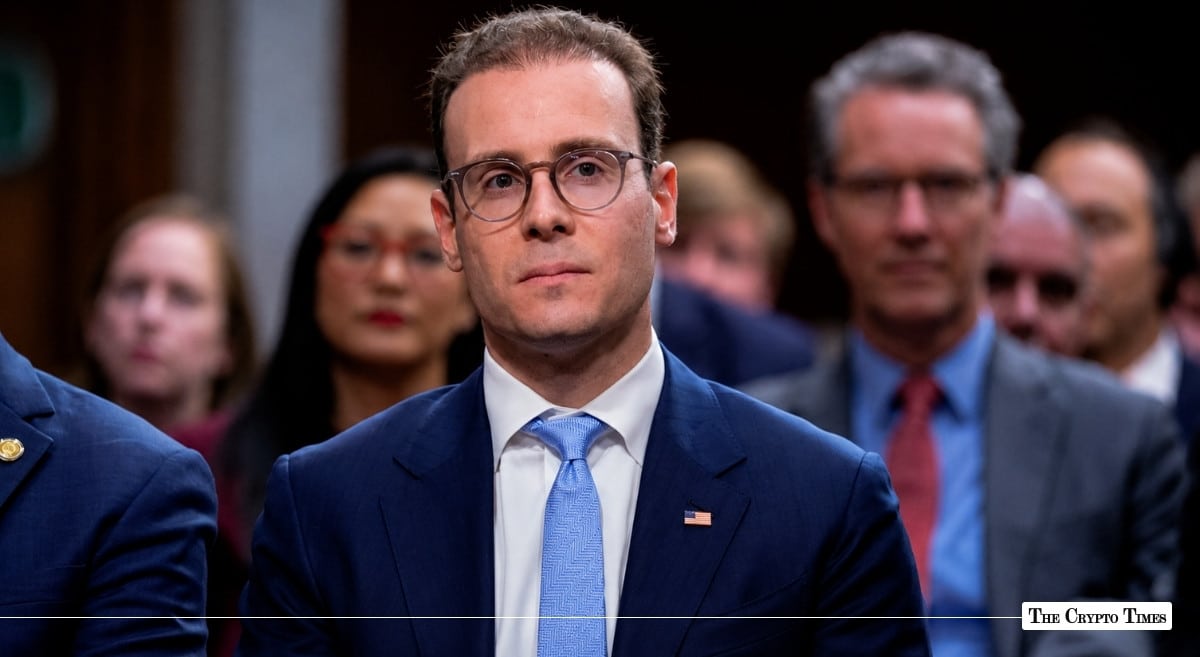
CFTC Chairman Michael S. Selig has criticized Illinois’ newly enacted crypto transaction tax, warning that the policy risks driving blockchain innovation, investment, and financial firms out of the state.
In a Washington Times op-ed published on Wednesday, Selig argued that Illinois is abandoning its historic role as a leader in financial innovation by imposing what he described as a discriminatory tax on blockchain-based transactions. According to Selig, the law imposes a 0.2% tax on a broad range of crypto asset transfers made by Illinois residents, even when those transactions generate no realized profit or economic gain.
“The law treats economically identical transactions differently based on the technology used to affect each transaction,” Selig wrote in an X post.
Why Selig opposes the new tax
Selig began the article by highlighting Illinois’ role in shaping global financial markets through Chicago’s commodity and derivatives exchanges. He argued that the state helped pioneer modern risk management and electronic trading but warned that its latest tax policy threatens that legacy.
According to Selig, financial firms increasingly incorporating blockchain technology into their operations can choose where to build, hire, and invest. “States that provide clear and predictable regulatory environments will naturally attract more business and investment. Those that punish innovation with taxes and draconian restrictions will drive innovation elsewhere,” he added.
Blockchain compared to the early internet
Drawing parallels with the rise of the internet, Selig argued that blockchain technology represents the next major evolution in financial infrastructure. “Just as the internet revolutionized the transfer of information, blockchains will revolutionize the transfer of value,” he said.
He added that nearly every major financial asset, including commodities, currencies, stocks, and bonds, is likely to become tokenized over time, making blockchain infrastructure increasingly important to future capital markets. Selig suggested Illinois lawmakers were making a strategic mistake by discouraging blockchain adoption just as the technology begins entering mainstream finance.
Calls for clearer federal crypto rules
The CFTC chairman also contrasted Illinois’s approach with ongoing federal efforts to establish a comprehensive regulatory framework for digital assets. He pointed to the proposed CLARITY Act, which Congress continues to consider as legislation intended to provide clearer rules for crypto markets while encouraging responsible innovation.
“Congress is actively considering the CLARITY Act, which is designed to provide transparent rules of the road for crypto asset markets,” he stated. According to Selig, the legislation aims to provide market participants with regulatory certainty, while Illinois has instead introduced policies that create additional costs and uncertainty.
Property rights and innovation at the center of debate
Beyond economic concerns, Selig framed the crypto tax as a broader issue involving property rights and free-market principles. Referencing former President Ronald Reagan, he argued that innovation flourishes when individuals can confidently retain the value created through their work and investments.
“Our nation is inventive because we’re free, and prosperous because each individual is secure to gather and keep the fruits of his labor,” Selig wrote. He warned that unpredictable taxation discourages entrepreneurship and weakens confidence in long-term investment.
Crypto industry pushes back
Selig’s comments add to growing opposition from the digital asset industry following Illinois’ approval of the tax.
Last month, Coinbase CEO Brian Armstrong criticized the legislation, warning that it could push blockchain companies and jobs out of Illinois. Other industry leaders, including representatives from a16z crypto and the Crypto Council for Innovation, have similarly argued that the law unfairly targets blockchain-based financial activity while exempting traditional financial transactions.
The debate has become one of the most closely watched state-level policy disputes in the U.S., as lawmakers, regulators, and crypto firms continue to debate how digital assets should be taxed and regulated while preserving innovation.
Also Read: Binance Set to Enter Philippines After SEC Sandbox Approval