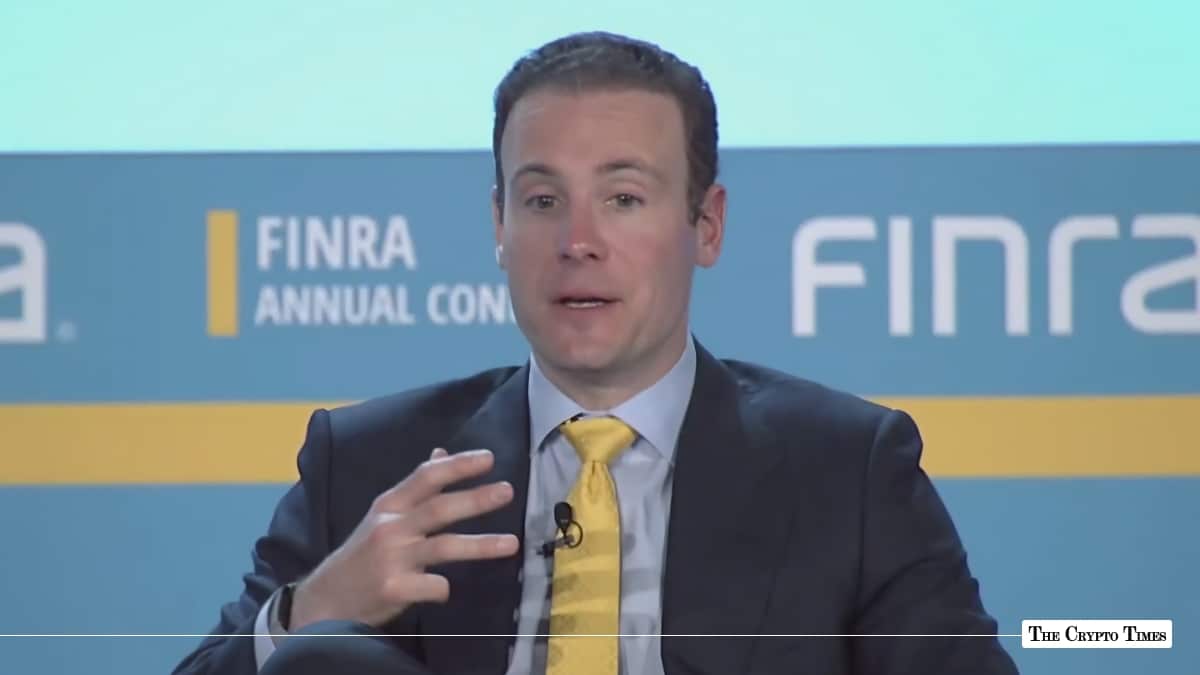
Commodity Futures Trading Commission (CFTC) Chair Mike Selig said the agency is preparing to adapt its regulatory framework to address the growing use of artificial intelligence and blockchain in financial markets.
Speaking at the FINRA Annual Conference 2026, Selig said the agency wants to encourage innovation while ensuring that new technologies do not undermine investor protections. “Our Innovation Task Force is hard at work ensuring those developing the next generation of blockchain technologies, AI, prediction markets, and more have good reason to build them in America,” Selig wrote in a post on X.
CFTC signals openness to AI-driven finance
Selig described AI as a transformative force that is already changing how market participants develop trading strategies and access financial products. He noted that investors can increasingly use AI-powered applications on smartphones to generate trading ideas and execute transactions, including through digital wallets connected to blockchain networks.
According to Selig, the CFTC does not intend to block these technologies or push developers offshore. Instead, the agency aims to understand how they work and determine whether new safeguards are needed. “We’re not going to fear the future,” Selig said. “We’re going to embrace it and find a way to get the rules right.”
Innovation Task Force meets with developers
Selig said the CFTC’s Innovation Task Force is holding discussions with companies building large language models, trading software, and blockchain-based applications. The agency is also speaking with firms exploring the use of AI in advisory tools and exchange infrastructure.
He said these conversations are intended to help regulators understand how AI is being integrated into financial products and whether existing rules are sufficient. Selig added that the CFTC may consider new rulemaking if current regulations do not adequately address risks associated with these technologies.
Agentic finance presents new regulatory questions
One of the emerging areas highlighted by Selig was “agentic finance,” where autonomous software agents can execute trades with limited or no direct human intervention. He said these systems challenge traditional regulatory approaches because they may operate without a centralized intermediary once deployed.
This raises questions about accountability and how regulators should apply oversight to software-based market participants. “Some of this stuff really is entirely software-based,” Selig said. “It’s not something that’s controlled by any central actor once it gets deployed.”
Blockchain amplifies AI trading risks
Selig said blockchain technology can make AI-based trading more efficient by allowing software agents to connect directly to digital wallets and transact on-chain. While that reduces friction, he said it can also expose users to risks if they do not receive the same protections that apply when trading through regulated brokers or futures commission merchants.
He emphasized that the agency’s goal is to ensure customer protections evolve alongside technological changes.
Building in the United States
Selig’s remarks reflect a broader push by federal regulators to signal that the U.S. remains open to financial innovation, provided firms operate within a compliant framework. The CFTC has increasingly focused on areas such as digital assets, prediction markets, and AI-powered financial services as part of that effort.
Selig said the agency’s objective is to strike a balance between encouraging experimentation and maintaining the safeguards needed to protect market participants.
Also Read: Crypto Lobby Battles ‘Anti-DeFi’ Amendments Ahead of CLARITY Act Vote