Key Highlights
- WazirX launched the “Guardians of Trust” hub featuring security updates, transparency initiatives, and investor education content.
- The platform now highlights partnerships with BitGo and Fireblocks to strengthen custody and transaction security.
- The initiative comes as users continue waiting for the remaining 15% of their claims tied to non-tradable Recovery Tokens.
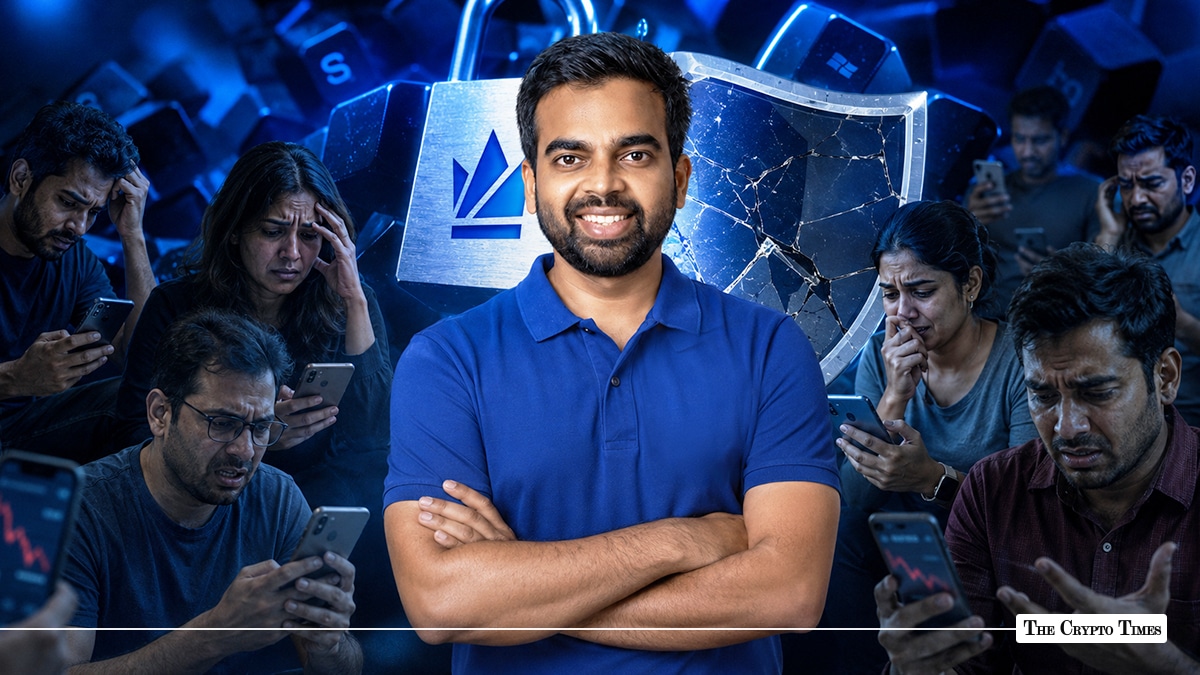
On May 7, 2026, WazirX, one of India’s largest crypto exchange, announced the launch of “Guardians of Trust,” a dedicated hub on its website designed to bring together everything the exchange is doing around security, transparency, and user education.
The timing of this launch is worth noting. It has been nearly two years since the exchange lost $234.9 million in one of India’s largest crypto hacks. The platform restarted only in October 2025, after more than 15 months of frozen operations, a Singapore court-supervised restructuring, and a recovery process that is still ongoing.
Against that backdrop, WazirX is now stepping into a new role: not just as an exchange trying to rebuild, but as an educator trying to help users protect themselves.
It is, on the surface, a reasonable thing for any exchange to do. But given the history that precedes it, the initiative naturally invites scrutiny. Not because the effort is unwelcome, but because the gap between the messaging and what users have actually experienced over the past two years is hard to ignore.
What Guardians of Trust actually offers
The Guardians of Trust page is structured around three core pillars: how WazirX says it protects users, how it is educating them, and what the exchange has done in collaboration with external bodies.
Security partnerships: BitGo and Fireblocks
Under the first pillar, the hub prominently features WazirX’s current security partnerships. The exchange partnered with BitGo, a US-based cryptocurrency custodian, after terminating its relationship with Liminal Custody in August 2024, the custody provider whose wallet infrastructure was involved in the hack. The hub describes this as “a key step toward delivering our promise to come back stronger.”
In January 2026, WazirX also integrated Fireblocks, an enterprise-grade digital asset custody platform that uses multi-party computation (MPC) wallet technology. According to the exchange, the Fireblocks integration brings institutional-grade custody controls, granular transaction policies, automated approval workflows, and real-time transaction monitoring to the platform. WazirX has stated that it plans to publish third-party audit reports and Proof of Reserves as they become available.
User education: “Bacche Bacche Ko Pata Hai” and the blog series
The second pillar is user education, which WazirX has branded under the tagline “Bacche Bacche Ko Pata Hai,” a Hindi phrase that loosely translates to “every child knows this.”
The series is described as a social-first awareness initiative that breaks down complex investing and safety concepts into simple, relatable content distributed across digital platforms.
The first episode covers what WazirX calls a “simple truth”: going all in on one coin might sound exciting, but spreading investments across assets can help reduce risk.
Supporting the series are three detailed blog posts, all published on the same day. The first explains how crypto Ponzi schemes work, covering warning signs like guaranteed returns, MLM-style downline models, and WhatsApp and Telegram investment groups. It uses the GainBitcoin case, one of India’s most well-known crypto frauds, as a real-world example.
The second blog discusses the risks of taking loans to invest in crypto, exploring what WazirX calls the “Crorepati mindset,” a psychological trigger where the aspiration to become wealthy quickly is exploited by scammers through urgency and emotional manipulation.
The third is a portfolio diversification guide that covers asset allocation strategies, the importance of using multiple trusted platforms, and warning signs that your portfolio might be too concentrated. Each blog is tagged under the “Guardians of Trust” initiative and categorized under “Safety & Security.”
Law enforcement and government collaborations
The third pillar highlights WazirX’s past collaborations with law enforcement and government bodies. The hub lists crypto investigation training sessions conducted at the National Investigation Agency (NIA) in Delhi, Assam Police headquarters, and Lucknow Police headquarters.
It also mentions a Web3 awareness workshop held alongside Bharat Web3 Association and Rajasthan’s iStart initiative, and a training session with the Reserve Bank of India and the BIS Financial Stability Institute covering digital asset evolution, global trends, and India’s crypto landscape. Additionally, WazirX notes its introduction of biometric two-factor authentication as a security feature on its platform.
Nischal Shetty, Founder of WazirX, framed the initiative in a statement shared through a PTI report. He said trust is built when users can see what the platform is doing and understand how to protect themselves, and that Guardians of Trust brings security updates and safety education into one place so users have “clearer information and fewer blind spots.”
Taken as a standalone package, it is a fairly comprehensive rollout. The content is well-produced, the blog posts are genuinely informative, and the security partnership announcements reflect real infrastructure changes. But the challenge for WazirX has never been about what it says it is building next. The challenge has always been about what happened before.
A quick recap: The hack and what followed
On July 18, 2024, WazirX suffered a cyberattack that resulted in the theft of approximately $234.9 million worth of digital assets, roughly half of the exchange’s total reserves at the time. The breach targeted a multi-signature Ethereum wallet managed through a custody arrangement with Liminal Custody. The attack was later attributed to the Lazarus Group, a North Korea-associated threat actor.
The hackers manipulated the wallet’s smart contract, tricking signatories into approving a malicious upgrade that gave the attackers full control of the wallet. Nearly all the stolen funds were subsequently laundered through Tornado Cash and decentralized channels.
According to Nischal Shetty’s own admission during his December 2025 podcast appearance on TheStreet Roundtable with host Mehab Qureshi, only about $3 million was frozen from the entire $234.9 million.
Trading was suspended. Withdrawals were halted. User balances were rolled back to July 18, 2024, 1:00 PM IST, reversing all trades made after the breach. For over 16 million registered users, many of whom were everyday retail investors who had trusted WazirX as India’s gateway to crypto, the wait began.
The exchange’s Singapore-based parent entity, Zettai Pte Ltd., pursued a Scheme of Arrangement through the Singapore High Court. The process was long and not without setbacks.
The court initially withheld sanction in June 2025, prompting WazirX to refine the scheme with improved terms. After a second creditor vote, approximately 95.7% of creditors by number and 94.6% by value approved the revised plan.
The Singapore High Court sanctioned the amended scheme on October 13, 2025. WazirX restarted operations on October 24, 2025, temporarily offering zero trading fees.
What users actually received
Within 10 business days of the restart, WazirX completed what it termed the “First Distribution,” returning approximately 85% of eligible users’ approved claims based on reference token pricing defined in the scheme.
For the remaining 15%, users were allocated Recovery Tokens (RTs) on a pro-rata basis. Each user’s allocation was calculated based on the proportion of their approved claim to the total value of all approved claims. The total pool consists of 1 billion Recovery Tokens distributed across all scheme creditors.
WazirX has stated that this structure ensures fair and consistent treatment with no preferential access or manual overrides.
What recovery tokens actually mean in practice
However, it is important to understand what Recovery Tokens actually represent in practical terms. RTs are not tradable at this stage. They cannot be sold on any secondary market. They are, in their current form, a digital record of what WazirX acknowledges it still owes you.
The exchange has indicated that RT trading may be introduced in the future, subject to legal and regulatory approvals, but there is no confirmed timeline for this.
The buyback mechanism and its limitations
The buyback mechanism operates in recurring three-month evaluation cycles. At the end of each cycle, WazirX reviews the progress made toward recovering assets and generating profits.
If at least $10 million in unencumbered value is realized during a given period from illiquid asset recoveries, shared surpluses, or platform profits, a portion of that amount is used to buy back Recovery Tokens from holders.
If recoveries in a cycle fall below $10 million, the amount is not lost. It rolls over and accumulates until the threshold is met and a new distribution can happen.
As of now, only approximately $3 million of the $234.9 million stolen has been traced or frozen. The rest was laundered through decentralized mixers. Nischal Shetty, during the same TheStreet Roundtable podcast, acknowledged as much, noting that funds can only be frozen when they reach cooperative centralized exchanges.
So the situation for users is this: they received 85% of their claim value in the first distribution, and the remaining 15% sits as non-tradable Recovery Tokens whose future value depends entirely on WazirX’s ability to generate profits and recover assets over an undefined period. It is not a total loss, but it is far from whole.
The podcast that set the tone
For more than 17 months following the hack, WazirX’s leadership largely stayed out of the spotlight. That changed on December 24, 2025, when Nischal Shetty sat down with TheStreet Roundtable host Mehab Qureshi for a detailed two-part conversation.
The interview covered a wide range of topics: the early days of WazirX, the events of the hack, the Liminal custody dispute, the Binance ownership conflict, and the restructuring process. Shetty spoke openly about how the hack unfolded, how the team discovered the breach, and the difficult months that followed. He described the past 15 months as a period of intense learning that reshaped how he approaches risk, partnerships, and responsibility.
“I Don’t Believe in Regretting”
One theme, however, surfaced repeatedly. Shetty said that he does not believe in regret, and that his philosophy is centered on learning and moving forward. He compared the restarted WazirX to an infant, describing it as “maybe 45 days old,” and estimated that profitability could take about a year.
He also noted that when dealing with large sums, one should always choose the most established, time-tested institutions for custody, which is what influenced WazirX’s decision to move to BitGo.
The unresolved disputes: Liminal and Binance
On the custody dispute with Liminal, Shetty maintained that the cyberattack happened through the external website used for fund management, not WazirX’s own servers or hot wallets. He added that the exchange had limited visibility into what happened on Liminal’s side and is still awaiting further clarity.
Liminal, for its part, had previously disputed aspects of the forensic analysis and commissioned its own review through Grant Thornton.
On the ownership dispute with Binance, Shetty confirmed that the matter has now entered formal litigation. He described it as a “he said, she said” situation and said the outcome will be determined by the legal process. He declined to comment on whether Binance reached out after the hack, citing sub-judice restrictions.
As The Crypto Times covered in detail in February 2026, the interview raised an important question about framing. Shetty’s focus on personal growth and learning is understandable from the perspective of someone who has navigated a crisis. But for users still holding non-tradable tokens and waiting for quarterly recovery cycles, the “no regrets” framing can feel disconnected from their reality. Learning and accountability are not the same thing, and how a crisis is narrated often tells you who is expected to carry the weight of it.
Where Guardians of Trust fits in all of this
This is where the Guardians of Trust initiative becomes interesting to evaluate.
What works
There is nothing wrong with what the hub is offering. The BitGo partnership is a legitimate custody upgrade from a well-established institution. The Fireblocks integration adds meaningful infrastructure, particularly around MPC wallets that eliminate single points of compromise.
Publishing Proof of Reserves, if and when it happens, would be a welcome transparency measure.
The law enforcement training sessions are genuinely useful contributions to the broader ecosystem, and the biometric 2FA feature is a practical security improvement.
The educational content is also well done. The Ponzi scheme blog does a solid job of explaining red flags using real-world Indian examples. The loan-to-invest piece addresses a genuinely dangerous behavior pattern that is common among Indian retail investors, particularly the “Crorepati mindset” that scammers exploit. The diversification guide is practical and measured.
The question of optics
But context shapes how all of this is received.
When a platform that was breached for nearly a quarter of a billion dollars, that kept its users locked out for over 15 months, and that handed them non-tradable Recovery Tokens for the remaining portion of their funds, launches an educational series telling users how to protect themselves, how to spot scams, and why they should not put all their eggs in one basket, the optics are complicated.
It is not that the advice is wrong. It is that the messenger carries baggage. And the question that naturally emerges is: at what point does “educating” users start to feel like redirecting the conversation?
Credit where it is due
To be fair, WazirX is not the first exchange to pivot toward trust-building after a crisis. It is a well-established playbook in the crypto industry. And the exchange deserves acknowledgment for at least making visible, documented moves toward better infrastructure rather than just issuing statements.
Partnering with BitGo and Fireblocks is substantive. Training law enforcement is substantive. Launching user awareness content is a net positive.
What remains unanswered
But trust, as Nischal Shetty himself said in the announcement, is built when users can see what a platform is doing. And right now, what users can also see is that the Binance ownership dispute remains unresolved and is in litigation. Only a fraction of the stolen funds have been recovered.
Recovery Tokens have no secondary market and their timeline to becoming tradable is unclear. The custody blame game with Liminal has no resolution in sight.
The Guardians of Trust hub does not address any of these open questions directly. It is focused entirely on the forward-looking narrative: what WazirX is building, what WazirX is teaching, and what partnerships WazirX has formed. And that is a reasonable editorial choice for a corporate page. But it also means the hub exists in a certain tension with the unresolved realities that preceded it.
What this means for the broader Indian crypto community
One thing worth noting is that regardless of how one feels about WazirX’s positioning, the educational content within the Guardians of Trust hub speaks to real problems in India’s crypto ecosystem.
Crypto Ponzi schemes, particularly those operating as MLM-crypto hybrids through WhatsApp and Telegram groups, are a genuine and growing threat. The blog’s reference to regional language targeting, where scammers use Hindi, Tamil, Telugu, and other local languages to appear more relatable, is an important callout. First-time investors in Tier-2 and Tier-3 cities are disproportionately vulnerable to these tactics.
Similarly, the risks of borrowing to invest in crypto are real and underreported. The psychological pressure of EMIs, the “guaranteed returns” promises, and the urgency-driven decision-making that the loan blog discusses are patterns that have caused real financial harm across India.
If this content reaches even a portion of WazirX’s 16 million registered users and prevents some of them from falling victim to scams or making reckless financial decisions, it would be a net positive regardless of the source.
The question is whether the Guardians of Trust initiative can eventually evolve beyond a landing page and a blog series into something with more ongoing substance: regular Proof of Reserves disclosures, real-time security audits, clearer communication on the status of fund recovery, and transparent updates on unresolved legal matters.
Final thoughts
WazirX is trying to rebuild, and Guardians of Trust is a visible step in that direction. The security partnerships are real. The educational content is useful. The law enforcement collaborations are a meaningful contribution. None of that should be dismissed.
But trust is not built through a hub. It is built through consistency, transparency, and time. It is built when users stop having to wonder what happened to their funds, who actually owns the exchange, or when their Recovery Tokens might translate into real value.
The Guardians of Trust hub tells users what WazirX is doing to protect them going forward. What it does not fully reconcile is how users got here in the first place.
And until that gap narrows, the initiative, however well-intentioned, will sit alongside the unresolved history it is trying to move past. Whether it can outgrow that history will depend not on the messaging, but on what WazirX delivers in the months and years ahead.
For a platform called “Guardians of Trust,” that might be the most important lesson of all. And ironically, it is one that “Bacche Bacche Ko Pata Hai.”