Four years ago this week, a single algorithm failed, and with it, the life savings of hundreds of thousands of people vanished into the digital ether.
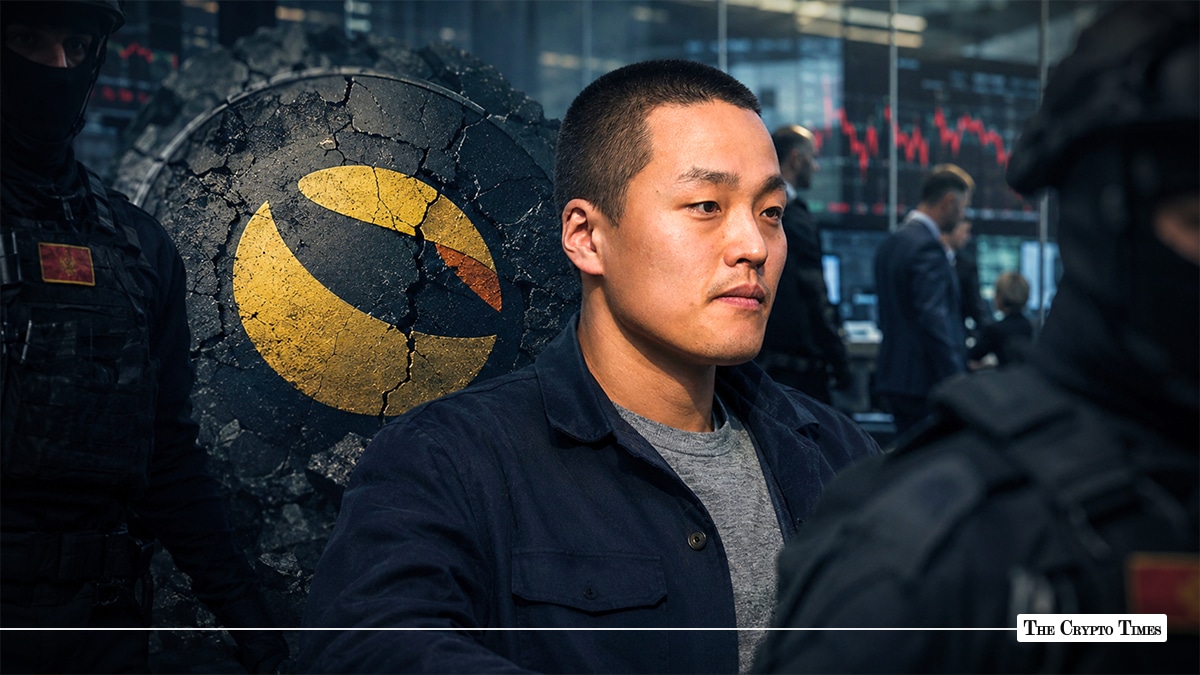
Between May 7 and May 13, 2022, the Terra ecosystem didn’t just crash; it underwent a total molecular disintegration. TerraUSD (UST), once the crown jewel of “decentralized money,” lost its peg, while its sister token LUNA, which had touched $119 just weeks prior, was minted into a hyper-inflationary abyss. In 72 hours, an estimated $60 billion in market value evaporated.
Today, in May 2026, the ghost of Terra Luna refuses to rest. While Do Kwon serves a 15-year sentence in a U.S. federal prison, the story has shifted from a “bank run” to a high-stakes legal thriller involving Wall Street’s most secretive trading firms and a community-led resurrection that defies mathematical logic.
Part 1: Anatomy of a death spiral
To understand why Terra failed, it is important to understand the “Anchor Trap.”
Terra’s growth was driven by Anchor Protocol, which promised a staggering 19.5% APY on UST deposits. Astroport, which replaced TerraSwap as the primary liquidity hub, allowed users to swap LUNA, UST, and other ecosystem tokens. Mirror Protocol, which allowed users to trade synthetic stocks like Apple or Tesla using UST as collateral. This wasn’t a product of organic demand; it was a subsidized marketing expense. By early 2022, Anchor held 75% of all UST in circulation.
But the warning sign had already flashed one year earlier.
In May 2021, UST had already lost its peg in what later became the dress rehearsal for the disaster. The SEC later said Terraform and Tai Mo Shan, a subsidiary of Jump Crypto’s parent firm, entered into an agreement that incentivized Tai Mo Shan to buy UST when it depegged, while Terraform publicly promoted the idea that UST’s algorithm had restored stability. This was the first crack in the myth. The algorithm had not saved UST alone; hidden market support had helped save the story.
Then came May 2022.
Terraform Labs withdrew $150 million in liquidity from Curve’s 3pool as part of a broader liquidity migration. Minutes later, large UST selling pressure hit the pool.
The Jane Street lawsuit later alleged that a wallet linked to the firm withdrew 85 million UST from the same pool after receiving non-public information about Terraform’s liquidity move. Jane Street has denied wrongdoing and asked the court to dismiss the claims, but that alleged sequence is now central to the Wall Street chapter of the Terra collapse.
Once the peg slipped, Terra’s design flaw took over. To defend UST’s $1 peg, the system allowed UST to be redeemed for LUNA. As UST redemptions accelerated, the protocol minted more LUNA. As more LUNA entered the market, LUNA’s price fell further. As LUNA fell, confidence in UST collapsed faster. The machine was not defending the peg anymore. It was printing the collapse.
The Luna Foundation Guard tried to defend UST with a Bitcoin war chest. Before the depeg, LFG had more than 80,000 BTC in reserves. By May 16, 2022, only 313 BTC remained after the failed peg defense. This detail matters because Terra was no longer just an algorithmic stablecoin by the end. It was an algorithmic stablecoin with a multibillion-dollar Bitcoin emergency fund, and the fund still could not stop the run.
The crash timeline was brutal:
| Date | What Happened |
|---|---|
| May 7, 2022 | Terraform withdrew $150M from Curve liquidity as UST sell pressure began. |
| May 8–9, 2022 | UST slipped below $1 and LFG began emergency defense efforts. |
| May 9–11, 2022 | UST redemptions accelerated and LUNA minting spiraled. |
| May 12, 2022 | Terra validators halted the blockchain to prevent governance attacks after severe LUNA inflation. |
| May 13, 2022 | Binance suspended LUNA/BUSD and UST/BUSD spot trading. |
| May 16, 2022 | LFG disclosed its Bitcoin reserve had collapsed from more than 80,000 BTC to 313 BTC. |
When the “Smart Money” began to exit in May 2022, the system’s fatal flaw, a death spiral by design, was triggered. To defend the $1 peg, the protocol minted LUNA. As the peg slipped further, it minted more LUNA. Within days, LUNA’s supply ballooned from 300 million to 6.5 trillion tokens, crushing its price to fractions of a cent.
The human toll: A wealth transfer event
The collapse wasn’t a market correction; it was a massive wealth transfer from retail investors to sophisticated insiders.
| Category | Estimated Loss |
|---|---|
| Combined LUNA + UST Wipeout | $40–60 Billion |
| Total Value Locked (TVL) Lost | ~$28 Billion |
| LUNA Price Collapse | $119 → $0.0001 (99.9%+) |
| Retail Exposure (S. Korea) | 280,000+ Citizens |
While whales spotted the de-peg early and exited, retail investors held on, urged by Kwon’s infamous X post: “Steady lads, deploying more capital.” They stayed. They lost everything.
Part 2: From Terra to crypto winter
Terra did not die alone. It dragged half the 2022 crypto credit market into the grave.
Three Arrows Capital, once one of the loudest and most aggressive hedge funds in the industry, was brought down after the TerraUSD and LUNA collapse. Its failure then punched holes through lenders and counterparties across the market. Voyager Digital, Celsius, BlockFi, Genesis, and eventually the broader FTX-era credit unraveling all became part of the same contagion map. Everyone started to describe Terra and Luna as one of the first dominoes in the 2022 bankruptcy chain.
This is why Terra still matters in 2026. It was not only a failed stablecoin. It was the market’s stress test. It exposed what happens when “stable” yield is financed by reflexive tokens, when lenders treat volatile collateral as money-good, and when crypto institutions build credit on top of assets that can go to zero in a weekend.
Moreover, the crash birthed Terra 2.0. After the collapse, the Terra community approved a revival plan. A new chain launched on May 28, 2022, while the original chain became Terra Classic and the old LUNA became Luna Classic, or LUNC. This split is why today’s LUNC revival exists at all: it is the zombie chain left behind by one of crypto’s largest collapses.
Part 3: The Wall Street reckoning — Jane Street & Jump Trading
For three years, the narrative was that Do Kwon was a lone rogue. In 2026, court filings have added a darker chapter: The Insider Trading Suit.
On February 23, 2026, the Terraform bankruptcy administrator filed a lawsuit against Jane Street Group. The allegation? Jane Street allegedly used non-public information to front-run the death spiral.
- The Trade: Minutes after Terraform Labs withdrew $150 million in liquidity, a wallet linked to Jane Street pulled $85 million—accelerating the panic.
- The Connection: The suit cites back-channels involving a former Terraform intern who moved to Jane Street.
Similarly, Jump Trading faces a $4 billion claim for allegedly propping up UST in secret during a 2021 “test run” to maintain the illusion of stability, generating $1 billion in gains while retail remained oblivious. The SEC had already found that Tai Mo Shan and Terraform agreed on the 2021 depeg that incentivized UST purchases in exchange for LUNA-related benefits. Jump has denied wrongdoing and called the bankruptcy estate’s lawsuit an attempt to shift blame away from Terraform’s own fraud.
If these cases succeed, they will set a historic precedent for holding traditional market-makers accountable for crypto manipulation. Crypto collapses have usually punished founders, exchanges, and lenders. These lawsuits ask whether elite trading firms, the firms that sit closest to liquidity, order flow, and market structure, can also be dragged into the accountability chain.
This is why the Terra story in 2026 is no longer only about Do Kwon. It is about the entire machinery that kept the illusion alive.
Part 4: Where is Do Kwon now? (The 2026 update)
On May 3, 2026, a viral hoax claimed U.S. President Donald Trump had pardoned Do Kwon in exchange for an investment in the WLFI token.
The Reality Check: Do Kwon is currently in a U.S. federal cell. On December 11, 2025, he was sentenced to 15 years in prison for what Judge Paul A. Engelmayer called an “epic fraud.” He forfeited $19 million and still faces up to 40 years of additional charges in South Korea. There is no pardon. No WLFI investment. Only a grim legal future.
Part 5: The bizarre resurrection of LUNC
While Kwon sits behind bars, the community-run Terra Luna Classic (LUNC) is having a surreal resurgence.
- 150% Rally: In May 2026, LUNC surged to a $570 million market cap.
- The Burn: Driven by Binance’s permanent burn of over 84 billion tokens and a community-imposed 0.5% transaction tax.
- The Tech: The v4.0.1 upgrade recently integrated the Cosmos SDK v0.53, signaling that, unlike its founder, the code is still evolving.
However, analysts warn that even at $0.0001, the math is brutal. It would take decades of current burning to return LUNC to meaningful value for the original victims. It remains a high-volatility speculative play, not a recovery vehicle.
7 hard-won lessons to save your portfolio
The Terra collapse was a tragedy, but it was also a curriculum. If you want to survive the next cycle, internalize these principles:
- If You Don’t Know Where the Yield Comes From, You Are the Yield: Any “stable” yield above 10% requires a forensic explanation. If it’s subsidized, it’s a ticking clock.
- Demand Hard Collateral: Algorithmic stablecoins backed by their own volatile tokens are circular logic. Use fiat-backed (USDC) or over-collateralized (DAI) stablecoins.
- Beware of “Decentralization Theater”: If a project has one charismatic founder making unilateral decisions on billions in reserves, it is a centralized startup with better marketing.
- Watch the Whales, Not the Founders: Founders are paid in narrative; whales vote with wallets. Check on-chain data (Nansen, Arkham) rather than Twitter threads.
- Stress-Test the Downturn: Ask: “What happens if the price drops 80%?” If the answer is “we mint more of a falling asset,” walk away.
- Size Positions Correctly: Never put more into a “stable” product than you can afford to lose. Diversity is the only free lunch.
- Have an Exit Discipline: Set “kill switches.” If a peg breaks by 2% for more than 4 hours, exit. Do not “buy the dip” in a death spiral.
The 2026 outlook: The math never lies
Four years later, the dust has settled, but the debris remains. We have the court documents, the MIT post-mortems, and the sentencing memos.
The next “steady lads” moment is already brewing, perhaps in a restaking protocol or a new “Real World Asset” scheme promising returns that the math doesn’t support. The only question is whether the industry has learned that confidence always breaks, but math remains immutable.
Do Kwon sold a story. The market bought it. In 2026, we no longer have the excuse of ignorance.
Also Read: Terra Luna Classic (LUNC) Evolution, Governance, and the 2026 Resurgence