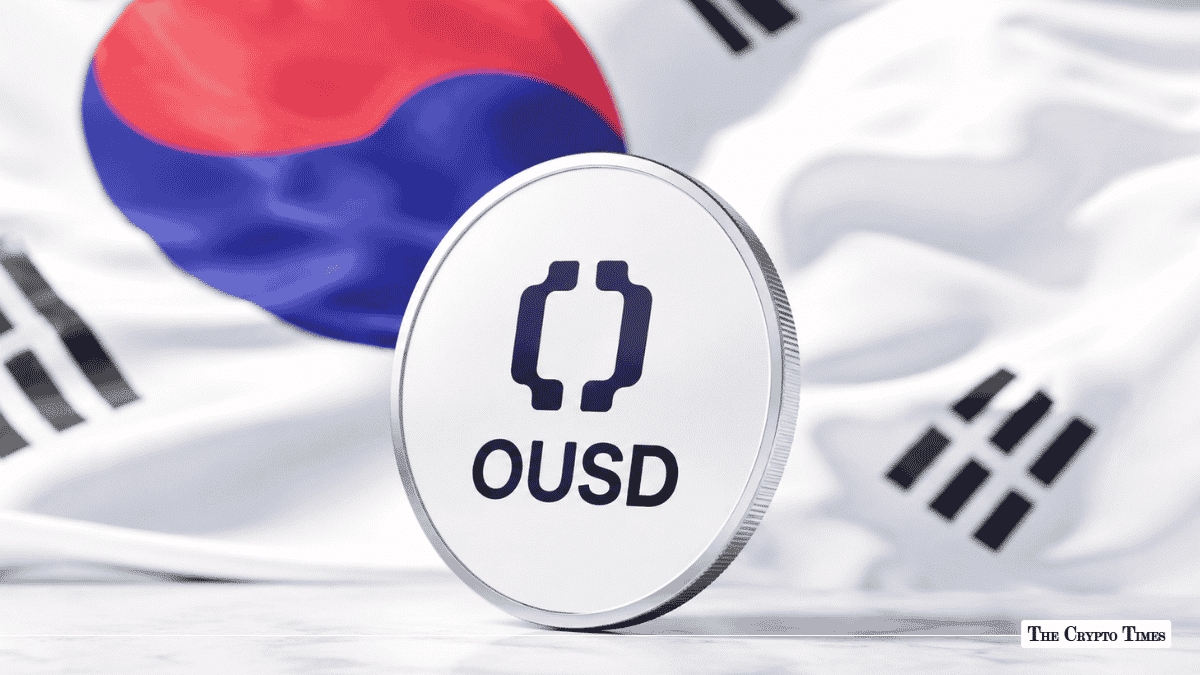
Open USD arrived on June 30 with one of the most heavily backed partner rosters the stablecoin industry has ever assembled, and within days, that roster is already under scrutiny.
Several major South Korean companies listed as partners of the consortium stablecoin say they never formally agreed to join, according to reporting from the Korean outlet Chosun Biz, puncturing some of the momentum from a launch that had sent shockwaves through incumbent Circle.
The discrepancy strikes at the heart of Open USD’s entire pitch, which rests almost entirely on the breadth and weight of the coalition behind it.
What Open USD is
Introduced by an independent corporate group called Open Standard and managed by founding CEO Zach Abrams, the Bridge co-founder and former Coinbase product lead, Open USD (OUSD) is a fully reserved dollar stablecoin. Unlike traditional models run by a single issuer, OUSD is built as a collaborative network.
By allowing corporate partners to mint and redeem tokens with zero fees and no artificial volume caps, OUSD alters standard stablecoin economics. Instead of the issuing firm keeping all the yield generated by short-term dollar reserves, Open Standard transfers nearly all excess interest income back to the participating businesses that route volume through the network.
The launch lineup reads like a who’s-who of global finance and technology — Visa, Mastercard, Stripe, American Express, BlackRock, Coinbase, Google, BNY, IBM, Ripple, Standard Chartered, DBS and more. The token is slated to go live later in 2026, initially on Solana, with Polygon, Stellar and Aptos to follow. Stripe has said it will make OUSD the default stablecoin for businesses on its platform, and Coinbase has confirmed it will bring the token to its Base network — two of the more concrete commitments in the roster.
The Korean partner list and the denials
Among the 140-plus partners are 13 Korean entities: Samsung Electronics, Shinhan Financial Group, Dunamu (the operator of the country’s largest crypto exchange, Upbit), K Bank, Kakao Bank, Hanwha Life, and a cluster of card issuers including KB Kookmin Card, Woori Card, Samsung Card, Hana Card, Hyundai Card, BC Card, and Nonghyup Card.
But when several of them were contacted, the picture that emerged was far removed from a firm alliance. A Samsung Electronics official said flatly that “there were no official consultations, and we do not even know what role we would play.”
Shinhan, Dunamu, and K Bank reportedly confirmed that Open Standard had inquired about their willingness to participate, that they had responded only that they would review the matter, and that their names were subsequently published as members regardless. Most striking was an unnamed company representative who said the firm had learned of its own inclusion through domestic news coverage, after offering nothing more than a casual “we will review it if it goes well,” and added that it was “perplexed to be included as members.”
‘Signed up’ versus ‘exploring’
The gap comes down to language. Open Standard’s official announcement presents its partners as having “signed up to use Open USD,” a phrase that implies commitment. The Korean firms, by contrast, describe their involvement as preliminary and exploratory, an expression of possible interest, not a binding agreement. A degree of this is routine; large consortium launches frequently list parties whose participation is still being negotiated, and the word “partner” can stretch from a signed integration to a single introductory call. What is unusual here is the scale of the disconnect, with globally significant names publicly stating they held no formal talks at all. As of publication, Open Standard had issued no statement disputing the Korean companies’ accounts, and its announcement did not spell out the specific level of commitment attached to each partner, a tiering that would resolve much of the ambiguity.
It is worth stressing what this is not: there is no suggestion that OUSD’s flagship backers are anything other than genuine. Stripe’s default-stablecoin pledge and Coinbase’s Base integration are on the record and consequential. The Korean episode raises a question about the depth of the “140,” not the existence of the project.
Why a shaky roster alters the competitive balance
This early friction has brought back a healthy skepticism regarding large corporate alliances. While analysts at firms like Arca and Dragonfly initially recognized OUSD as a notable structural threat to Circle, they also warned that complex enterprise consortiums often run into coordination challenges because aligning incentives across dozens of independent companies is difficult to sustain.
The initial scale of the 140-firm announcement had clear market implications. Circle’s stock experienced an intraday drop of 16.38% to close near $63.52, as investors worried that Coinbase might shift its lucrative USDC revenue-share pipeline over to the new consortium.
With payment networks like Visa and Mastercard already backing the project, and analysts projecting the total stablecoin market to scale significantly under the regulatory clarity of the federal GENIUS Act, clear distribution channels are crucial.
If parts of OUSD’s international partner network turn out to be tentative leads rather than legally committed participants, the network effects may build more slowly than early market reactions suggested. Long-term adoption will ultimately be determined by consistent transaction volume rather than initial logo placement.
What to watch
Three questions will determine whether this is a footnote or a fracture. First, whether Open Standard clarifies its partnership tiers or responds to the Korean firms’ accounts; silence will invite more scrutiny. Second, whether additional listed partners, in Korea or elsewhere, distance themselves in the coming days. And third, the only test that ultimately counts: when OUSD goes live later this year, whose products actually mint, hold and settle in it.
For a venture whose central selling point is the size and unity of its alliance, discovering that some marquee members did not know they had joined is an awkward way to begin, and a reminder that in stablecoins, as ever, the verdict comes from volume, not logos.
Also Read: The New Stablecoin in Town: How Could OUSD Challenge or Replace USDC?