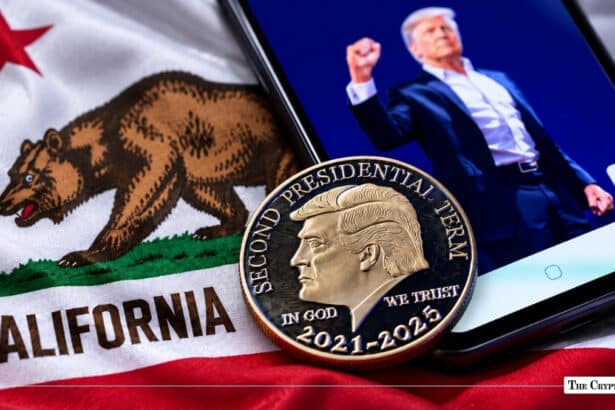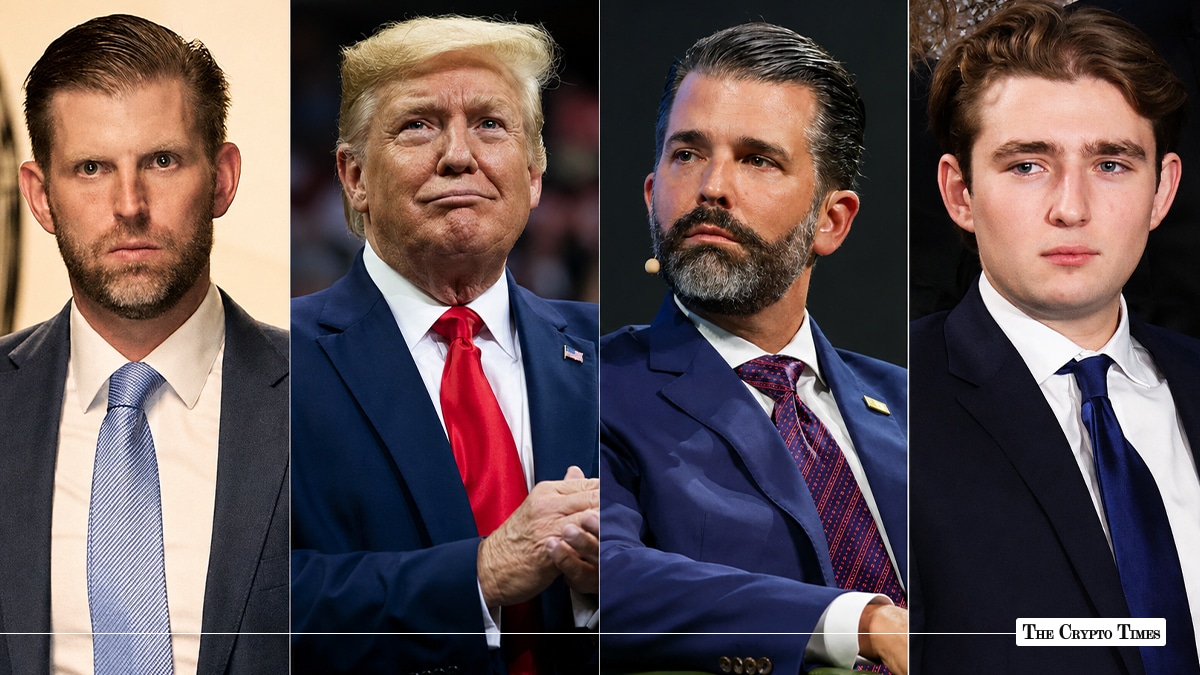
The President of the United States Donald Trump has made a bold statement that he is profiting because “everybody’s profiting.” But the money trail behind his family’s crypto empire tells a more complicated story.
According to federal financial disclosures, released June 30, 2026 by the U.S. Office of Government Ethics as a striking 927-page filing (compared to Vice President JD Vance’s 17-page disclosure), and multiple reviews of those filings, Trump took in nearly $1.2 billion from crypto-linked businesses in 2025. Reuters, using a broader calculation, put the figure at more than $1.4 billion from family crypto ventures, including almost $800 million from World Liberty Financial and $635 million from the $TRUMP memecoin. Some reports have calculated the crypto-business income at nearly $1.2 billion, while others reported more than $1.2 billion in crypto earnings and more than $50 million in Bitcoin holdings.
Trump’s crypto activities have been a key factor in nearly tripling his net worth from $2.3 billion to $6.5 billion between 2024 and 2026, a two-year expansion driven substantially by ventures that barely existed before he retook office.
The headline number is staggering. But the bigger issue is not only how much the Trump family made. It is how they made it.
The Trump family’s biggest crypto gains did not come from buying Bitcoin early, holding through a bear market, or building a widely used blockchain product. Much of the money came from something more powerful in politics than in finance: the Trump name itself. Licensing arrangements, token-sale proceeds, founder allocations and equity-linked deals allowed Trump-linked entities to collect revenue upfront, while outside investors were left exposed to collapsing token and share prices.
The Crypto Presidency Became a Business Model
For years, Trump publicly dismissed crypto. In 2019, he said Bitcoin and other cryptocurrencies were “not money,” “highly volatile,” and “based on thin air.” By 2024 and 2025, that position had flipped. Trump campaigned on making the United States the “crypto capital of the world,” and his administration later backed major crypto-friendly moves, including a stablecoin framework under the GENIUS Act, a Strategic Bitcoin Reserve and a U.S. Digital Asset Stockpile.
That reversal is now at the center of the controversy. The same industry Trump once described as speculative and dangerous has become one of the largest income engines of his second presidency.
The scale is striking when compared with the crypto sector’s own leaders, Per Reuters’ comparative analysis, the Trump family’s ventures generated approximately $2.3 billion in pretax crypto market income between November 2024 and April 2026. Over the same window, BlackRock’s IBIT, the world’s largest spot Bitcoin ETF, generated an estimated $109 million. Circle, the issuer of USDC, lost approximately $14 million. Galaxy Digital, one of the largest publicly listed crypto companies, posted a $430 million loss. The Trump family’s political-brand-driven ventures out-earned the largest institutional crypto product on the market by more than 20-to-1.
The White House has defended the policy shift as pro-innovation. Its GENIUS Act fact sheet said the law created the first federal regulatory system for stablecoins, required 100% reserve backing with liquid assets such as dollars or short-term Treasuries, and positioned America to lead in digital assets.
Critics see a conflict. World Liberty Financial, the Trump family-linked DeFi and stablecoin venture, launched its USD1 stablecoin in the same policy environment the administration helped shape. The question facing Washington is no longer only whether crypto needs clear rules. It is whether a president and his family should be allowed to profit from crypto while his administration is writing those rules.
The $TRUMP Coin: Brand First, Buyers Later
The most politically explosive line item is the $TRUMP memecoin.
The memecoin business entity is CIC Digital LLC: Trump’s family holding company for the token, while Celebration Coins is the external licensing counterparty that pays royalties to CIC Digital. NBC News reported it could find no digital footprint for “Celebration Coins,” and a Senate Democrats’ letter noted that a Wyoming-registered entity called “Celebration Cards” facilitated a crypto conference at Mar-a-Lago in April.
Trump earned just over $635 million from the token, mainly through royalties tied to a licensing agreement with Celebration Coins. The token launched on Solana days before Trump returned to office for his second term in January 2025, and then surged to a multibillion-dollar valuation before dramatically collapsing. The token was trading around $1.66 with a market cap of about $394 million, down roughly 98% from its January 2025 peak.
A similar pattern can be seen in Trump-linked crypto ventures. The $TRUMP token generated about $616 million for the family, while buyers lost more than $700 million. The token’s all-time high was $75.35, reached shortly after launch, before it began its long slide.
Blockchain analytics firm Chainalysis previously reported that only a small group of large early traders profited from the memecoin, while hundreds of thousands of retail investors bought in at higher prices and ended up with losses. Reuters estimated that more than one million investors were affected across all four Trump-linked crypto ventures combined.
That makes the “everybody’s profiting” defense hard to square with the token’s market history. Trump-linked entities were paid through licensing economics and token revenue. Buyers, meanwhile, were exposed to price action.
The result was an asymmetric trade: the family monetized attention; retail investors bought the volatility.
World Liberty Financial: The Bigger Machine
World Liberty Financial appears to be the larger and more durable part of the Trump family’s crypto structure. WLF was launched in September 2024 by Donald Trump Jr., Eric Trump, Barron Trump, and the sons of Steve Witkoff, including Zach and Alex Witkoff. Steve Witkoff is Trump’s Special Envoy to the Middle East, meaning the Witkoff family’s business relationship with the Trump family runs alongside Witkoff’s official diplomatic role. Trump himself is listed as “co-founder emeritus” of WLF.
Trump-linked companies received almost $800 million from World Liberty in 2025, including more than $520 million from token sales and more than $250 million from the sale of interests in the business. In addition, Trump made over $196 million from an equity sale of Stablecoin Holdco — a separate WLF-related transaction the disclosure documents but the broader coverage has largely overlooked.
The structure is important. Trump licensed his name and image to World Liberty under an arrangement that sends 75% of token sales to DT Marks DEFI LLC. That entity is 70% owned by the Donald J. Trump Revocable Trust and 30% owned by other Trump family members. Reuters estimated World Liberty had funneled more than $1.6 billion to the Trump family, including more than $1.4 billion from governance token sales and about $230 million from other ventures.
Outside investors saw a different outcome. World Liberty’s token price fell from 46 cents after exchange trading began to around 6 cents by the end of April, an 87% decline. Investor losses in World Liberty tokens were estimated at about $674 million.
The situation for retail holders worsened materially in April 2026. The WLF DAO passed a governance vote effectively barring token holders from disposing of their holdings until 2030 — a decision that specifically benefits the Trump family’s early positions while trapping retail investors through a multi-year lockup. The Democracy Defenders Fund (DDF), a nonpartisan ethics watchdog, has since called on the SEC to launch a formal investigation into the lockup vote and possible conflicts of interest.
World Liberty has pushed back against the criticism. A company spokesman reportedly stated that World Liberty is a private financial technology company, not a political organization, and said the tokens are “not an investment product.” But for buyers, the economic reality looked very much like an investment gone wrong: money went in, prices fell, and large portions of holdings were locked.
The Justin Sun Question
One of the largest single buyers of Trump-linked crypto assets was Chinese-born Tron founder Justin Sun. Sun spent approximately $75 million on WLF governance tokens and an additional $200 million on the $TRUMP memecoin.
In February 2024, the SEC had filed a federal lawsuit charging Sun with duping investors. Under the Biden administration, that case was actively pursued; under the Trump administration, it was paused shortly after Trump took office and ultimately settled last month for a $10 million fine.
Sun has repeatedly denied that his spending on Trump-linked crypto ventures had any connection to his federal case, and World Liberty has dismissed conflict-of-interest claims. But the pattern, a $275 million buyer of Trump-family crypto whose active SEC enforcement case was paused and then settled at a fraction of typical penalties, is the most concrete conflict-of-interest datapoint in the entire disclosure.
Public-Market Route: ALT5 and American Bitcoin
The Trump family crypto trade did not remain confined to tokens. It moved into public stocks.
ALT5 Sigma, later renamed AI Financial Corp., raised $750 million by selling new shares and used $717 million to buy World Liberty tokens in a $1.5 billion overall token deal announced in August 2025. More than $500 million from that token purchase flowed to the Trump family through World Liberty’s revenue-sharing structure.
ALT5’s share price then fell from above $9 in August 2025 to 75 cents by the end of April 2026, wiping out about $675 million for investors. By June 8, 2026, ALT5 shares had fallen further to $0.66, a 93% drop from the pre-deal price of $8.97, leaving the company’s continued Nasdaq listing uncertain. One retiree put $60,000 of retirement savings into the stock after hearing about the Trump connection; by the end of May, the investment was worth about $5,300.
American Bitcoin followed a similar pattern. The Trump brothers received stakes in American Bitcoin at no monetary cost. Donald Trump Jr. and Eric Trump attended a bell-ringing ceremony at the Nasdaq market in New York to publicly promote the company’s listing. Eric Trump’s stake was still worth more than $70 million at the end of April, even after the stock had fallen sharply. Outside investors lost more than $200 million as American Bitcoin shares dropped from $11 at launch to $1.15 by the end of April.
Across World Liberty, $TRUMP, ALT5 and American Bitcoin, the Trump family made at least $2.3 billion from crypto-related projects since Trump returned to office, while outside investors absorbed roughly comparable losses.
Trump’s Defense: The Market Is Up
Trump has rejected accusations that he is using the presidency to enrich himself.
After the disclosure became public, Trump told reporters that he does not personally manage his finances and that professional funds handle his money. He also argued that his gains reflect a strong market: “Everybody’s profiting,” he said.
The White House’s statement to reporters has been more categorical: “Neither the President nor his family has ever engaged — or will ever engage — in conflicts of interest,” a White House representative said.
But the crypto numbers weaken that argument.
The largest Trump crypto gains were not mainly passive market gains from Bitcoin or Ethereum. Trump did report more than $50 million in Bitcoin holdings (with CIC Digital LLC additionally holding at least $60 million in various cryptocurrencies in digital wallets) and between $5 million and $25 million in Ethereum, but those holdings were small compared with the $635 million from the memecoin and hundreds of millions from World Liberty.
In other words, Trump did not simply ride the crypto market higher alongside ordinary investors. His family’s entities collected money through token sales, licensing rights, revenue-sharing deals and equity-linked transactions. Those cash flows could be realized even if the underlying tokens later crashed.
For investors, the timing mattered. For the Trump family, the structure mattered more.
The Broader Disclosure Picture
Beyond crypto, the 927-page disclosure documented Trump’s other 2025 income streams:
- Mar-a-Lago Club revenue grew from $50 million to $77 million.
- More than $290 million in total income from Trump’s golf and club properties (Doral, Bedminster, Mar-a-Lago).
- $52 million from licensing the Trump name to overseas property developers, primarily in the Middle East (a departure from the Trump Organization’s first-term policy of not pursuing new overseas deals).
- More than $86 million from legal settlements with media companies including ABC, CBS, Meta, YouTube, and X.
- $4.7 million from sales of Trump-branded watches alone.
- First Lady Melania Trump’s separate earnings included over $10 million from a biographical Amazon documentary and more than $500,000 from her memoir.
By comparison, Vance’s 17-page disclosure showed between $1 million and $5 million in royalties from his 2016 book “Hillbilly Elegy,” a small fraction of Trump’s 2025 income.
The Ethics Battle Moves to Congress
The filings have now turned crypto regulation into an ethics fight.
Senator Elizabeth Warren said after the new disclosure that Trump family crypto ventures generated more than $1.4 billion and argued that any crypto legislation heading to the Senate floor must prevent the president, vice president, senior administration officials, members of Congress and their families from profiting off the crypto industry. Warren has specifically targeted the CLARITY Act, the market-structure legislation currently under Senate consideration, as needing ethics guardrails before it can pass responsibly.
That criticism is not limited to Democrats. Transparency International U.S. said leading ethics and anti-corruption groups believe the CLARITY Act cannot responsibly regulate crypto while leaving elected officials and immediate family members free to profit from ventures affected by federal policy. The group also cited ethics experts calling for restrictions on officials and their spouses or dependent children owning, trading, issuing, endorsing or profiting from crypto products.
This is the central contradiction now facing Washington.
The administration says it is building rules to legitimize crypto. Critics argue that those rules are being built while the president’s family is financially exposed to the same industry. Even if every disclosure was legally filed, the optics are damaging: the referee appears to have a stake in the game.
The Real Cost
The Trump crypto story is not only about one family’s income. It is a case study in how political branding can become financial infrastructure.
In traditional finance, investors usually ask whether a company has revenue, users, cash flow, assets or a durable competitive advantage. In Trump-linked crypto, the core asset was different. It was access, attention and identity. Buyers were not just buying a token. They were buying proximity to a political movement and, in some cases, the belief that policy power could support market value.
That belief proved expensive.
World Liberty buyers faced lockups, now extended until 2030, and falling prices. $TRUMP buyers watched a politically branded meme coin collapse from its peak. ALT5 and American Bitcoin shareholders saw public-market versions of the Trump crypto trade fall sharply. The Trump family, meanwhile, booked revenue through structures that limited downside exposure. Over the same 18-month window, the Trump family’s crypto ventures out-earned BlackRock’s flagship spot Bitcoin ETF by more than $2 billion.
That is the cost hidden behind the $1.2 billion headline. It was not paid only in dollars. It was paid in market trust, regulatory credibility and the idea that crypto policy can be separated from political self-interest.
For the crypto industry, the risk is obvious. If the most visible pro-crypto presidency in U.S. history becomes associated with insiders monetizing hype while retail investors lose money, the backlash could shape the next wave of regulation as much as any stablecoin bill or market-structure framework.
Trump says everyone is profiting. The ledger says otherwise.
Disclaimer:
Some elements of this content may have been enhanced with the help of our artificial intelligence (AI) assistants for purposes such as basic refinement, review, image generation, and translation to deliver high-quality news in a shorter time frame. However, all AI-assisted content is reviewed and approved by our team to ensure accuracy, fairness, and editorial integrity.