Key Highlights
- AVAT shares have plunged more than 71% since the Nasdaq listing on June 11.
- The company’s AVAX holdings have lost more than $142 million in value.
- AVAT warned of “substantial doubt” about continuing operations.
Avalanche Treasury Corp ($AVAT), the Nasdaq-listed vehicle heavily exposed to Avalanche ($AVAX) tokens, has seen its shares decline sharply since its June 2026 debut.
Once positioned as a publicly traded vehicle focused on Avalanche, the company’s stock has plunged over 71% since its Nasdaq launch and is currently hovering near $0.53, according to Google Finance data. Year-to-date, the stock is down nearly 95%, erasing most of its post-listing value.
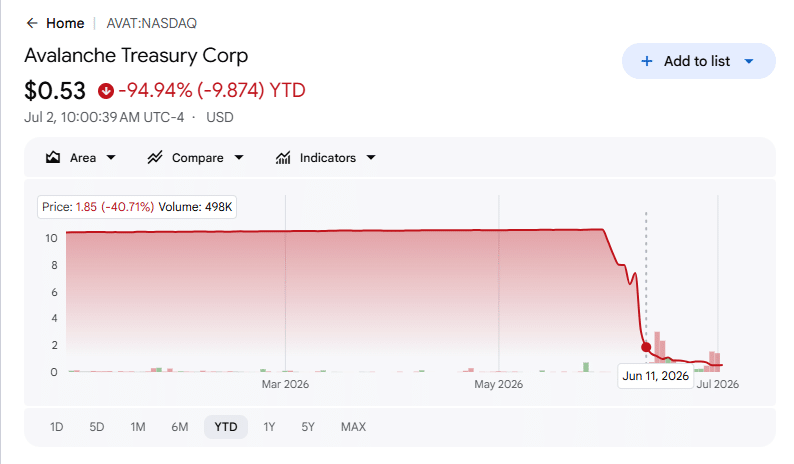
The decline is visible in the stock’s charts. The year-to-date chart shows the share price trading near $10, followed by a near-vertical collapse beginning in mid-June. The one-month performance tells a similar story, with the price sliding from around $9–$10 to under $1 in a matter of weeks. Even on a daily basis, volatility remains extreme, with the stock trading in a tight range around $0.50–$0.54 amid thin liquidity.
What factors accelerated the decline
At the center of AVAT’s woes is its concentrated bet on AVAX. The company acquired its Avalanche token holdings at a cost basis of approximately $265 million. By late March 2026, the fair value of those holdings had fallen to roughly $123 million, reflecting a paper loss of more than $142 million.
The asset devaluation has directly translated into devastating financial results. In Q1 2026 alone, AVAT reported a net loss exceeding $26 million, driven almost entirely by the markdown of its crypto reserves.
Investor concerns also intensified after the company disclosed in a late-June SEC filing that there is “substantial doubt” about its ability to continue as a going concern through the end of 2026. With a market capitalization of approximately $23.59 million, AVAT remains highly exposed to fluctuations in AVAX because its business model centers on holding the token as its primary treasury asset.
Broader market dynamics have not helped. In early July 2026, tech-heavy indices and speculative AI-linked stocks came under intense selling pressure. Digital-asset treasury companies, often viewed as high-beta plays on crypto, have been hit particularly hard. AVAT’s performance mirrors the punishing environment for single-asset corporate treasuries in a risk-off market.
Avalanche payments push fails to support AVAT shares
Despite launching the Avalanche Payments Collective on June 18, a major industry group uniting 28 organizations, including Franklin Templeton, VanEck, WisdomTree, Paxos, Ethena, Kraken, and Anchorage Digital, Avalanche’s ecosystem momentum failed to support its Nasdaq-listed treasury vehicle.
The initiative aims to advance blockchain payments, stablecoins, and cross-border settlement. However, just weeks later, Avalanche Treasury Corp.’s stock had plummeted over 90% from its debut, now trading near $0.53.
The company’s heavy exposure to AVAX, significant unrealized losses, and going-concern warning continued to weigh on investor sentiment despite ongoing development within the Avalanche ecosystem.
Questions around treasury strategies
AVAT’s performance highlights the risks associated with corporate treasury strategies built around volatile digital assets.
While some companies have pursued Bitcoin treasury strategies, firms with concentrated exposure to alternative cryptocurrencies face greater sensitivity to price volatility and liquidity conditions. AVAT’s recent performance illustrates how declines in a single underlying asset can materially affect both financial results and investor confidence.
Also Read: Ondo Debuts First U.S. Tokenized Securities Under SEC Framework