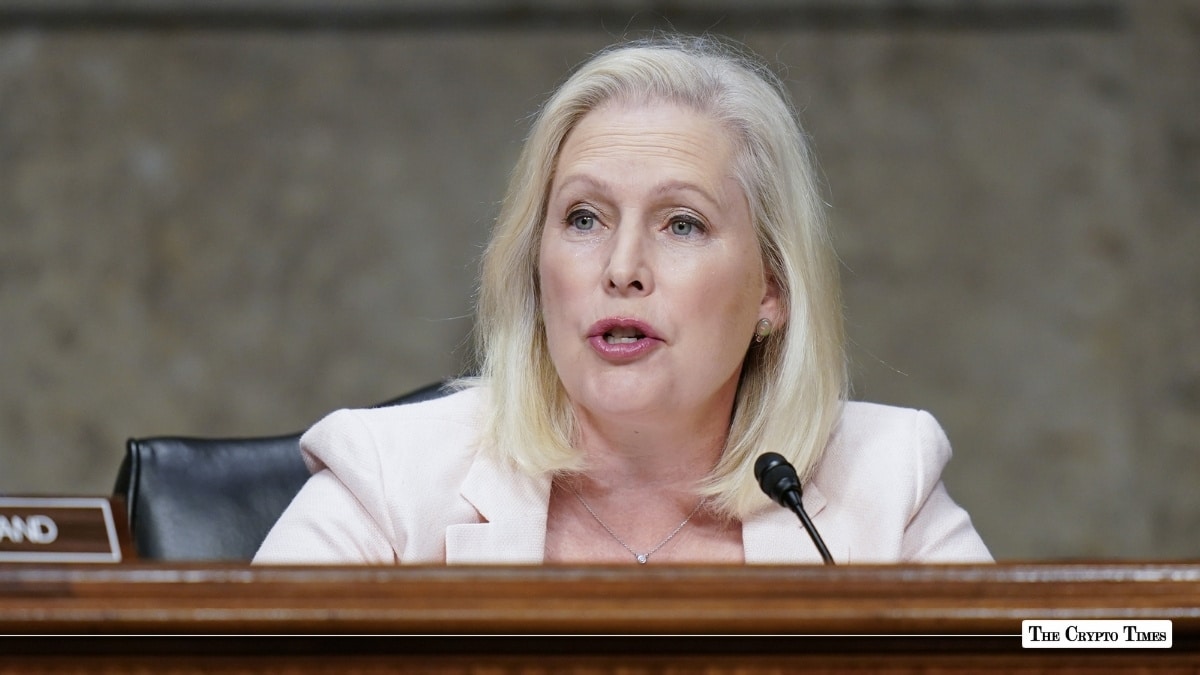
US Senator Kirsten Gillibrand said the Senate’s crypto market structure push will fail unless lawmakers include an ethics provision preventing senior public officials from profiting from the digital asset industry through insider status.
Speaking at Consensus 2026, Gillibrand said the emerging Senate version of the CLARITY Act still has three unresolved issues: consumer protection, illicit finance and ethics. The comments place political corruption safeguards at the center of the next stage of US crypto regulation, even as lawmakers try to move the bill before the August recess.
“There will be no one voting for this bill if we don’t have an ethics provision,” Gillibrand said. “Because the truth is that we cannot allow members of Congress, senior administration officials, presidents, or vice presidents to get rich off of these industries because of their insider status.”
Gillibrand makes ethics clause a red line
Gillibrand said the provision is needed to stop crypto regulation from becoming a vehicle for political enrichment.
“It is the worst form of pay for play, it is the worst form of campaign finance violations, and it’s a violation of the Constitution,” she said.
The senator added that lawmakers are trying to secure agreement from Republicans, congressional allies and the White House to include the ethics provision in the final bill.
“This provision will be part of this bill, or it will not go forward,” Gillibrand said. “Because we cannot let greed and corruption in Washington tear this industry down, and without that provision, that’s exactly what will happen.”
The warning comes after the GENIUS Act became law in July 2025, establishing the first federal regulatory framework for payment stablecoins. The White House said President Donald Trump signed S.1582, the GENIUS Act, on July 18, 2025. Gillibrand’s office previously described her as the lead Democratic senator on the stablecoin bill after its Senate passage.
Three issues remain before Senate markup
Gillibrand said the Senate negotiations now depend on closing three areas: stronger consumer protections, illicit finance and anti-terrorism financing language, and ethics restrictions.
“One part that’s very important to me is consumer protections,” she said, adding that state-level consumer protection law and rights of action must be preserved.
On illicit finance, Gillibrand said existing language is difficult because current rules were built around banks and money transmitters, while crypto platforms and assets operate differently.
“These aren’t banks; they are not money transmitters. They’re different,” she said.
She added that the industry itself will have to help shape the tools that allow law enforcement to respond when digital assets are used by hostile actors or criminal networks.
Banking rewards compromise appears settled
Gillibrand also indicated that the banking rewards provision, one of the most politically sensitive parts of the crypto debate, may no longer be an open issue.
Asked whether the banking rewards provision was a “done deal,” Gillibrand said: “I think there is an agreement, and I think it might last because everyone’s unhappy.”
“So I think you’ve got a compromise that no one’s happy with, but I think it will probably work,” she added. “So, I think that’s done.”
The stablecoin rewards debate has become a flashpoint between banks and crypto firms, with banks warning that exchange rewards could function like deposit interest, while crypto firms argue that overly broad restrictions would hurt consumer access and competition.
CLARITY Act could reach vote before August recess
Gillibrand said the three remaining issues need to be resolved immediately to keep the bill on schedule.
“These three open issues have to be closed out in the next week. Really, it has to be this week,” she said.
She expects a Senate Banking Committee markup “about a week from now” if negotiators reach agreement. Senate Banking Committee Chairman Tim Scott also recently said he hoped for a bipartisan markup in May, saying lawmakers were “in the red zone” on the CLARITY Act.
After the banking text is settled, Gillibrand said lawmakers must negotiate with the Senate Agriculture Committee and combine the banking draft with the agriculture draft. The Senate Banking Committee has framed the CLARITY Act as a digital asset market structure bill designed to balance investor protection, law enforcement tools and responsible innovation.
“If those three pieces come into place, you can have a vote, and that could happen before the August recess,” Gillibrand said.
Asked whether the bill would have the votes if the three issues are resolved, Gillibrand replied: “Yes. If we have those three things, if the ethics provision is in there, we will have the votes. If it’s not, we will not.”
House path could move quickly if Senate passes bill
Gillibrand said she is optimistic that the House would take up the Senate version if it clears the chamber.
She said Senate negotiators have been working with House Financial Services Committee Chair French Hill and ranking Democrat Maxine Waters, sharing drafts and receiving feedback. Waters is the top Democrat on the House Financial Services Committee, while Hill chairs the panel.
“I think they’re going to be excited about it, and I’m optimistic that they will approve it as well,” Gillibrand said.
Asked to handicap the final timing, Gillibrand said: “I think it gets done in the first week of August if we’re lucky, otherwise September.”
The comments give the crypto industry a clearer legislative clock: settle ethics, consumer protection and illicit finance language now, or risk pushing market structure legislation deeper into the election-year calendar.
Also Read: Powell’s Exit, Warsh’s Arrival, and the CLARITY Act: Your 2026 Crypto Portfolio Roadmap