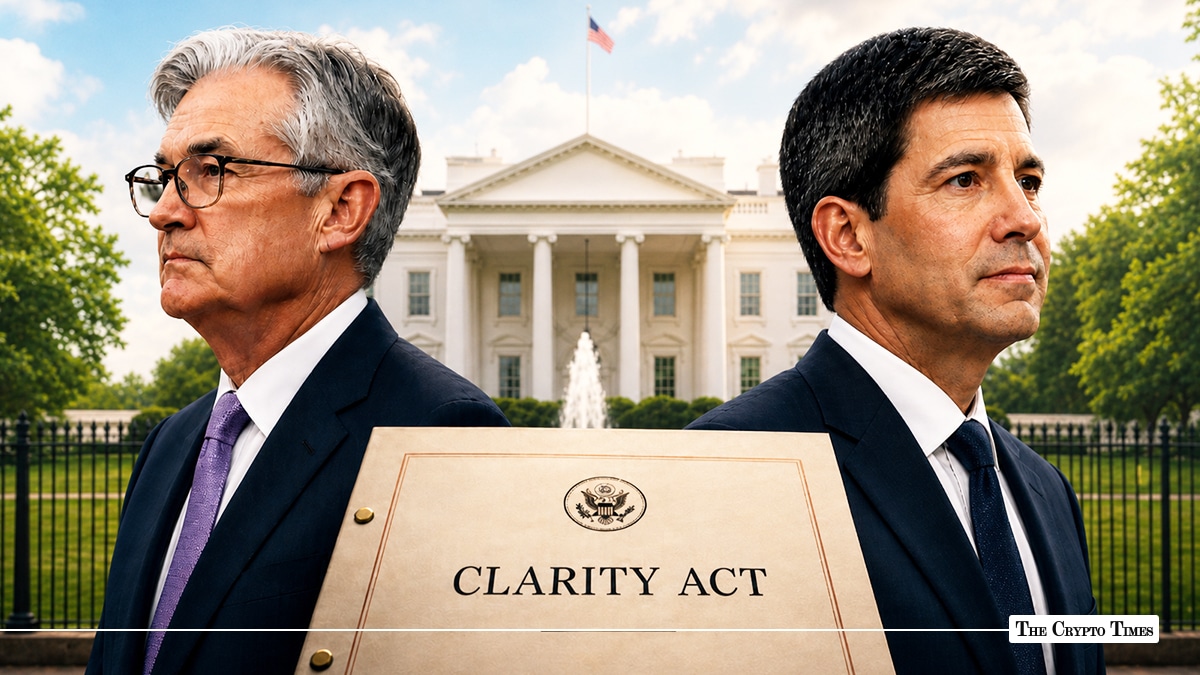
A major leadership shift at the Federal Reserve is underway, and it could mark one of the most constructive moments for U.S. crypto policy in years.
On April 29, the Senate Banking Committee advanced the U.S. President Donald Trump’s nominee Kevin Warsh to replace Jerome Powell as Fed Chair in a 13-11 party-line vote. This was the first fully partisan committee vote on a Fed Chair nominee in the Senate Banking’s history, according to Senator Elizabeth Warren. Powell’s term as Chair ends on May 15, after which he has stated plans to remain on the Board of Governors (a rare move intended to safeguard the Fed’s independence). The full Senate is expected to vote on Warsh’s confirmation the week of May 11, meaning he could be confirmed before Powell’s term expires. Senator John Fetterman (D-PA) has indicated he plans to vote in favor, potentially making it the sole bipartisan crossover.
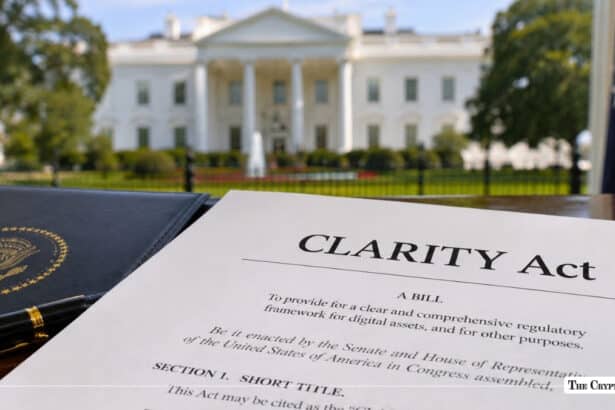
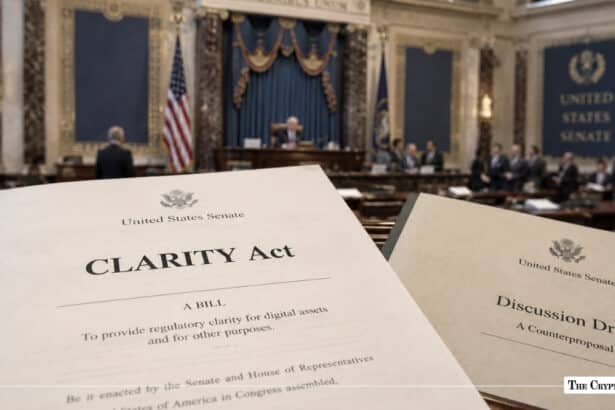
At the same time, the long-stalled CLARITY Act (Digital Asset Market Clarity Act) has seen renewed momentum, with a breakthrough compromise on stablecoin yield announced on May 1 and Senate leaders now targeting a committee markup in May.
While social media has framed this as “Powell OUT, Warsh IN, CLARITY will PASS,” the reality is more nuanced — but the directional shift is significant for crypto. Here’s exactly what’s confirmed, why it matters for Bitcoin and altcoins, and how it could directly impact your portfolio.
The Fed Leadership Change: From Powell to Warsh
Jerome Powell has been a steady but cautious voice at the Fed, prioritizing inflation control over aggressive rate cuts. Kevin Warsh, a former Fed Governor (2006–2011) and Trump ally, brings a different philosophy; though not the one many crypto investors initially expected.
When Trump nominated Warsh in January, crypto markets fell sharply, with Bitcoin dropping approximately 14% cumulatively. Warsh is historically a monetary hawk, adopting a near-term dovish stance only recently. He criticized the Fed’s low-rate stance during the 2021–2022 inflation surge as a “fatal policy error” and has advocated for a more disciplined Fed with a smaller balance sheet.
However, what distinguishes Warsh from every previous Fed Chair nominee is his personal exposure to crypto. His 69-page financial disclosure filed with the Office of Government Ethics in April 2026 revealed over $100 million in crypto-related investments across more than 20 blockchain entities, including stakes in Bitwise Asset Management, dYdX, Compound, Solana, Polymarket, Polychain Capital, and Bitcoin Lightning startup Flashnet. His combined household assets with spouse Jane Lauder (an Estée Lauder executive) total at least $192 million, making him the wealthiest Fed Chair nominee in modern history. He has signed an ethics agreement requiring divestiture of most private holdings upon confirmation.
He has publicly described Bitcoin as “a sustainable store of value, like gold” in a 2018 op-ed and that “if you’re under 40, Bitcoin is your new gold.” During his April 21 confirmation hearing, he stated that digital assets are “already part of the fabric of our financial services industry” and argued for clear rules rather than enforcement actions. He also called Bitcoin “an important asset that can help inform policymakers when they are doing things right and when they are doing things wrong.”
Warsh’s arrival does not guarantee easier monetary policy; his record suggests the opposite. But it signals a potential shift toward easier monetary policy and greater institutional tolerance for risk assets, and a more informed, less hostile regulatory posture from the central bank.
The committee vote was preceded by weeks of drama. Powell’s decision to stay on the Board followed a DOJ criminal investigation into the Fed, ostensibly focused on renovation cost overruns at the central bank’s Washington headquarters. Powell accused the administration of targeting him over rate decisions. Senator Thom Tillis (R-NC) blocked Warsh’s nomination until the DOJ dropped its probe, calling it “frivolous.” The investigation was ultimately abandoned, clearing the path for the April 29 vote.
CLARITY Act: From Stalled to “May Push”
The CLARITY Act passed the House in July 2025 with strong bipartisan support (294-134). In the Senate, progress has been slower due to debates over stablecoin yield rules and DeFi provisions. However, recent developments have cleared key hurdles:
On May 1, Coinbase Chief Policy Officer Faryar Shirzad announced that a bipartisan compromise on stablecoin yield had been finalized by Senators Tillis and Angela Alsobrooks (D-MD). The deal bans passive yield on idle stablecoin balances — rewards offered “in a manner that is economically or functionally equivalent to the payment of interest or yield on an interest-bearing bank deposit” — but preserves activity-based rewards tied to payments, transfers, and platform usage. Coinbase CEO Brian Armstrong responded: “Mark it up.”
The compromise was preceded by Coinbase CEO Brian Armstrong’s reversal of his earlier opposition. The company withdrew support in January over proposed yield restrictions, then backed the bill again in April as negotiations progressed. The White House’s own Council of Economic Advisers has since published an academic review finding no evidence that stablecoin rewards cause deposit flight from traditional banks — undermining the banking lobby’s core argument.
Senators Cynthia Lummis and others have publicly stated that a Senate Banking Committee markup is now targeted for May. Galaxy Digital’s head of firmwide research Alex Thorn predicted the yield text release “suggests that Senate Banking will schedule markup imminently, as soon as the week of May 11.” Senator Bernie Moreno has separately said he expects the bill to “get done” by the end of May. However, Thorn warned he expects “the banks to increase their opposition efforts.”
The bill would establish a regulatory framework dividing digital asset oversight between the CFTC and SEC, granting the CFTC primary jurisdiction over digital commodities white the SEC retains authority over digital securities. It would also provide regulatory certainty for DeFi and stablecoins, and reduce enforcement uncertainty.
This is the same bill we have tracked extensively at The Crypto Times — from the initial House passage to Coinbase’s dramatic U-turn and the stablecoin compromise.
Why This Double Catalyst Matters for Crypto and Your Portfolio
1. Monetary Policy Tailwind
Warsh is not expected to be more dovish on rates than Powell; his record suggests the opposite. He has historically argued for tighter monetary policy and a smaller Fed balance sheet.
However, political pressure from President Trump, who told CNBC he “would” be disappointed if Warsh does not cut rates in June, creates a push-pull dynamic. Lower interest rates (or even just the expectation of them) typically drive capital into risk assets like Bitcoin and altcoins. Bitcoin has historically corrected for several months after each new Fed Chair takes office before rallying, according to analyst CRYPTOWZRD, who noted: “Every time a new FED Chair takes over, BTC has corrected for a few months before the real fun began.”
2. Regulatory Clarity = Institutional Inflows
The CLARITY Act would remove much of the legal gray area that has held back banks, ETFs, and traditional finance from deeper crypto involvement. Clear rules reduce compliance costs and litigation risk, making it easier for institutions to allocate capital.
A Warsh-led Fed that views crypto as “already part of the fabric” of finance, combined with market structure legislation, could unlock allocations from pension funds, endowments, and insurance portfolios that have remained on the sidelines pending regulatory clarity.
3. Portfolio Implications
- Bitcoin: Strongest beneficiary. As a store of value and inflation hedge, BTC could see renewed institutional buying if rates ease and regulation improves. Warsh calling BTC “new gold for people under 40” and his own investment in Bitcoin Lightning infrastructure signals a deeper understanding of the asset’s long-term trajectory. However, the historical pattern of post-Chair-transition corrections suggests short-term caution is warranted.
- Altcoins and DeFi: Projects with real utility (especially those tied to stablecoins or compliant infrastructure) stand to gain the most from market-structure clarity. Warsh’s personal portfolio included exposure to DeFi protocols (dYdX, Compound), Layer 1 networks (Solana), and prediction markets (Polymarket) — though he will be required to divest these holdings upon confirmation.
- Risk Management: Short-term volatility is likely around confirmation votes and markup dates. Long-term, this setup favors allocation to high-conviction assets rather than pure speculation. Galaxy Digital estimates the odds of the CLARITY Act becoming law in 2026 at “roughly 50-50, and possibly lower,” and Polymarket prices a 2026 signing at approximately 47%, down from 82% in February. Currently, the bill is not a certainty.
What to Watch Next
- Full Senate confirmation of Kevin Warsh: Expected in the week of May 11, before Powell’s May 15 term expiry.
- Senate Banking Committee markup of the CLARITY Act: Galaxy Digital’s Head of Research Alex Thorn says “as soon as the week of May 11.” Two remaining hurdles: the law enforcement provision and Senator Tillis’ ethics clause on White House crypto dealings.
- Any signals from Warsh on rate policy in his first public appearances as Chair: Particularly whether he aligns with President Trump’s push for a June rate cut or maintains his historically hawkish stance.
Bottom Line for Investors
This is not guaranteed overnight passage or immediate rate cuts, but the direction of travel is clearly pro-clarity. For the first time in years, the Fed leadership and Congress appear aligned on reducing uncertainty in crypto.
If you hold crypto, this is a moment to review your portfolio allocation with fresh eyes. Focus on projects with strong fundamentals and regulatory readiness. The combination of a more crypto-invested Fed Chair who has pledged to divest but brings informed perspective and meaningful U.S. market-structure legislation could be the catalyst that takes crypto from niche asset to mainstream financial infrastructure.
The transition is just beginning — but the signals are unmistakable. The risks, however, are equally real: Warsh may prove tighter on monetary policy than markets hope, the CLARITY Act still faces sequential legislative hurdles, and the banking lobby has not yet given up the fight.