Updated [6 May, 2026] to include comments from Dr. Sharmila S of Liminal Custody.
For an industry built on the premise that mathematics is more trustworthy than institutions, the cryptocurrency billionaire class has a remarkable habit of avoiding the one mathematical question that could undo it.
Q-Day—the theoretical future moment when a sufficiently capable quantum computer can derive private keys from exposed public keys—is no longer a fringe concern. NIST finalized its first three post-quantum cryptography standards in August 2024. The U.S. federal government has mandated a complete phase-out of Elliptic Curve Digital Signature Algorithm (ECDSA) cryptography by 2035; this is what currently secures the network. Federal agencies faced an April 2026 deadline to submit post-quantum cryptography transition plans under National Security Memorandum 10. BlackRock has flagged quantum risk in its Bitcoin ETF filings. Coinbase analyst David Duong has estimated that approximately 6.51 million Bitcoin (BTC), which is about 32.7% of the circulating supply, sit in addresses with exposed public keys.
In a statement provided to The Crypto Times, Coinbase confirmed it has launched a comprehensive internal effort to prepare its infrastructure for a post-quantum world. “While customer assets are safe today and in the near term, the industry should treat quantum computing as an important long-term consideration,” a Coinbase spokesperson said. “We want to ensure that both Coinbase and the industry as a whole are protecting customers long before quantum becomes a practical concern.”
The statement is part of a meaningful shift over the last several months. Where the public record around Q-Day was, until recently, dominated by silence from the industry’s largest holders, that silence is now giving way to a wider — and sharply divided — public conversation. The conversation breaks the industry’s billionaires into three distinct camps, and the size of each is changing fast.
The Scale of the Vulnerability
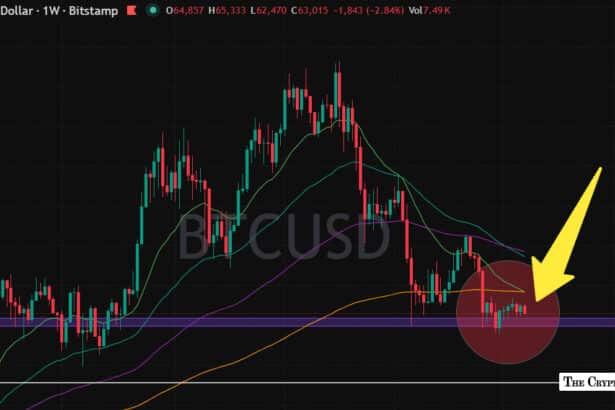
To understand what’s at stake, the numbers need to be set out plainly. Multiple analyses converge on a range: between 4.49 million and 6.65 million BTC sit in addresses where public keys have already been exposed on-chain. At current prices, that translates to roughly $650 billion to $750 billion in theoretically quantum-vulnerable Bitcoin.
This pool includes three categories. First, the early Pay-to-Public-Key (P2PK) outputs from 2009 to 2011 published public keys directly on-chain. Second, the long-dormant Satoshi-era coins themselves—between 600,000 and 1.1 million BTC by various estimates—fall squarely into the most exposed category. Third, modern Bitcoin is held in reused addresses, where the public key becomes visible the moment a holder makes their first outbound transaction.
The threat isn’t symmetric. A holder using a fresh, modern address that has never been spent from is significantly safer than someone whose public key has been broadcast to the network. But “significantly safer” is not “safe.” Every spending event creates a window of exposure between transaction broadcast and block confirmation, during which a sufficiently advanced quantum adversary could theoretically race to derive the private key before the transaction settles.
This is the asymmetry that makes Q-Day a holdings-strategy problem, not just a protocol problem.
Camp One: The Skeptics
The most prominent public position belongs to those who have decided, in effect, that Q-Day is not their problem yet—but that the eventual outcome may not be as catastrophic as the most alarmed voices suggest.
Adam Back, the cryptographer whose Hashcash design directly inspired Bitcoin’s proof-of-work mechanism, has argued that a cryptographically relevant quantum computer capable of breaking Bitcoin’s elliptic curve cryptography may still be decades away. Back has publicly opposed the more aggressive BIP-361 proposal that would force a migration of legacy coins or freeze them entirely. His preferred path is opt-in upgrades, not mandatory deadlines.
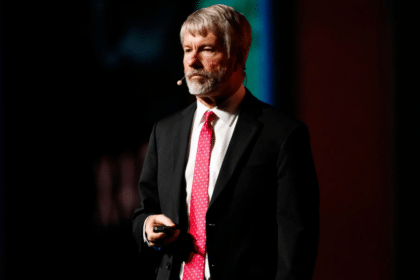
Michael Saylor, whose Strategy holds over 818,334 BTC, has been similarly measured but has framed the long arc as net positive. Saylor has called the threat “overblown” and likely more than a decade away, while arguing that “quantum computing won’t break Bitcoin—it will harden it. The network upgrades, active coins migrate, and lost coins stay frozen. Security goes up. Supply comes down.” Strategy remains fully committed to Bitcoin while formally supporting long-term security planning.
The skeptic camp’s position has logical coherence. Premature migrations carry their own technical risk. Forced freezes contradict Bitcoin’s immutability ethos. And if Q-Day really is fifteen years away rather than five, the cost of acting now may exceed the benefit. But the position also depends, structurally, on the timeline estimates being correct.
Camp Two: The Builders
A growing group has gone the opposite direction—and is putting capital, engineering effort, and increasingly, public commitment behind the assumption that Q-Day arrives sooner than the skeptics expect.
Brian Armstrong (Coinbase) moved the fastest in early 2026. Hours after a landmark quantum-risk paper was published, Armstrong announced he would “start spending time on this personally” and that the industry needs to “solve it sooner rather than later.” Coinbase subsequently formed an independent Quantum Advisory Board—including cryptographers Dan Boneh and Justin Drake, along with Eigen Labs’ Sreeram Kannan—and is reportedly planning quantum-proof custody services for institutional clients by late 2026.
The exchange’s statement to The Crypto Times confirms that this work has now matured into a structured operational program. “Quantum readiness really spans the full stack, from protocol-level changes like validator signatures and the evolution of core systems, to custodian-level responsibilities, including safe client asset migration and operational controls,” Coinbase told The Crypto Times. The exchange describes a multi-year readiness approach rather than a Q-Day-pegged migration. “We aren’t working back from a specific Q-Day, but are preparing early to give ourselves time to ensure systems, standards, and processes are in place well in advance.”
The shift in client conversations may be the most telling detail Coinbase shared. “Earlier conversations tended to focus on whether quantum was a valid concern, and are now more around timelines, migration paths, and how responsibility is divided between the various parts of the ecosystem,” the spokesperson said. “As a whole, we’re seeing a broader shift towards preparation and execution.”
Changpeng Zhao struck a calmer but similarly forward-looking tone. “No need to panic. Crypto will upgrade to Quantum-Resistant (Post-Quantum) Algorithms,” CZ stated publicly. He acknowledged the governance complexity that decentralization introduces—including the potential for contentious forks over which algorithms to adopt—and flagged the particular challenge facing self-custody users who will need to manually migrate their coins. He also raised the unresolved question of Satoshi’s dormant Bitcoin.
Vitalik Buterin has been planning for this scenario for years. In early 2026, he outlined Ethereum’s multi-year quantum roadmap: near-term improvements to zkEVM and gas efficiency for quantum-resistant signatures, a dedicated post-quantum research team, and a new coordination hub at pq.ethereum.org. The long-term goal, in Buterin’s framing, is full cryptographic safety on a 100-year horizon, with lattice-based or hash-based signatures eventually replacing current schemes entirely.
Charles Hoskinson, founder of Cardano and IOG, has gone further on the competitive positioning. IOG has published peer-reviewed research on post-quantum signature schemes, and Hoskinson has publicly argued that approximately 1.7 million BTC would remain vulnerable under Bitcoin’s currently proposed BIP-361 migration plan — a critique that doubles as a positioning of Cardano’s own architecture.
The custodian-side perspective adds a layer often missing from the protocol-led conversation. Dr. Sharmila S, Head of Research and Principal Scientist at Liminal Custody, told The Crypto Times that the firm views post-quantum readiness “not as a distant concern, but as a structural evolution in cryptographic security.”
Liminal’s approach centers on building crypto-agile systems — architectures where cryptographic primitives can be upgraded without disrupting the underlying infrastructure. “We are actively evaluating post-quantum cryptographic algorithms, including those emerging from global standardization efforts, and assessing how they can be integrated into wallet architectures and key management systems,” Dr. Sharmila said. The firm is parallelly strengthening key management, access control, and governance frameworks — components she emphasized “remain critical irrespective of the cryptographic layer.”
Her framing of the threat itself is sharper than the dominant industry narrative. “Quantum readiness is often misunderstood as a binary state: either you are ready or you are not. In reality, it is a gradual transition that will unfold over time as quantum capabilities evolve and standards stabilize,” she said.
The more pressing risk, in her view, is not a sudden cryptographic break. It is what cryptographers call “harvest now, decrypt later” — the practice of capturing encrypted data today for decryption once quantum capabilities mature. “This makes early preparedness particularly important for systems handling high-value or long-term assets,” Dr. Sharmila said. She also flagged the inverse risk of moving too soon: “Post-quantum cryptography is still evolving, and premature adoption without standardization can introduce new risks.”
Other prominent voices have added weight to the urgency. Haseeb Qureshi of Dragonfly Capital has called recent quantum-risk findings “serious” and argued that every blockchain now needs a concrete transition plan. Eli Ben-Sasson of Starknet has urged Bitcoin developers to accelerate BIP-360 adoption. Nic Carter of Castle Island Ventures has described Google’s paper on quantum threats as “very sobering.” On the builder side, teams at Quip Network and Starknet are already running hybrid testnets with post-quantum signatures in production environments.
The common thread across all these responses is a shared framing: act now while there is still time. Crypto-agility — the property Dr. Sharmila identified as central to Liminal’s design — has become the foundational concern that will determine which protocols and platforms survive Q-Day intact.
Camp Three: The Quiet Holders
The third camp is smaller than it was 12 months ago, but it remains substantial — and arguably more notable for who hasn’t spoken than for who has.
The Winklevoss twins, Justin Sun, Anthony Pompliano, Arthur Hayes — none of them have publicly disclosed personal Q-Day preparation strategies for their own holdings. Their companies have varying degrees of institutional exposure. Gemini, post-IPO, faces regulatory disclosure requirements that didn’t exist for it three years ago. But the personal positioning of these holders — what they themselves are doing with their own coins — remains absent from the public record.
The reasons are reasonable. Disclosing a wallet management strategy is a security risk in itself. Speaking publicly about personal hedges against a tail-risk event invites volatility into one’s own holdings. Acknowledging concern publicly may even contradict the long-term thesis that justifies their public commentary in the first place.
The closest signal from this camp comes through corporate filings, not personal statements. BlackRock’s flagging of quantum risk in its Bitcoin ETF documents is, in effect, the institutional version of a quiet hedge: it shifts liability onto the disclosure rather than onto the strategy. Whether the firms behind these disclosures have actually begun preparing custodied assets for migration—or are simply checking the regulatory box—is a question 2026 will continue to answer.
What’s Actually Being Built
The protocol-level response is, for its part, real and underway.
In February 2026, BIP-360 — the Bitcoin Improvement Proposal authored by Hunter Beast, Ethan Heilman, and Isabel Foxen Duke — was officially merged into the Bitcoin BIPs repository, entering the formal review process. The proposal introduces a new output type called Pay-to-Merkle-Root (P2MR), which preserves Taproot’s scripting capabilities while removing the key-path spend mechanism that exposes public keys on-chain. In March 2026, BTQ Technologies deployed the first working implementation of BIP-360 on the Bitcoin Quantum testnet v0.3.0.
A more aggressive companion proposal, BIP-361, has since taken the conversation further — and more contentiously. It would activate a phased migration: blocking new sends to legacy addresses three years after activation, then invalidating ECDSA and Schnorr signatures entirely on a fixed “flag day” five years out. Coins not migrated by then would be frozen.
Separately, StarkWare introduced Quantum Safe Bitcoin (QSB) on April 9, 2026, a hash-based signature scheme that allows quantum-resistant transactions today without any soft fork, at a current cost of $75 to $200 per transaction.
According to BIP-360 co-author Ethan Heilman, the full migration could take Bitcoin up to seven years to complete — a timeline that aligns closely with the multi-year readiness window Coinbase has described.
How Q-Day Preparations Are Influencing the Crypto Industry
The conversation has already shifted sentiment and priorities across the industry in ways that extend well beyond protocol development.
Market impact: Short-term uncertainty caused minor dips in BTC and ETH following high-profile quantum-risk research, but the narrative quickly reframed around Bitcoin as “anti-fragile” — a system that hardens through upgrades rather than breaking under them. Institutional players are beginning to interpret proactive quantum preparation as a maturity signal, with potential long-term confidence benefits that may outweigh near-term volatility.
Innovation acceleration: New projects focused on quantum-resistant ledgers and Layer 2 solutions are gaining real traction. Starknet’s existing hash-based signature architecture and Ripple’s XRP Ledger quantum roadmap represent working products, not just whitepapers. Advisory boards and dedicated foundation research teams — most notably Ethereum’s post-quantum group — are now becoming standard infrastructure at major protocols.
Community and governance: Debates over forks, the fate of Satoshi’s coins, and migration fairness have moved from niche cryptography forums to mainstream discourse. The Q-Day question is forcing a quality of coordination between exchanges, core developers, and individual users that the space has rarely attempted at scale.
Broader perception: Traditional finance is watching closely. Handled well, the industry’s quantum response could prove that decentralized systems can evolve faster and more transparently than legacy financial infrastructure. Mishandled, it risks reinforcing narratives about the space’s structural fragility. The early responses from Armstrong, Buterin, CZ, and others are, at minimum, building the credibility that a coherent industry response will require.
The Honest Conclusion
The honest answer to “how are crypto billionaires preparing for Q-Day” is no longer that nobody is talking about it. A meaningful group — Armstrong, Buterin, Hoskinson, CZ, Saylor, Coinbase as an institution, and custody operators like Liminal — has moved firmly into the conversation, with positions ranging from active engineering programs to publicly stated frameworks for how the eventual transition will unfold.
But the conversation is still uneven. Many of the largest individual and corporate Bitcoin holders have not publicly disclosed personal preparation strategies for their own holdings. The infrastructure is being built by a small group of cryptographers and protocol developers, often working with limited funding and against the inertia of a community whose largest stakeholders are economically incentivized to project confidence rather than concern. The migration timeline, even under optimistic assumptions, is measured in years.
A cryptographic transition at the scale of a global, decentralized financial network has never been attempted before. There is no precedent, no rehearsal, and no fallback. Whether Q-Day arrives in five years or fifteen, the migration window is the same: it has to start before the threat is operational, because once it is, there is no time left to migrate.
For the people holding the largest, most exposed positions in this market, the question is not whether protocol-level migration will eventually arrive. It is whether they have personally positioned themselves to be among the holders whose coins survive it.
That question, more than any other, is the one a growing — but still incomplete — public record is finally beginning to answer.
Also Read: Crypto Faces ‘Y2K-Scale’ Crisis, Says Ledger CTO Amid Quantum Push