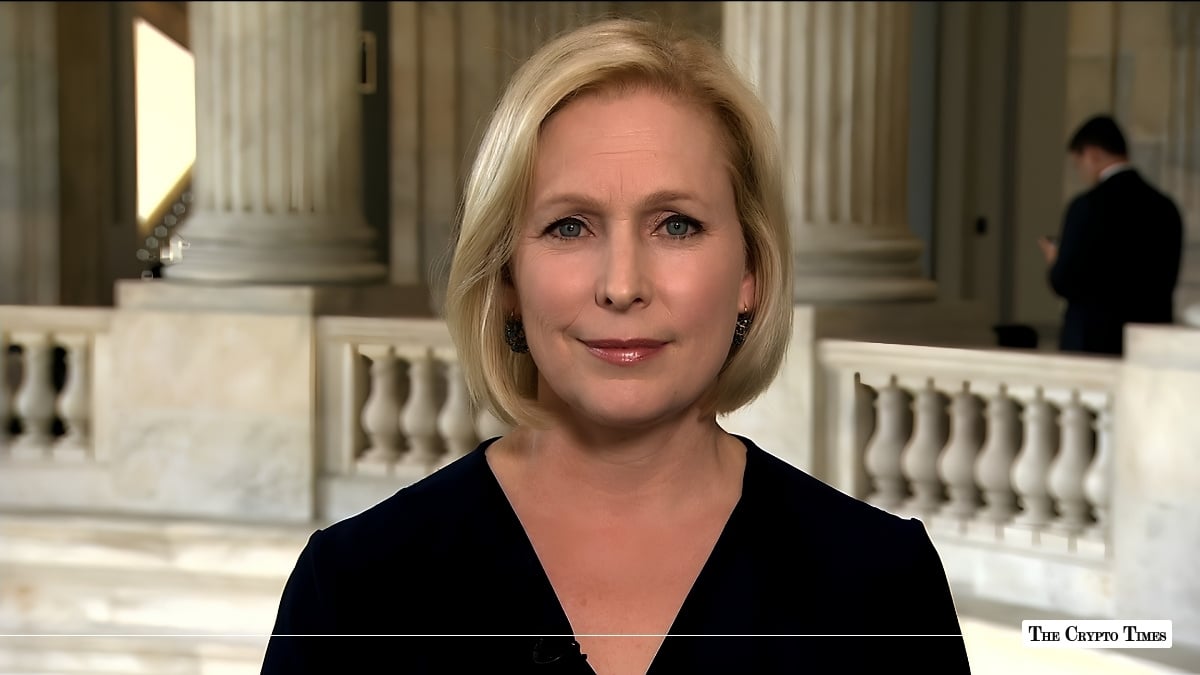
Theodore Gillibrand, the 22-year-old son of crypto-friendly U.S. Senator Kirsten Gillibrand, has raised $30 million to launch a regulated perpetual futures exchange, marking one of the latest bets on a derivatives market that is rapidly gaining traction in the United States.
According to a Fortune report, the startup, American Perpetuals Exchange Corporation (APEC), was valued at approximately $300 million, with venture capital firm Lux Capital leading the round. Lux Capital confirmed its participation.
APEC plans to seek approval from the Commodity Futures Trading Commission (CFTC) to offer perpetual futures tied to equities and stock indices, rather than cryptocurrencies, according to materials filed with the U.S. Securities and Exchange Commission.
“It is clear that the future of these markets is not in offshore and unregulated foreign entities but rather in a regulated and institutional American company,” Theodore Gillibrand said in a statement confirming the funding.
APEC targets regulated perpetual futures market
Perpetual futures, commonly known as “perps,” allow traders to speculate on an asset’s price without owning the underlying asset or dealing with contract expiration dates.
The products have traditionally been associated with offshore crypto exchanges, but recent regulatory developments have begun creating pathways for compliant offerings in the United States. Unlike many crypto-native platforms, APEC intends to focus initially on traditional financial markets by listing perpetual contracts linked to stocks and stock indices.
U.S. regulators open the door to perpetual futures
The fundraising comes as the CFTC has taken steps to accommodate perpetual futures within the existing U.S. regulatory framework. In May, prediction market platform Kalshi became the first U.S.-regulated venue to launch Bitcoin perpetual futures after receiving CFTC approval.
More recently, Kraken introduced perpetual futures trading for eligible U.S. customers through its CFTC-regulated subsidiary, Bitnomial, expanding access to the product on a domestic regulated platform.
CFTC Chair Mike Selig has also defended the agency’s approach, arguing that U.S. law does not require futures contracts to have expiration dates and rejecting criticism that regulated perpetual futures permit excessive leverage. He has also noted that the Commission sought industry input before approving the products and said funding-rate mechanisms help align perpetual prices with underlying spot markets.
CME lawsuit highlights growing regulatory divide
APEC’s launch plans also come amid a legal dispute over the future of perpetual futures in the United States. A day ago, CME Group announced it would sue the CFTC over the regulator’s approval of Bitcoin perpetual futures. CEO Terry Duffy argues that perpetual contracts should be regulated as swaps under the Dodd-Frank Act rather than as futures.
The lawsuit follows months of debate over how perpetual contracts fit within existing derivatives law and could influence how similar products are approved in the future.
Why perpetual futures are gaining momentum
Perpetual futures have become one of the most actively traded derivatives products in digital asset markets because they allow traders to maintain positions indefinitely without rolling contracts forward.
Interest in the products has expanded beyond crypto. During periods of heightened market volatility, including recent geopolitical events, traders increasingly turned to perpetual contracts that continued trading around the clock while traditional exchanges remained closed.
The emergence of regulated U.S. offerings, combined with new entrants such as APEC, reflects growing competition in a market that has historically been dominated by offshore platforms.
Also Read: Hyperliquid Fires Back at CME Over CFTC Perpetual Futures Lawsuit