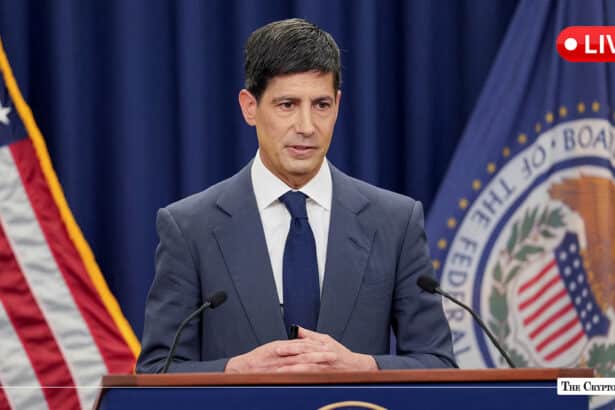
The Commodity Futures Trading Commission (CFTC) Chair Mike Selig has responded to what he described as growing misconceptions surrounding cryptocurrency perpetual futures, outlining why the regulator believes the products are consistent with US derivatives law and existing regulatory standards.
In a detailed X post on Monday, Selig addressed four recurring claims related to the legal status, leverage, approval process, and pricing mechanism of perpetual futures following the CFTC’s recent approval of regulated perpetual contracts.
Myth 1: Futures contracts must have an expiration date
Selig rejected the claim that perpetual futures conflict with the Commodity Exchange Act because they do not expire. According to the CFTC chair, neither the Commodity Exchange Act nor the agency’s regulations explicitly define the term “futures contract” or require a fixed expiration or delivery date.
Instead, he said the legal interpretation of futures contracts has been developed through court decisions and long-standing Commission interpretations, neither of which requires an expiration date.
Myth 2: CFTC-approved perpetuals allow 250x leverage
Selig also disputed claims that the recently approved perpetual Bitcoin futures contract permits leverage of up to 250x, as commonly seen on offshore crypto exchanges. He said extreme leverage is a feature of certain offshore trading platforms rather than the perpetual contract structure itself.
According to Selig, perpetual futures listed on CFTC-regulated venues are subject to the same leverage and margin requirements that apply to other regulated US futures contracts.
Myth 3: Industry had no opportunity to comment
Responding to criticism that the CFTC approved perpetual futures without industry consultation, Selig pointed to the Commission’s April 2025 Request for Comment covering both perpetual contracts and 24/7 trading.
He said the agency received more than 100 public comments from market participants, including numerous CFTC-regulated firms, before moving forward with approvals.
Myth 4: Funding rates create excessive costs
Another criticism addressed by Selig concerned the funding rate mechanism used by perpetual futures. He argued that funding payments are not uniquely expensive compared with traditional futures markets. According to Selig, when the costs of repeatedly rolling expiring futures contracts are considered, the annualized cost of maintaining a comparable position is broadly similar.
He also said funding rates serve an important market function by helping keep perpetual futures prices aligned with the underlying spot market, rather than encouraging manipulative trading behavior.
Perpetual futures expand into the US market
Selig’s comments come as CFTC-regulated perpetual futures begin entering the US market after years of dominating offshore cryptocurrency derivatives trading. Unlike traditional futures contracts, perpetual futures do not expire, allowing traders to maintain positions indefinitely, while periodic funding payments help keep contract prices close to the underlying asset’s market value.
Earlier today, Kraken launched perpetual futures trading for eligible US clients through Kraken Pro, making the contracts available under the regulatory framework of its recently acquired derivatives business, Bitnomial.
The launch expands Kraken’s domestic derivatives offering by adding perpetual futures alongside spot, margin, and traditional futures trading within a single account. It also marks one of the first opportunities for eligible US traders to access perpetual futures through a CFTC-regulated venue, a market that has historically been dominated by offshore exchanges.
Recent launches by regulated exchanges have brought the product under the CFTC’s oversight, marking a shift from the offshore venues where perpetual futures have historically generated the majority of crypto derivatives trading volume.
Also Read: FBI Explains How a Fake Crypto Investment Ends With a Cash Pickup