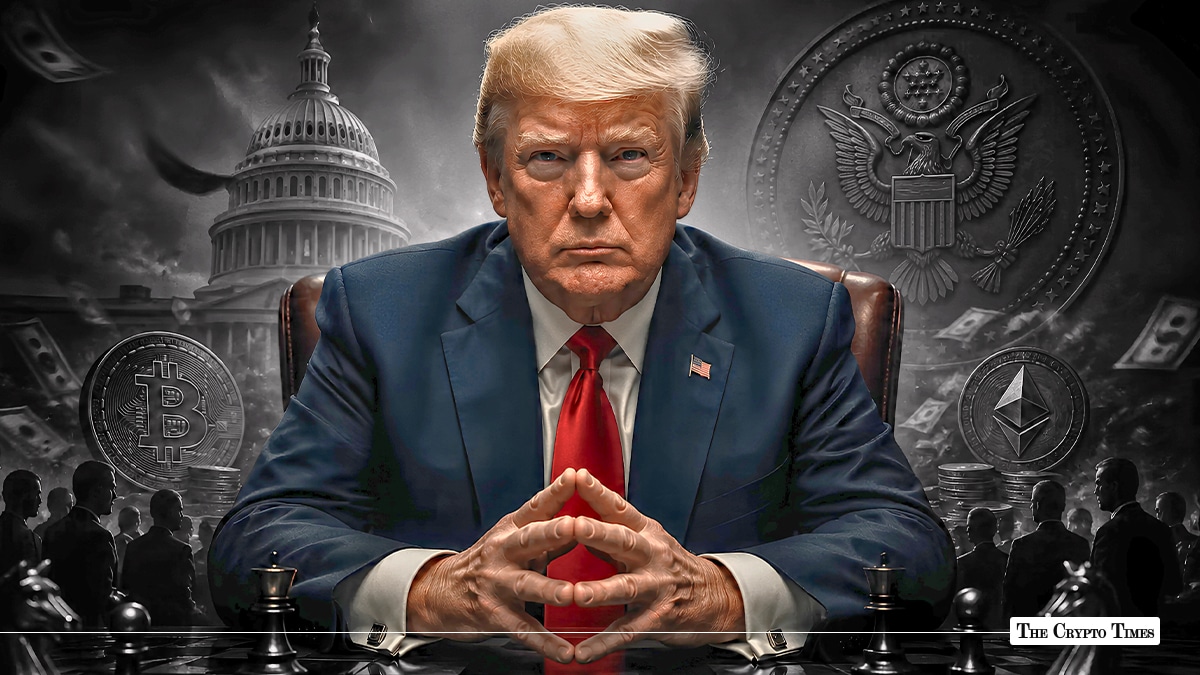
There is a version of the past 18 months that reads as an unambiguous triumph for crypto. In January 2025, the United States was the world’s most litigious major jurisdiction for digital assets — defined by subpoenas, ambiguous jurisdiction, and an exodus of builders offshore. By the summer of 2026, it has a stablecoin law on the books, a securities regulator that no longer treats most tokens as securities, a commodities regulator authorising perpetual futures, a national Bitcoin reserve, and a president who calls digital assets strategic infrastructure.
There is another version, visible only in the last few weeks, in which the machine has stopped moving. The GENIUS Act’s rulemaking deadline passed on July 18 with not one final rule issued. The CLARITY Act — the market-structure bill the industry has pursued for years — is stalled in the Senate, its lead Democratic supporter describing the latest Republican offer in unprintable terms. Prediction markets put its odds of becoming law this year at roughly one in three.
Both versions are true, and they are connected by something larger than any single dispute: the steady, and now nearly complete, concentration of crypto regulatory power in the hands of one man — who also happens to be the industry’s largest single financial beneficiary. This is how that happened, and why it has become the industry’s biggest obstacle.
The 72 hour rewrite
The pivot began immediately. On January 23, 2025, the administration issued an executive order titled “Strengthening American Leadership in Digital Financial Technology,” rescinding the prior framework and replacing it with an industry wish list: protection for self-custody, mining and software development; a commitment to promote private dollar-backed stablecoins over a state-issued digital dollar; an explicit prohibition on a central bank digital currency; and a directive guaranteeing banking access for lawful crypto firms. It created a President’s Working Group on Digital Asset Markets, initially chaired by venture capitalist David Sacks; by mid-2026, White House Crypto Council chief Patrick Witt has become the administration’s most visible operational voice on digital-asset legislation.
A second order in March 2025 established the Strategic Bitcoin Reserve, instructing the government to retain rather than auction seized Bitcoin — including the roughly 100,000 BTC recovered from the 2016 Bitfinex hack. An asset the government once treated as contraband to be liquidated became a sovereign reserve holding. Alongside the policy came the culture: Trump pardoned Silk Road founder Ross Ulbricht, an olive branch to crypto’s libertarian origins, and the first of several clemency grants that would grow far more contentious.
Personnel is policy: The SEC’s reversal
No agency changed more than the Securities and Exchange Commission (SEC). Under the prior administration it had pursued “regulation by enforcement,” setting the boundaries of crypto law through litigation against Coinbase, Kraken, and Gemini. The Trump administration dismantled that doctrine methodically: a crypto task force under Commissioner Hester Peirce, Paul Atkins confirmed as chairman, and the Coinbase case dropped in early 2025. The transparency reckoning followed, Coinbase’s FOIA litigation exposed that nearly a year of former Chair Gary Gensler’s text messages had been destroyed through avoidable IT failures during the FTX collapse and the agency’s most aggressive enforcement period. The SEC settled that suit this week, closing the file on an era.
In its place, Atkins launched “Project Crypto,” built on the argument that the previous Commission had misapplied the Howey test by treating tokens themselves as securities. A formal token taxonomy from the Division of Corporation Finance followed, sorting digital assets so that network tokens like Bitcoin and Ethereum, collectibles like NFTs and memecoins, and utility tokens sit outside securities law, while tokenised stocks and Treasuries remain regulated as securities. It was paired with a tailored offering regime, an innovation exemption for early-stage projects, and the May 2026 rescission of the SEC’s five-decade-old “no admit, no deny” settlement policy.
This was not the abolition of enforcement — Atkins has been explicit that fraud remains fraud. The change is jurisdictional, not moral: the agency stopped asserting that the technology itself was the violation.
The CFTC pivot, and its capacity problem
If the SEC’s story is retreat, the Commodity Futures Trading Commission’s (CFTC) is expansion, and whether it can survive its own success. Under Acting Chairman Michael Selig, the CFTC announced in January 2026 that Project Crypto would proceed as a joint SEC-CFTC initiative, an unprecedented alignment meant to end a decade-long turf war. It advanced guidance on leveraged spot retail transactions, sought comment on 24/7 derivatives trading, and coordinated with the SEC to bring perpetual futures onshore, a product that had lived exclusively on unregulated offshore venues.
But the agency now faces a structural problem the CLARITY Act would make far worse. It operates with a single sitting commissioner and has requested a $410 million budget for fiscal 2027 that must survive appropriations. At a House Agriculture hearing this month, former CFTC lawyer Carl Kennedy warned it is likely too short-staffed to police the booming prediction-market sector, let alone absorb oversight of the entire digital-commodity market. The strain is already visible: the CFTC has been forced to invoke emergency powers in a standoff with Michigan’s courts over Kalshi — precisely the federal-state conflict CLARITY is meant to settle.
The Supreme Court hands him the keys
If the first three chapters describe an administration persuading and appointing its way to a friendlier posture, the next is categorically different: the Supreme Court simply handing the president control of the machinery.
On June 29, 2026, in Trump v. Slaughter, the Court ruled 6-3 that the president may remove commissioners of independent multimember agencies at will — overruling Humphrey’s Executor v. United States, the 91-year-old precedent that had shielded agencies like the FTC, SEC and CFTC since 1935. The case arose after Trump fired two Democratic FTC commissioners without cause. Chief Justice John Roberts held that such agencies exercise executive power and must answer to the president: “The President may remove his subordinates at will.” Justice Sonia Sotomayor warned in dissent that the ruling handed the president “a power unknown even to the English Crown.”
The opinion never names the SEC or CFTC. It did not need to. As The Crypto Times reported, the same reasoning applies to any multimember agency exercising executive power — squarely including the two bodies that decide whether a token is a security and how aggressively to enforce. The CFTC’s removal-protection statute uses nearly identical language; the SEC’s staggered terms rested on the same assumed independence Slaughter eliminated. In practice, the president can now remove SEC and CFTC commissioners largely at will, and the current composition already reflects it: three Republican SEC commissioners and no Democrats, and a lone Republican CFTC acting chair. The same day, in Trump v. Cook, the Court declined 5-4 to extend that power to the Federal Reserve, leaving the central bank institutionally insulated in a way the market regulators no longer are.
The timing could hardly be sharper. Slaughter landed as the CLARITY Act headed toward a vote that would hand the SEC and CFTC sweeping new authority, and as Democrats sought assurances the administration would honour the norm of appointing minority-party commissioners as a check. Slaughter gutted that safeguard: even if Trump appointed a Democratic commissioner tomorrow, he could remove that commissioner the day after. It is the single fact that makes every other chapter different in kind, the same agencies now expected to police the president’s crypto holdings under CLARITY answer, as a matter of doctrine, to the president himself.
The quiet retreat at Justice
The least examined pillar sits at the Department of Justice, and it has become explosive. Shortly after his confirmation as deputy attorney general, Todd Blanche issued a memo dismantling the National Cryptocurrency Enforcement Team and instructing prosecutors to stop pursuing “regulation by prosecution,” on the premise that the department “is not a digital assets regulator.” For the industry it was a landmark relief, doing administratively much of what the Blockchain Regulatory Certainty Act seeks in statute — a position supported even by Democratic Senator Ron Wyden, who has defended the BRCA as codifying existing federal policy.
For critics, it is the first link in a chain. At Blanche’s attorney general confirmation hearing this month, Senator Dick Durbin catalogued a sequence: the memo; Blanche’s own reported holdings of at least $159,000 in crypto at the time, later divested to family members; the president’s $1.4 billion in crypto income; and the pardon of Binance founder Changpeng Zhao. “Every smarmy suspect deal in this administration has cryptocurrency behind the curtain,” Durbin said. Blanche did not respond, and no finding of wrongdoing has been made against him. That sequence matters now for a reason nobody anticipated in 2025: the Justice Department has become the specific reason the CLARITY Act is stuck — and after Slaughter, it is no longer the only enforcement body whose independence is in question.
One law passed, one law stranded
The GENIUS Act was signed on July 18, 2025 — the first standalone federal crypto statute, requiring payment stablecoins to be fully backed by cash or short-term Treasuries, with disclosure, AML, and insolvency protections. Its logic was to export private dollar-backed stablecoins rather than compete with foreign CBDCs, and it has largely worked: the stablecoin market now sits near $310 billion, and jurisdictions from South Korea onward are racing to legislate around it.
Which makes the next fact remarkable. On July 18, 2026, the law’s first anniversary and its deadline for implementing rules, the six responsible agencies had issued around ten proposed rules and finalised none. The Federal Reserve never published a standalone proposal. The deadline carries no enforcement mechanism, but the January 2027 effective date is immovable — leaving issuers to comply with rules that exist only in draft.
The CLARITY Act is stuck a step earlier. It passed the House in 2025 and cleared Senate Banking 15-9 in May 2026 with two Democratic votes, then stopped. Its consumer case is genuine and bipartisan: Senator Cynthia Lummis has spent the past week invoking Terra, Celsius and Voyager to argue its bankruptcy protections would keep customer crypto out of failed platforms’ estates. But it needs 60 votes — at least seven Democrats — and has none committed. Prediction markets have swung from above 80% in February to roughly 35%.
The $1.4 billion disclosure
The reason for that collapse is a set of numbers disclosed on June 30, 2026, when the Office of Government Ethics released the president’s 2025 financial disclosure: roughly $1.4 billion in crypto-linked revenue, more than double his prior-year income and, by several accounts, the majority of it. The bulk came from brand and memecoin royalties tied to the $TRUMP token (around $635 million) and from World Liberty Financial token sales (around $527 million), with the remainder from the USD1 stablecoin business and equity holdings. The disclosure also listed Bitcoin and Ethereum positions above $50 million each and retained WLFI tokens above $50 million.
Senator Elizabeth Warren’s subsequent letter detailed the structure: Trump family members holding a 30% stake in DT Marks Defi LLC, tied to Coinbase accounts worth over $100 million, which alone generated over $590 million in 2025; unnamed third parties owning 61.75% of two key holding companies; and a deal in which affiliates of UAE national security adviser Sheikh Tahnoon bin Zayed Al Nahyan bought a 49% stake in World Liberty Financial, generating a $263 million windfall.
Two things must be said plainly. First: these figures come from a legally required disclosure, and no finding of wrongdoing has been established; the White House maintains there are no conflicts of interest. Second: the structural overlap is not seriously disputed. The executive order promoting stablecoins, the GENIUS Act’s legitimisation of private issuers, and the SEC’s taxonomy reclassifying tokens as non-securities each created conditions in which USD1 and WLFI could operate — and each was advanced by the administration whose principal holds those interests. After Slaughter, the regulators who might check that overlap serve at his discretion. Supporters counter that these were the industry’s priorities long before Trump held any position, that they draw Democratic support, and that a president may hold assets in a legal industry. Critics say the sequencing is irrelevant to the appearance. Both arguments have force — which is why the dispute has proven unresolvable by argument alone.
Clemency, and its limits
The pardon power has been the administration’s most personal instrument of crypto policy: Ulbricht, BitMEX co-founders Arthur Hayes and Ben Delo, and, most consequentially, Binance founder Changpeng Zhao, pardoned after a $2 billion Abu Dhabi-backed investment into Binance was settled using World Liberty Financial’s USD1 stablecoin.
There is a real legal distinction: Zhao pleaded to a compliance failure, not to defrauding customers. But the pattern prompted an extraordinary response — this month the Senate agreed by unanimous consent, no senator objecting, to a resolution declaring that FTX founder Sam Bankman-Fried should under no circumstances receive clemency. It was authored by Lummis and Gallego, the two lawmakers leading the CLARITY push, crypto’s own champions pre-emptively closing a door, because they understood how much damage another crypto pardon would inflict on their bill.
The $2.3 billion asymmetry
For all the institutional achievement, the retail ledger reads very differently — and the memecoin category the SEC’s taxonomy freed from securities law is where the gap is widest. The MELANIA token, launched in January 2025, reached an all-time high of $11.65 and a market cap above $242 million. On-chain analysis by Bubblemaps later found roughly 92% of supply sat in team-linked wallets, and that insiders moved around 50 million tokens, some $30 million, from a nominal community reserve into exchange wallets. The price fell more than 96%.
The pattern is not confined to one token: The Crypto Times analysis has documented that the Trump family’s ventures generated roughly $2.3 billion while investors lost a comparable sum. Promoters captured value through royalties and early allocations; secondary-market buyers absorbed the volatility. The taxonomy that freed genuine utility tokens also freed celebrity tokens with 92% insider concentration. Both flow from the same policy choice.
When the conflict became the obstacle
Which brings the story to this week. The CLARITY Act’s remaining fight is not about SEC-CFTC jurisdiction or stablecoin yield. It is about ethics enforcement, and it has narrowed to a single question Slaughter makes far harder. Republicans released text on July 22 barring a sitting president, vice president, members of Congress and judges from issuing or sponsoring digital assets for compensation while in office, which Lummis called the most robust ethics standard ever imposed on the presidency, and which the White House urged Democrats to accept.
Democrats rejected it over one clause: enforcement would fall solely to the Justice Department. Having watched that department dismantle its crypto unit under an acting attorney general who himself held crypto, they refused. Senator Angela Alsobrooks summarised the objection in four words: “Look at this Department of Justice.” Senator Ruben Gallego, the most essential Democratic vote, called the offer “not a serious effort” and is now working with Republican Thom Tillis on a counteroffer built around state attorneys general.
Slaughter deepens the objection beyond DOJ. Even assigning enforcement to the SEC or CFTC would hit the same wall: their commissioners now serve at the president’s pleasure. There is no independent regulator left to hand the job to. Every enforcement path Congress can write now terminates at the desk of the man the rules are meant to constrain. Senate Majority Leader John Thune has conceded he does not expect passage before the August recess. Note the shape of it: the industry’s decade-long campaign for market-structure legislation has been halted not by anti-crypto sentiment or by Elizabeth Warren, but by the question of who may police the president’s crypto holdings, at the exact moment the Supreme Court made that question nearly unanswerable within the executive branch.
The world is not waiting
The cost is measured most clearly abroad. Japan has advanced legislation reclassifying crypto as financial instruments, opening a path to spot Bitcoin ETFs and cutting its crypto tax from a rate reaching 55% to a flat 20%. Europe’s MiCA regime is fully operational, its licensed roster at 294 firms, with conventional banks — Commerzbank, BBVA, Standard Chartered — taking licences in volume. South Korea has committed to fortnightly sessions to pass a won-stablecoin law by year-end. Even Russia and Brazil have moved. India remains the outlier, holding a 30% tax and refusing legal recognition.
Lummis has made the argument bluntly: every month without clear rules is a month another country writes them instead. That was the case for American leadership; it is now, increasingly, a description of American delay. Meanwhile the institutional adoption the administration unlocked continues regardless — tokenised Treasuries scaling into the billions, JPMorgan filing for tokenised funds on Ethereum, the plumbing being laid whether or not Congress finishes the rulebook.
The ledger
Four conclusions survive scrutiny from both directions.
The transformation was real and largely delivered what the industry asked for. Self-custody protections, an end to debanking, the CBDC prohibition, a workable token taxonomy, onshore perpetual futures, a stablecoin statute, and the end of regulation-by-enforcement are not cosmetic. Whatever one thinks of the motives, the deliverables exist.
The president’s power over crypto’s regulators is no longer just political — it is constitutional. Appointments and executive orders are reversible by the next administration. Trump v. Slaughter is different in kind: a ruling that at-will removal of SEC and CFTC commissioners is the president’s prerogative, for this president and every one after. The industry did not just get a friendlier White House; it got a permanent structural change in who controls its regulators.
The conflict of interest is structural, not rhetorical. A president who discloses $1.4 billion from an industry whose framework he is authoring, and whose regulators he can now remove at will, occupies a position with no modern precedent. That it is legal, disclosed and unaccompanied by any finding of wrongdoing does not dissolve the problem; it defines it. The proof is in the arithmetic: the bill cannot pass because too many senators will not hand enforcement of presidential ethics to agencies that, after Slaughter, answer only to the president.
The unfinished business is now the story. Rules that exist only as proposals are not rules; a bill that cannot reach a cloture vote is not a framework. GENIUS issuers face a January 2027 deadline with no final text; CLARITY faces a recess that may push it past the midterms and, by Lummis’s own warning, toward the end of the decade.
The administration set out to make the United States the crypto capital of the world, and moved faster toward that goal than any government in history — culminating, almost accidentally, in a Supreme Court ruling that handed it more direct control over crypto’s regulators than any administration has held since those agencies were created. It also proved something the industry had not reckoned with: that a champion with both the power to write the rules and a stake in the outcome is unstoppable right up until the moment Congress has to decide who is allowed to watch him. That moment arrived this month.