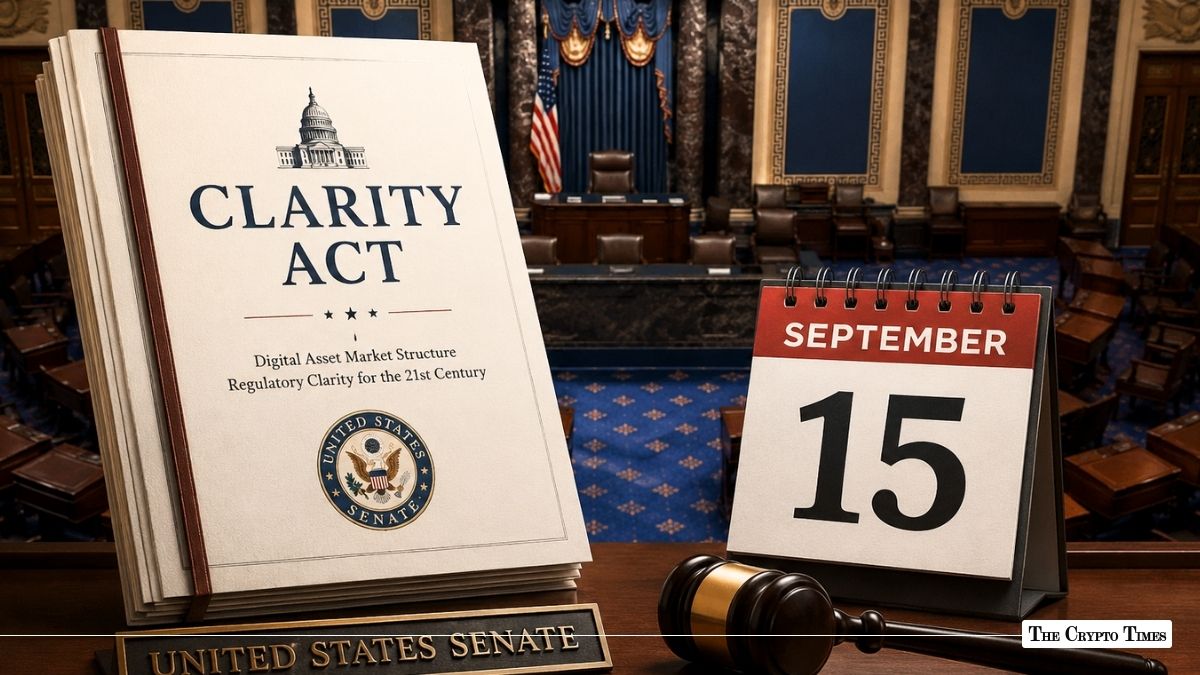
The CLARITY Act is heading toward a crucial Senate test on September 15 as lawmakers return to Washington following weeks of negotiations over the crypto market structure bill.
However, the upcoming vote will not determine whether the Senate finally passes the legislation.
Senate Majority Leader John Thune filed cloture on the motion to proceed to H.R. 3633, the Digital Asset Market Clarity Act, before lawmakers left for the August recess. Under the official Senate schedule, the cloture motion will ripen at 2:15 p.m. ET on September 15.
The procedural distinction is important because senators will first decide whether there is enough support to formally take up CLARITY before moving toward debate, amendments and an eventual vote on the legislation itself.
The September date has already drawn renewed attention from regulators. SEC Chair Paul Atkins has backed congressional action on the legislation, saying in an official SEC statement that legislation remains necessary for durable crypto rules and that the agency would continue supporting efforts to deliver CLARITY to President Donald Trump’s desk.
Atkins has since expressed optimism over the September 15 Senate vote, but the bill must first overcome a more immediate problem: getting 60 senators to allow the Senate to move forward with consideration.
How Many Votes Does the CLARITY Act Need?
Under Senate Rule XXII, cloture on legislation requires support from three-fifths of senators duly chosen and sworn. With all 100 seats filled, that means 60 votes are needed to invoke cloture on the motion before the Senate.
Republicans currently control 53 seats, while Democrats hold 45 and independents hold two. Senators Bernie Sanders and Angus King, the two independents, caucus with Democrats, according to the Senate’s official party lineup.
If all 53 Republicans support the motion, Thune would therefore need at least seven Democrats or independents to reach the 60-vote threshold.
That is the easiest possible calculation for Republican leadership. The number required from the other side could increase if senators within the Republican conference decide not to support cloture.
Stablecoin rewards have been one of the issues complicating the Republican vote count. Senators James Lankford and Mike Rounds were among those who raised concerns over stablecoin yield provisions, particularly over whether rewards could encourage customers to move deposits away from traditional banks.
Rounds, however, indicated that he was prepared to get onto the legislation while continuing to seek changes, showing why objections to the current text do not necessarily mean a senator will vote against allowing the bill to reach the floor.
The banking industry has also continued to push for revisions. In a joint letter to Thune and Senate Minority Leader Chuck Schumer, the American Bankers Association, Independent Community Bankers of America and 76 state associations said Section 404 needed stronger safeguards to prevent stablecoin arrangements from functioning as substitutes for bank deposits.
The dispute has persisted even after lawmakers worked on compromises over the provision. Senator Thom Tillis has also floated a potential regulatory safeguard that could allow banking regulators to intervene if yield-bearing stablecoins were found to cause significant deposit outflows.
That makes the Republican side of the vote important. If 52 Republicans support cloture, Thune would need eight Democrats or independents. If Republican support falls to 51, the requirement would rise to nine.
Why Seven Democratic Votes Matter
The search for Democratic votes presents a different problem for Republican leadership.
Seven Democratic senators involved in the negotiations said on July 22 that the Republican-proposed CLARITY text still fell short, identifying ethics for elected officials, consumer protection, illicit finance, conflicts of interest and market integrity as provisions that needed strengthening.
The group included Angela Alsobrooks, Cory Booker, Catherine Cortez Masto, Ruben Gallego, John Hickenlooper, Mark Warner, and Raphael Warnock.
In their official joint statement, the senators did not walk away from the legislation and said they would continue working with Republicans to get it “over the finish line.”
Their position becomes especially important ahead of September 15 because seven is also the minimum number of Democratic or independent votes Republicans need if their entire 53-member conference stays together.
Republicans had already made changes to the legislation before the recess. The updated Senate draft added ethics provisions restricting certain covered federal officials from issuing or sponsoring digital assets for compensation while in office, but those changes did not immediately resolve the Democratic objections.
Gallego later criticized the White House-backed ethics language and continued working with Tillis and other Republicans on alternative language.
This leaves Senate leaders dealing with two different sets of concerns before September 15. Stablecoin rewards could affect Republican support, while ethics, consumer protection and illicit-finance provisions remain important to the Democrats needed to cross the 60-vote line.
Why Thune Scheduled the Vote Before All Issues Were Resolved
Scheduling a cloture vote before every disagreement has been settled also puts pressure on senators to decide whether their concerns are serious enough to block consideration of the legislation altogether.
Senate Banking Committee Chairman Tim Scott made that strategy clear in August, saying that forcing a vote would make Democrats “put their cards on the table.”
Scott also said he believed CLARITY had a “really good shot” in September, according to an official Senate Banking Committee release.
That distinction could matter for senators who still want changes to the bill.
A Republican concerned about stablecoin rewards could vote to move onto CLARITY and then seek changes during floor consideration. A Democrat could similarly support beginning debate while reserving the right to amend or ultimately oppose the legislation if negotiations on ethics and consumer protection remain unresolved.
The September 15 vote may therefore reveal whether there is a bipartisan group willing to continue negotiating on the Senate floor, rather than whether the same group already supports every part of the final legislation.
What Happens If CLARITY Gets 60 Votes?
Getting 60 votes on September 15 would clear an important obstacle, but the CLARITY Act would still not have passed the Senate.
The cloture vote concerns the motion to proceed. Under Rule XXII, once cloture has been invoked, the Senate can spend up to 30 hours considering the pending matter before moving to its final disposition.
If senators then agree to the motion to proceed, the chamber can begin considering CLARITY itself, including amendments dealing with the issues that have remained unresolved during negotiations.
The bill has already changed substantially as Senate Banking and Agriculture negotiators combined their work into a 616-page merged CLARITY Act text, covering securities and commodities regulation, stablecoins, developer protections, anti-money laundering provisions and ethics rules.
Further changes could still be proposed once the legislation reaches the floor.
The Senate could also face another cloture process if leadership later needs to end debate on the underlying bill. While most measures ultimately require a simple majority to pass, Senate debate rules require three-fifths support to invoke cloture on legislation.
This means getting 60 votes on September 15 would establish that there is enough support to begin the Senate fight over CLARITY, but it would not establish that lawmakers have already agreed on the bill they are prepared to pass.
Can the Senate Pass the CLARITY Act on September 15?
The Senate could theoretically move beyond the procedural vote and pass CLARITY on September 15, but that is not what is currently scheduled.
Senate procedure allows lawmakers to shorten the normal timetable when there is sufficient agreement. The Senate Republican Policy Committee’s guidance on post-cloture procedure notes that cloture restrictions can be superseded through unanimous consent, allowing the chamber to move more quickly when senators agree on the process.
However, the current Senate schedule only states that cloture on the motion to proceed to H.R. 3633 will ripen at 2:15 p.m. ET on September 15. It does not schedule a final passage vote for the CLARITY Act that day.
For final passage to happen on the same day, senators would need to clear the initial procedural hurdle and then agree to significantly accelerate the remaining floor process.
Such an agreement is possible under Senate procedure, but the unresolved disputes surrounding the legislation make it different from the vote that is currently on the calendar.
September 15 should therefore be viewed primarily as the day senators decide whether CLARITY can move into formal floor consideration.
What Could Stop the CLARITY Act From Advancing?
The biggest risk before September 15 is that negotiators fail to resolve enough of the remaining disagreements to assemble 60 senators willing to move forward.
Stablecoin rewards remain one of those areas. Banking groups want tighter restrictions on incentives they argue could resemble deposit interest, while crypto companies and platforms have supported room for rewards tied to activities such as transactions or other platform use.
The latest banking proposal on Section 404 specifically calls for changes intended to prevent stablecoins from functioning as substitutes for bank deposits.
Ethics is another unresolved area. Although Republicans added restrictions on certain federal officials to the revised text, the seven Democratic negotiators have continued to seek stronger rules on ethics, conflicts of interest and enforcement.
Consumer protection, illicit finance, and market integrity remain part of those negotiations as well.
These disagreements do not necessarily need to disappear before September 15. Senators only need to decide whether they are willing to allow the legislation to proceed while negotiations continue. That difference could ultimately determine whether CLARITY reaches 60.
House Recess Adds Another Problem After September 15
Even if the Senate clears its first hurdle, lawmakers may have little time to complete the legislation before the congressional calendar becomes another obstacle.
House leadership is now expected to send members home after September 17 after canceling the final two weeks of the chamber’s September schedule. The change leaves only a short overlap between the Senate’s September 15 vote and the House’s departure two days later, creating a new timing problem for the CLARITY Act.
If the Senate were to approve exactly the same text already passed by the House, the legislation could move toward the president without another House vote. If senators change the bill, however, both chambers would ultimately need to agree on identical language before it could become law.
That possibility cannot be neglected, because many of the provisions now holding up negotiations are also the provisions most likely to change during Senate consideration.
If debate over stablecoin rewards, ethics or illicit finance pushes the Senate process beyond September 17, an amended version could be ready only after House members have already left Washington.
The September 15 vote may therefore settle whether CLARITY can enter Senate debate, while the House calendar could determine how quickly Congress can finish the job afterward.
What Happens If the September 15 Vote Fails?
If the cloture motion fails to reach 60 votes, the Senate would not advance the motion to proceed under the current attempt.
That would not automatically end the CLARITY Act. Senate leadership could continue negotiations and make another attempt if enough senators changed their positions.
The problem would be time.
The Senate is scheduled to return for regular business on September 14, with the CLARITY cloture motion ripening the following afternoon. A failed vote would send negotiators back to the same stablecoin, ethics and enforcement disputes while requiring leadership to find another opportunity on an increasingly crowded fall calendar. For that reason, September 15 is more important than a routine procedural vote.
The bill does not need every disagreement over U.S. crypto regulation to be resolved by then, and the senators who vote to proceed do not necessarily need to support the final text. But Thune does need 60 senators who are prepared to let the Senate continue the debate.
If he reaches that number, CLARITY moves into its next fight over amendments and final language. If he falls short, lawmakers will return to negotiations knowing exactly how many votes remain between the bill and the Senate floor.
Also Read: CLARITY Act Timeline Update: Missed August Deadline, September Window, Ethics Compromise