Key Highlights
- Revolut received conditional approval from the OCC to establish a U.S. national bank.
- The company still needs approvals from the FDIC and Federal Reserve, followed by final approval from the OCC.
- Revolut expects the proposed bank to launch in 2027 if the remaining regulatory requirements are completed.
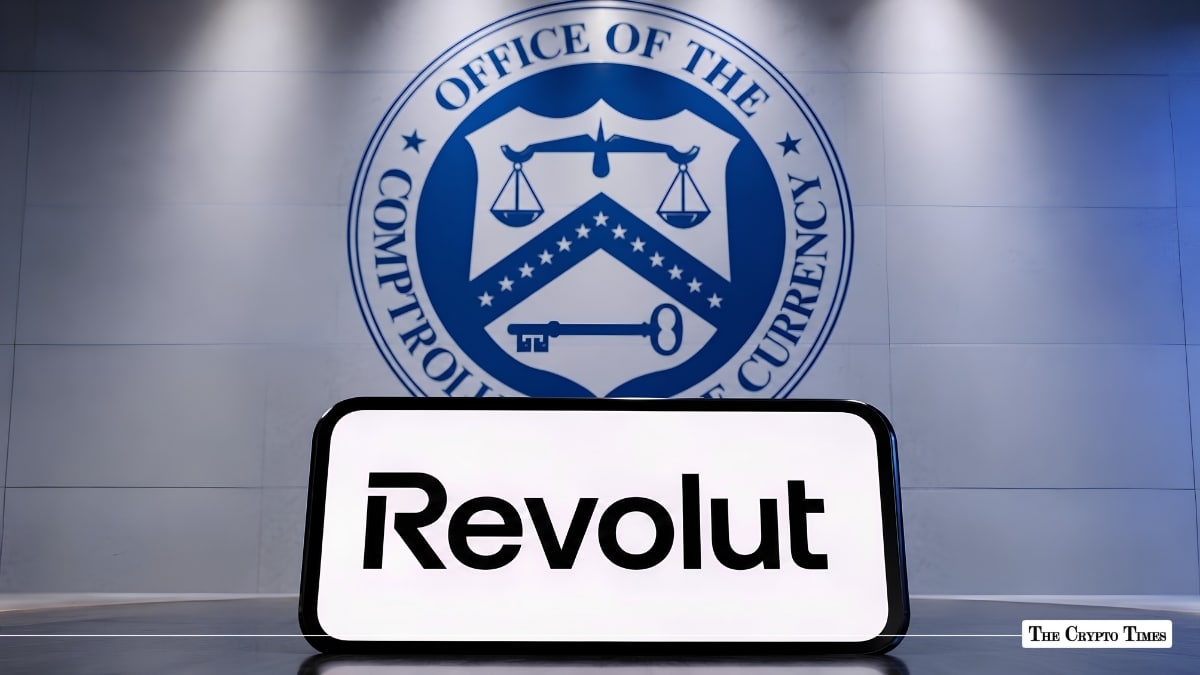
Revolut has received conditional approval from the U.S. Office of the Comptroller of the Currency (OCC) to establish a national bank, allowing the fintech to continue pursuing its proposed U.S. banking operation.
According to an announcement published September 3, the approval is not yet a full banking authorization. Revolut said it must still complete applications and receive approvals from the Federal Deposit Insurance Corporation (FDIC) and the Federal Reserve, in addition to obtaining final approval from the OCC.
Revolut is targeting a 2027 launch for the proposed bank, subject to completion of the regulatory process.
OCC approval moves Revolut’s application forward
The conditional approval allows Revolut to continue preparations for the proposed national bank while the remaining regulatory reviews take place.
Revolut founder and CEO Nik Storonsky described the decision as an initial step toward establishing the U.S. bank.
“Conditional OCC approval is an important first step towards establishing the proposed Revolut Bank US.”
Revolut US CEO Cetin Duransoy also acknowledged the OCC’s review process and the work that remains before the bank can begin operating.
The conditional status means the OCC has approved the application subject to further requirements rather than granting a completed banking authorization.
Crypto and stablecoins part of planned offering
Cryptocurrency and stablecoins are included in Revolut’s plans for the proposed U.S. bank.
The company has said the bank could offer loans, credit cards and FDIC-insured deposits, alongside cryptocurrency and stablecoin services, once the required approvals are secured.
Those products would not automatically become available following the OCC’s conditional decision. Their availability would depend on the bank completing the regulatory process and meeting applicable requirements.
Revolut already provides financial and crypto-related services in the U.S. through separate regulated entities and partner institutions. The proposed national bank would provide a different regulatory structure for its U.S. banking activities.
OCC clarifies path for digital-asset activities
Revolut’s application comes as the OCC has taken steps to clarify how digital-asset activities can operate within the national banking system.
In August, the regulator said companies involved in permissible digital-asset activities could seek national bank charters.
OCC Comptroller Jonathan V. Gould has also pointed to increased chartering activity involving digital-asset businesses. At the SALT Conference in Wyoming on August 19, Gould said digital-asset chartering activity had increased eightfold since the Biden administration.
Jonathan also said the OCC expects to finalize rules implementing the GENIUS Act by November, with potential changes based on feedback from the crypto industry.
The developments provide regulatory context for Revolut’s application as U.S. authorities continue defining the requirements for banks and fintech companies involved in cryptocurrency and stablecoin activities.
Circle received final OCC approval
The OCC has also approved a national trust bank for Circle, the issuer of USDC.
In July, the regulator granted final approval for First National Digital Currency Bank, doing business as Circle National Trust. The institution is intended to provide custody services for USDC and other digital assets.
The Circle’s structure differs from Revolut’s proposed bank. Circle is pursuing a national trust bank focused on custody, while Revolut is seeking a broader national banking charter covering conventional banking products alongside planned cryptocurrency and stablecoin services.
The two cases show different ways digital-asset businesses are seeking access to the federally supervised banking system.
Revolut still faces regulatory reviews
The OCC decision does not complete Revolut’s U.S. banking application.
The company still needs to obtain the necessary approvals from the FDIC and Federal Reserve, while the OCC must provide final approval before the proposed bank can begin operations.
The remaining process can include reviews of the bank’s business model, governance, capital, risk management and compliance systems.
As a result, Revolut’s 2027 launch remains a target rather than a confirmed start date.
Revolut expands its regulated financial operations
Revolut’s U.S. application comes as the company continues developing its regulated financial operations in other markets.
The company said it has obtained banking licenses in France, Australia and the UK, secured a payments license in the UAE and is pursuing a banking license in South Africa.
In Latin America, Revolut has launched banking operations in Mexico and is pursuing regulatory approvals in Brazil, Colombia, Peru and Argentina.
The company says it currently serves more than 80 million customers globally and has a target of reaching 100 million customers by mid-2027.
What the charter could mean for Revolut’s crypto business
If Revolut completes the remaining regulatory process, the proposed national bank could allow the company to provide banking services alongside its planned cryptocurrency and stablecoin offerings within the same federally supervised structure.
However, the conditional OCC approval does not authorize the bank to begin operations or automatically approve those digital-asset services.
Revolut’s next steps remain the FDIC and Federal Reserve reviews, followed by the OCC’s final decision.
Also Read: DWF Labs Secures VASP Approval In British Virgin Islands