Key Highlights
- Jackson Hole runs from August 27–29 under the theme “Financial Innovation: Implications for Payments and Policy,” making the 2026 symposium unusually relevant for digital assets.
- Bitcoin has climbed above $80,000 while investors simultaneously confront a weaker dollar, Treasury intervention in bond markets and the possibility that the Federal Reserve may still raise rates.
- The market may be too focused on whether Kevin Warsh sounds hawkish or dovish. The bigger question is whether Jackson Hole reinforces Bitcoin as merely a liquidity trade or increasingly as an alternative to the monetary system being debated in Wyoming.
For years, crypto traders have treated Jackson Hole like another date on the macro calendar. A Fed chair speaks, Treasury yields move, the dollar moves. And a lot of times Bitcoin follows.
That framework is too small for Jackson Hole 2026.
When central bankers gather in Wyoming from August 27 to 29, the official theme will be “Financial Innovation: Implications for Payments and Policy.” Crypto may not dominate every panel, but it is increasingly difficult to have a serious conversation about financial innovation, payments or the future transmission of monetary policy without eventually running into stablecoins, tokenization and blockchain-based settlement.
At the same time, Bitcoin (BTC) arrives at Jackson Hole having broken above $80,000 for the first time in roughly three months. Crypto is no longer simply waiting outside Jackson Hole to hear what central bankers decide about its liquidity conditions. Parts of the industry are moving closer to the financial architecture those central bankers are trying to understand.
The Market Is Watching Warsh. Bitcoin Is Watching the System
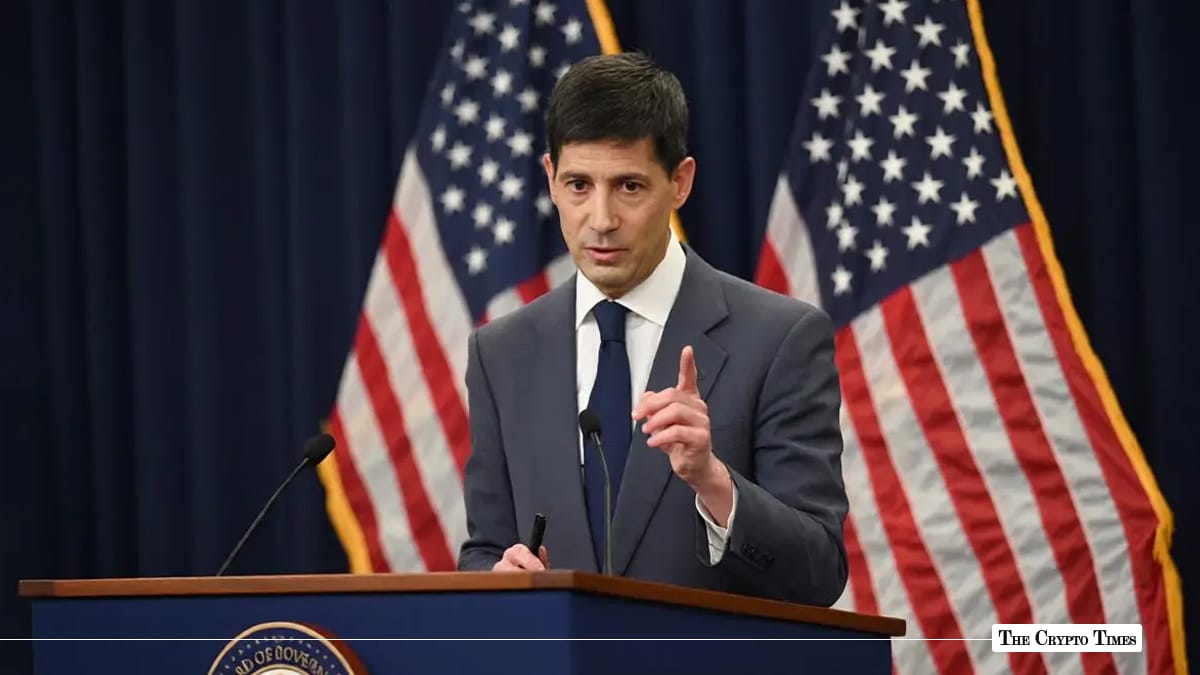
The obvious trade is to listen to Federal Reserve Chair Kevin Warsh and decide whether his speech is bullish or bearish for Bitcoin.
A softer Warsh could pull Treasury yields lower, weaken the dollar and improve appetite for risk assets. Bitcoin could benefit.
A more hawkish Warsh could revive expectations for higher rates, push real yields upward and make non-yielding assets less attractive. Bitcoin could sell off.
That is the first-order reaction, but it misses what has changed.
The Fed held its benchmark rate at 3.50%–3.75% in July, yet the decision passed by only 9 votes to 3. Beth Hammack, Neel Kashkari and Lorie Logan wanted an immediate 25-basis-point hike because inflation remained above the Fed’s target.
This is not a central bank preparing markets for easy money. Yet Bitcoin has rallied anyway. BTC crossed $80,000 on August 25 as a softer dollar, Treasury efforts to contain pressure in the long end of the bond market and renewed concerns about currency debasement pushed investors toward alternative assets.
According to coingecko data, Bitcoin was up roughly 28% for August at the time of the move. That creates one of the most interesting setups crypto has faced in years.
Bitcoin is rallying while the Fed is debating whether policy is restrictive enough.
The Old Crypto Liquidity Trade Is Being Challenged
Crypto investors have spent years learning one equation:
More liquidity = higher Bitcoin.
The equation worked often enough to become doctrine.
Falling rates reduced the opportunity cost of holding speculative assets. Quantitative easing pushed capital further along the risk curve. A weaker dollar helped hard assets. When liquidity disappeared, crypto usually suffered. That relationship still exists. However, Bitcoin’s August rally suggests another trade is becoming important.
Investors are not only asking how much liquidity the Fed will provide, they are asking what happens when governments have difficulty balancing high debt loads, elevated borrowing costs and political pressure to prevent yields from rising too far.
The U.S. Treasury recently expanded buybacks of longer-dated government securities. The move helped push yields lower and weighed on the dollar, while Bitcoin and gold benefited as investors revived the so-called debasement trade.
Bitcoin therefore enters Jackson Hole with two personalities.
- It remains a risk asset that dislikes higher real rates.
- It is also increasingly being traded as an asset that benefits when confidence in conventional fiscal and monetary management weakens.
Warsh has to speak to both.
A Hawkish Fed Is Not Automatically Bearish for Bitcoin
This is where crypto’s relationship with Warsh becomes more complicated.
A hawkish speech could absolutely hurt Bitcoin in the short term. If markets begin pricing a September hike more aggressively, Treasury yields could rise and leveraged crypto positions could unwind.
However, a credible inflation-fighting Fed is not necessarily Bitcoin’s long-term enemy.
The more interesting bearish scenario would be one in which monetary and fiscal authorities appear willing to suppress yields while tolerating persistently higher inflation.
That could initially support asset prices through easier financial conditions, but it would also strengthen the monetary-debasement argument that sits at the core of Bitcoin’s investment case.
Warsh therefore faces an unusual contradiction. If he convinces markets that the Fed will defend price stability regardless of political pressure, Bitcoin could lose one source of short-term momentum.
If he fails to convince them, Bitcoin’s reason for existing becomes easier to sell. Either outcome gives crypto something to trade.
Jackson Hole Is Also Becoming a Crypto Policy Event
The second reason this symposium deserves more attention is hiding in its title.
Financial innovation. Payments. Policy.
Stablecoins now sit directly at the intersection of all three.
Dollar-backed tokens increasingly operate as digital payment rails. Tokenized Treasuries and securities are moving traditional assets onto blockchain infrastructure. Banks, exchanges and asset managers are experimenting with tokenized settlement.
This is no longer a debate about whether somebody should be allowed to trade a speculative token.
It is becoming a debate about what money looks like when bank deposits, government debt, securities and dollars can move across programmable financial networks.
Central banks cannot remain spectators to that transition indefinitely. For crypto, that may ultimately matter more than whether Bitcoin gains or loses 5% after Warsh walks away from the podium.
Bitcoin Has Already Broken $80K. Jackson Hole Decides What Kind of Rally This Is? Only days ago, the market was questioning whether Bitcoin could clear $80,000 without a clearer shift from the Fed.
Bitcoin crossed that level before Warsh spoke. Now the test changes. If Warsh remains hawkish and Bitcoin continues holding around or above $80,000, the market would be showing that this rally is no longer completely dependent on expectations for easier monetary policy.
If Treasury yields rise sharply, the dollar strengthens and Bitcoin loses the breakout, the old liquidity relationship will have reasserted itself.
The most bullish outcome may therefore not be a dovish speech. It may be Bitcoin surviving a hawkish one.
That would suggest demand is being driven by something broader than another attempt to front-run the Federal Reserve.
Jackson Hole May Mark Crypto’s Next Transition
The crypto industry once built its identity in opposition to central banks. Then it spent years obsessing over every word central bankers said.
Now central bankers are gathering at Jackson Hole to discuss financial innovation and payments while Bitcoin trades above $80,000, stablecoins move dollars across blockchain networks and tokenization pushes traditional financial assets on-chain.
The important question at Jackson Hole is therefore not simply whether Kevin Warsh sends Bitcoin toward $85,000 or back below $75,000.
It is whether the world’s monetary establishment is beginning to discuss a financial system in which crypto infrastructure is no longer sitting at the edge.
Bitcoin will still react to rates. It will still react to yields and the dollar.
Bitcoin Still Has an Awkward Relationship With the Fed
There is another contradiction that crypto rarely admits.
Bitcoin is supposed to exist independently of Federal Reserve policy, yet the crypto market still pays extraordinary attention to Federal Reserve policy.
Interest rates affect liquidity, the dollar, bond yields and investors’ willingness to take risk. Bitcoin cannot operate outside the global cost of capital merely because its monetary supply is independent of the Fed.
But Bitcoin’s long-term test is not whether it rallies after a dovish speech.
It is whether its value proposition becomes stronger regardless of what the Fed says.
If investors buy Bitcoin only because they expect lower interest rates, then it remains largely another macro trade. If they increasingly hold it because they distrust the long-term purchasing power of fiat currencies, worry about sovereign debt or want an asset outside discretionary monetary policy, then the relationship becomes fundamentally different.
The Federal Reserve can determine the price of money in dollars. It cannot determine Bitcoin’s supply.
That tension has always existed. Rising government debt and the renewed debate around currency debasement are making it harder to dismiss.
Also Read: Trump’s CLARITY Push vs. SEC Rulemaking: Has the White House Changed the Debate?