Key Highlights
- The OCC said companies involved in legally permissible digital asset activities should have a path to national bank charters.
- The agency said it has received 40 de novo (newly formed) bank applications over the past 18 months.
- The OCC’s comments come as several digital asset firms pursue or receive approval for national trust bank charters.
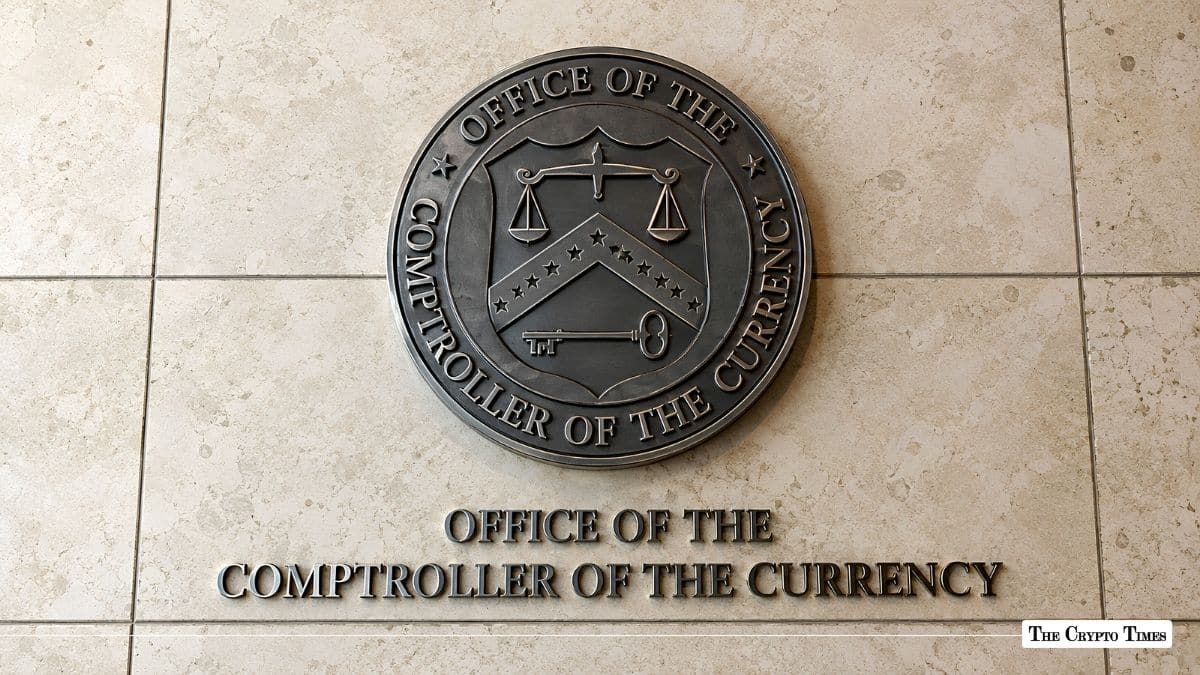
The Office of the Comptroller of the Currency (OCC) is signaling a broader opening for crypto companies seeking access to the U.S. banking system, saying businesses engaged in legally permissible digital asset activities should have a path to becoming national banks.
In a statement issued Tuesday, the OCC said it is working to revive de novo bank chartering and welcomed recent changes by the Federal Deposit Insurance Corporation (FDIC) aimed at making the deposit insurance application process clearer.
The announcement comes as several digital asset firms pursue national trust bank charters. The OCC has approved or conditionally approved multiple digital asset-related applications, including Circle’s national trust bank, which received approval in July and is initially focused on digital asset custody.
OCC explicitly includes digital asset businesses
OCC Comptroller Jonathan V. Gould said companies should not be excluded from the national banking system simply because they use newer technologies. He added, “Entities that engage in legally permissible activities, including those involving digital assets and other novel technologies, should have a path to becoming a national bank.”
The statement does not automatically authorize crypto firms to operate as banks or approve specific digital asset activities. Instead, it sets out the OCC’s position that legally permissible crypto-related activities can be considered as part of the national bank chartering process, subject to the regulatory review applicable to other applicants.
That could matter for companies working in areas such as digital asset custody, payments, stablecoin infrastructure and other blockchain-based financial services.
Warren previously challenged OCC crypto charters
The OCC’s approach has faced opposition in Washington.
Earlier this year, Senator Elizabeth Warren accused the agency of improperly approving crypto-related bank charters and questioned whether the approvals complied with federal banking requirements. Her criticism formed part of a broader campaign questioning the OCC’s handling of digital asset firms and whether crypto companies should receive access to banking structures traditionally used by financial institutions.
The Digital Chamber, however, pushed back against Warren’s position in May, arguing that OCC-approved crypto charters were subject to legal standards and federal supervision.
The dispute highlighted differing views over whether expanding crypto’s role in banking would improve regulatory oversight or introduce additional risks to the financial system.
OCC says new bank formation has declined
The OCC’s latest announcement places the crypto debate within a broader effort to increase competition in U.S. banking. The agency said de novo chartering — the process of forming and licensing an entirely new bank, as opposed to acquiring an existing one — has declined sharply over the past 15 years. Between 2011 and 2014, the OCC received fewer than four charter applications per year on average, with some years recording none.
Gould said reversing that trend is important for the health of the banking system.
The OCC said it has received 40 de novo applications over the past 18 months, including applications for national trust banks. The agency said it has reached decisions on some applications within 120 days after receiving a complete application.
What the policy means for crypto
For digital asset companies, a national charter provides another potential option for building regulated financial businesses in the United States. A national charter can provide access to a federal regulatory framework, while trust-bank structures can be used for activities such as custody without operating as traditional deposit-taking banks.
That distinction is relevant for crypto firms because not every digital asset company seeking a bank charter intends to offer conventional banking services.
Circle’s trust-bank approval illustrates how a crypto company can use the federal framework for a specific regulated function—in its case, digital asset custody.
The OCC’s latest statement suggests that other companies engaged in legally permissible crypto activities may also seek similar structures.
Crypto banking debate remains unsettled
The OCC’s position does not resolve the broader debate over crypto bank charters.
Supporters argue that federal charters can bring digital asset businesses under clearer and more consistent supervision. Critics, including Warren, have questioned whether regulators are moving too quickly and whether crypto-focused institutions could introduce new risks into the banking system.
The OCC is seeking to widen the pipeline for new bank applicants while explicitly acknowledging digital assets as one category of legally permissible activity.
Also Read: Polygon Joins Bank of England to Test Stablecoin & Digital Pound Lab Phase 2