Key Highlights
- Stablecoin yield provisions have become the main obstacle to advancing the CLARITY Act in the Senate.
- More Republican senators, including James Lankford and Mike Rounds, are seeking changes before backing the bill.
- Banking groups warn stablecoin yield could reduce community bank deposits, complicating bipartisan support.
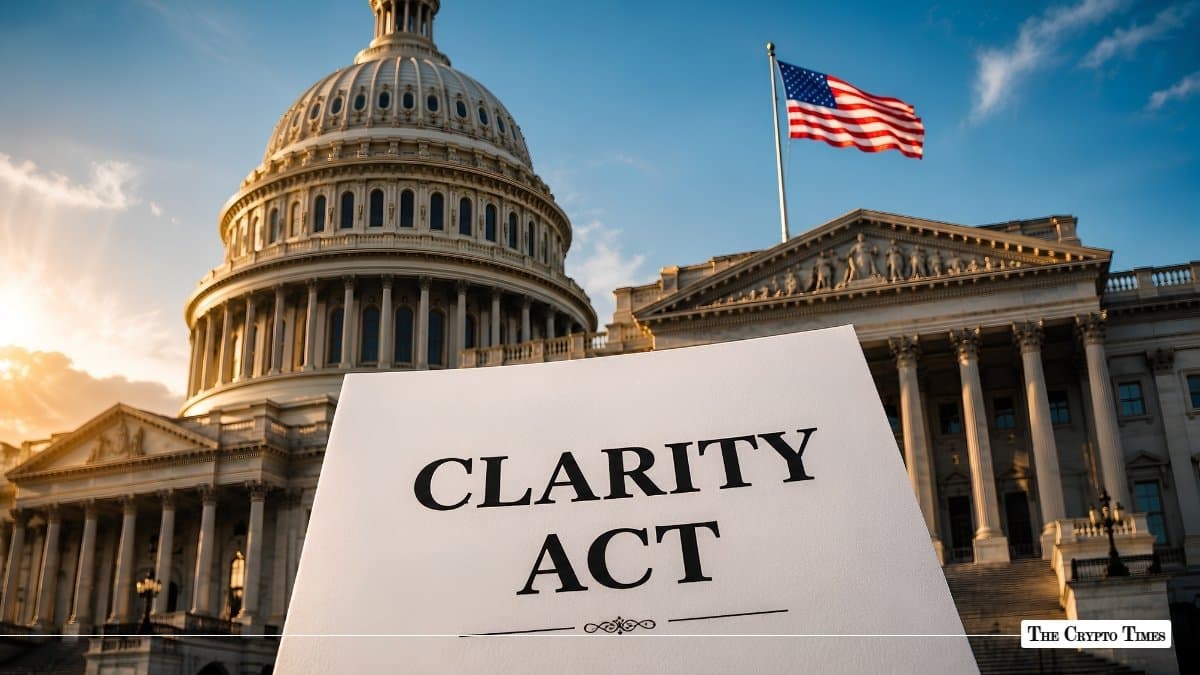
Stablecoin yield has emerged as one of the key sticking points for the CLARITY Act, with growing concerns among Senate Republicans threatening to slow the crypto market structure bill.
In an X post on Thursday, journalist Brendan Pedersen reported that two more GOP senators, James Lankford (R-Okla.) and Mike Rounds (R-S.D.), have raised concerns about the bill, specifically regarding provisions related to stablecoin yield. This brings the number of Republican holdouts to as many as five, excluding firm “No” votes from Senators Rand Paul and Josh Hawley.
Stablecoin yield becomes a sticking point
According to a report, Sen. Lankford said bank advocates have warned the stablecoin yield provisions could undermine the funding sources of community banks. He described the bill as “large” and “complicated,” noting that new processes naturally invite scrutiny.
“The bill’s large and complicated, and when you’re dealing with a new process, there’s always gonna be questions,” Lankford said on Thursday. He said issues involving community banks and deposit flows should be addressed before the legislation moves forward.
Sen. Mike Rounds (R-S.D.), who supported advancing the CLARITY Act during its committee markup in May, also indicated that he wants changes before giving the bill his full backing. “Well, I’m not there yet,” Rounds stated when asked about his colleagues’ reservations on stablecoin yield. Although prepared to move forward on the legislation in a general sense to establish safeguards for the crypto industry, he remains focused on improvements.
“I’m prepared to get on the bill,” Rounds said, referring to the cloture process. “But I am not prepared to get off the bill until we have an opportunity to repair the yield portion of it.”
Why CLARITY Act draws attention
The CLARITY Act aims to provide much-needed regulatory clarity for digital assets, including stablecoins. However, the stablecoin yield debate has become a flashpoint, with traditional banking interests raising alarms about potential competitive disadvantages and risks to community banks’ deposit bases.
The latest Republican concerns add pressure on Senate leadership as lawmakers work to secure enough support to advance the legislation before the August recess. The debate also comes as lawmakers continue broader discussions on digital asset policy, including a bipartisan crypto ethics proposal introduced by Sens. Thom Tillis (R-N.C.) and Ruben Gallego (D-Ariz.), according to an X post by Pedersen.
Banking groups push for changes
The banking industry’s concerns are not new. On July 13, 2026, the American Bankers Association (ABA), the Independent Community Bankers of America (ICBA), and 76 state banking associations sent a joint letter to Senate Majority Leader John Thune (R-SD) and Minority Leader Chuck Schumer (D-NY).
The groups, representing thousands of community banks nationwide, expressed support for innovation in digital assets but urged targeted revisions to the bill’s stablecoin provisions. The banks were concerned with Section 404, arguing that the current language lacks sufficient safeguards to prevent yield-bearing stablecoins from competing directly with bank deposits.
They warned that unclear boundaries could disrupt the flow of credit in local communities. Despite these concerns, the latest draft of the CLARITY Act released on July 22 left the stablecoin yield provisions largely unchanged.
Under the current language, companies are prohibited from paying direct interest on idle stablecoin balances. However, the bill still allows certain rewards tied to actual platform usage, such as transaction fees or staking rewards, as long as they are not economically equivalent to traditional bank deposit interest.
What’s next for the CLARITY Act
The Senate is expected to hold an initial procedural vote on the CLARITY Act before August 7, although final passage before the August recess remains unlikely. Lawmakers are reportedly expected to begin consideration of the bill before leaving Washington, but significant procedural hurdles remain, including cloture, debate, potential amendments, and a final floor vote.
As negotiations continue, the bill’s fate may depend on whether lawmakers can resolve disagreements over stablecoin yield while preserving the broader market structure framework.
Also Read: Treasury Sec. Bessent Urges Senate to Vote on CLARITY Act ‘Now’