Key Highlights
- The Senate is expected to hold an initial CLARITY Act vote before the August 7 recess.
- Procedural hurdles and bipartisan disagreements make full passage before recess unlikely.
- Ethics negotiations remain a major sticking point, with both Democrats and some Republicans raising concerns.
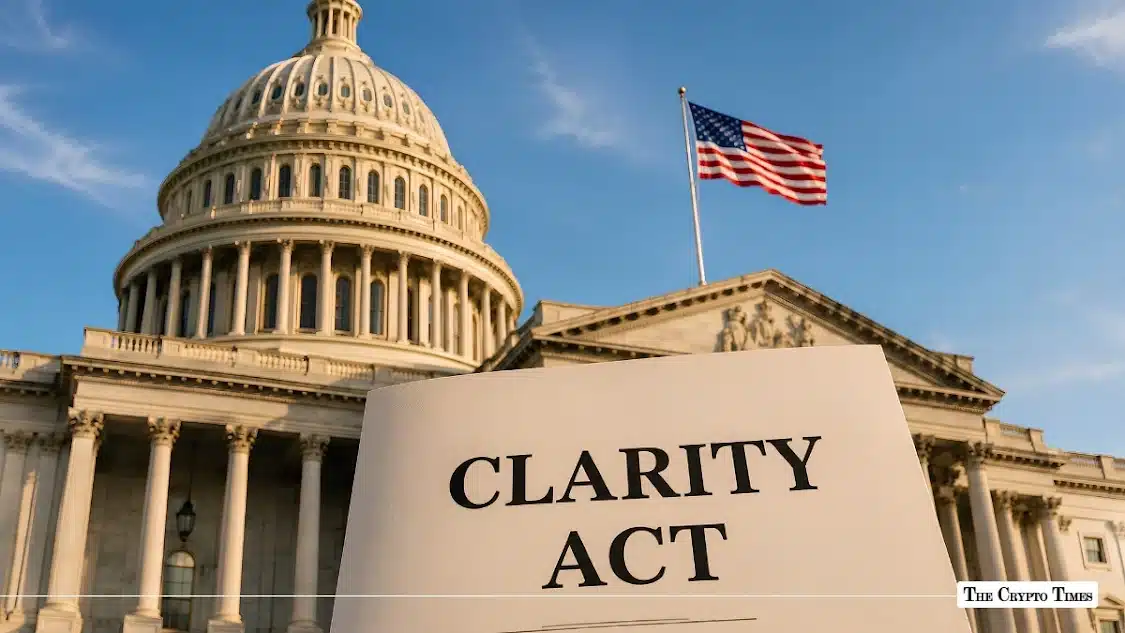
The Senate is reportedly expected to hold an initial vote on the CLARITY Act before August 7, despite slim chances of full passage before the August recess.
In an X post on Monday, journalist Brendan Pedersen wrote, “The politics of CLARITY are live this week. We still expect an initial vote before Aug 7.”
However, procedural challenges make full passage before the Senate’s scheduled August 7 adjournment unlikely without unanimous consent agreements.
Why is CLARITY Act facing delays
One of the key procedural obstacles is the absence of a filed cloture motion this week. Even if one were filed on Monday evening, the earliest initial floor vote would be Thursday, where the legislation would require 60 votes to advance.
Subsequent steps, including additional debate time, amendments, and a final passage vote, would demand even more floor time. Democratic critics, including Senators Elizabeth Warren (D-Mass.) and Chris Murphy (D-Conn.), are unlikely to provide such consent, effectively stalling the bill’s momentum.
Nevertheless, the politics surrounding the CLARITY Act remain very active this week. An initial procedural or test vote is still anticipated before the August 7 deadline. This vote will serve as an important political signal and test for both parties heading into the final stretch of the legislative session.
Republicans face their own internal challenges. The more pressing issue for Republicans centers on securing an ethics deal acceptable to Democrats and the White House. A recent version of the agreement released by Senators Cynthia Lummis (R-Wyo.) and Bernie Moreno (R-Ohio) with White House backing was deemed too weak by Democrats and at least one Republican, Senator Thom Tillis (R-N.C.).
Industry support keeps growing
A day ago, SkyBridge Capital founder Anthony Scaramucci urged lawmakers to back the latest Senate version of the CLARITY Act, warning that continued demands for revisions could kill the bill’s chances. In a post on X, he expressed frustration with Washington’s negotiation culture. He noted that politicians frequently demand compromise but often withhold support once actual concessions are made.
“Is it ten times better than the Wild West status quo? Obviously,” Scaramucci wrote, emphasizing that the current draft represents a major improvement over the existing regulatory uncertainty. His comments arrive as the Senate works to secure sufficient bipartisan support for the crypto market-structure legislation ahead of the August recess.
Other industry figures, including Aave founder Stani Kulechov, Chainlink executive Andrew McCormic, and the National Fraternal Order of Police (FOP), have also recently voiced support for the CLARITY Act.
How many votes does the CLARITY Act have?
As previously reported, the CLARITY Act remains nine votes short of the 60 needed to advance in the Senate, placing the key crypto market structure bill in a tight race against the clock ahead of the August recess.
Republicans currently provide 51 of the 53 publicly declared supporting votes. No Democrat has openly backed the latest version of the bill, while at least 12 Democrats have either opposed it or voiced strong criticism. Another 25 Democrats have remained silent on their voting intentions.
The tug-of-war for CLARITY Act
The CLARITY Act seeks to provide regulatory clarity for digital assets, addressing long-standing uncertainty that has hampered innovation and investment in the crypto sector.
Supporters argue the legislation would create a balanced framework distinguishing between decentralized assets and securities while providing consumer protections. Opponents, however, worry about potential loopholes that could weaken oversight of the industry.
With the August recess approaching, the coming days are expected to shape the bill’s near-term legislative path.
Also Read: Hyperliquid, Multicoin Back CFTC Prediction Market Rules