Key Highlights
- Cynthia Lummis urged Congress to pass the CLARITY Act to strengthen protections for cryptocurrency owners.
- She cited the Celsius and Voyager bankruptcies, where customer crypto became part of bankruptcy estates rather than remaining user property.
- The proposed legislation would ensure digital assets remain legally owned by customers, even if a crypto platform files for bankruptcy.
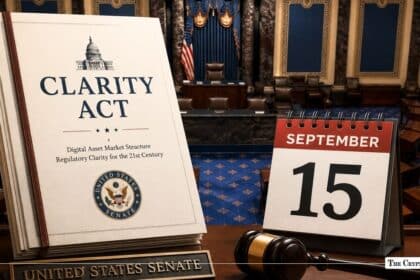
U.S. Senator Cynthia Lummis is advocating for the CLARITY Act, legislation intended to protect cryptocurrency owners from losses seen during the collapses of platforms such as Celsius and Voyager.
In a post on X on Monday, the Wyoming Republican highlighted the need for the bill, which would ensure digital asset holders retain ownership of their crypto even if the platforms holding it file for bankruptcy.
When Celsius and Voyager went bankrupt, customer deposits didn’t stay customer deposits,” she wrote. “They became assets in a bankruptcy pool, fought over by creditors who had never even heard of the customers who owned them.”
Why Senator Lummis is pushing the CLARITY Act
Lummis argues that the Celsius and Voyager bankruptcies exposed a gap in U.S. law because customer crypto deposits were not legally segregated and were treated as company assets available to general creditors. In those cases, customers lost direct ownership rights and were forced into lengthy claims processes alongside other creditors.
The core provision backing her claim is Section 701 (Title VII – Protecting Customer Property) of the Digital Asset Market CLARITY Act. It would amend the U.S. Bankruptcy Code (primarily 11 U.S.C. § 741 and related sections) to:
- Explicitly define and expand “customer property” to include digital commodities and ancillary assets held for customers.
- Require these assets to be treated as belonging to customers (similar to securities and commodities in broker-dealer bankruptcies under Subchapter III/IV).
- Include a strong construction rule (§701(d)) that prevents platform terms of service or commingling from converting customer holdings into estate property, effectively a “no-take-back” protection.
Investors faced uncertainty over their funds
Lummis’s comments refer to the 2022 bankruptcies of Celsius Network and Voyager Digital, two major crypto lending platforms that together managed billions of dollars in customer funds. When the firms collapsed during the market downturn, customers discovered that their deposits were no longer treated as personal property. Instead, they became part of the companies’ bankruptcy estates and were subject to claims by various creditors.
Celsius, once managing over $20 billion in assets, filed for bankruptcy in July 2022 after suspending customer withdrawals. Users discovered their deposits had been lent out and commingled with company funds, turning customer assets into part of the bankruptcy estate.
Voyager Digital filed for bankruptcy in July 2022 after losses tied to the Three Arrows Capital hedge fund failure. Like Celsius, customer funds were not segregated and became subject to creditor claims in court.
Legal battles dragged on for months, leaving retail investors uncertain about recovering their holdings.
Lummis’s push to pass CLARITY Act
Lummis has repeatedly urged Congress to pass the CLARITY Act. Most recently, as the GENIUS Act marked its first anniversary, she again called on lawmakers to approve the legislation.
In a post on X, Lummis described the GENIUS Act as “an important first step in securing the dollar’s dominance” through stablecoin regulation. She urged lawmakers to build on this progress by approving the Clarity Act to establish a comprehensive crypto framework. “Our nation must cement America’s legacy as the crypto capital of the world,” Lummis stated. “Let’s get the Clarity Act done!”
Latest update on CLARITY Act
The release of the updated Digital Asset Market CLARITY Act was delayed again on July 17, with industry participants now expecting the revised bill sometime this week. According to reports, negotiations over ethics provisions extended beyond expectations, pushing back the rollout.
Many expected the updated language to emerge shortly after President Donald Trump’s meeting with Senate Republicans to resolve remaining disagreements. The delay followed White House discussions as lawmakers continued negotiations over the legislation.
If passed, the CLARITY Act could set a precedent for how digital assets are treated under U.S. bankruptcy law. Industry participants hope it will serve as a foundation for more comprehensive legislation addressing custody, licensing, and market structure.
Also Read: BitMine Ethereum Treasury Hits 5.78 Million ETH After 53rd Weekly Buy