Key Highlights
- U.S. nonfarm payrolls increased by 162,000 in August, nearly three times the 56,000 expected, while July’s previously reported 23,000 decline was revised to a 21,000 gain.
- Bitcoin fell from above $81,000 to below $80,000 immediately after the report as September Fed hike odds rose to 59% from 52%.
- Bitcoin’s September 18 options expiry is also in focus, with DWF Labs’ Martin Lee pointing to $78,000 as the current max-pain level.
Bitcoin (BTC) dropped below $80,000 on Friday even as the U.S. economy posted a much stronger-than-expected employment report, as traders interpreted the jobs surprise as another reason for the Federal Reserve to keep monetary policy tight.
BTC was trading around $81,036 at approximately 13:25 UTC, according to CoinGecko, after recovering from the initial payroll-driven drop. Bitcoin traded between $77,661 and $82,108 over the previous 24 hours.
The immediate reaction was sharper. Bitcoin was around $81,335 shortly before the payroll release and fell to about $79,654 within one five-minute candle, before beginning to recover on crypto exchange Coinbase as per TradingView data.
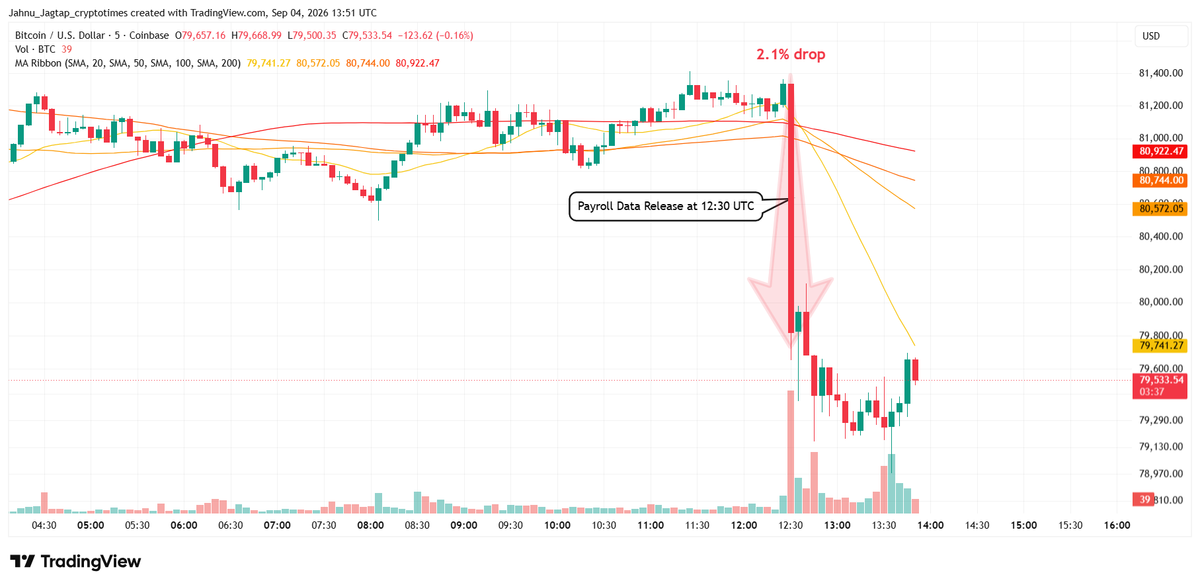
So why did Bitcoin fall when the jobs report itself was strong? The answer lies less in employment and more in what the numbers could mean for interest rates, Treasury yields and dollar liquidity.
U.S. Payrolls Crush Expectations at 162,000
The U.S. economy added 162,000 nonfarm jobs in August, compared with the 56,000 increase expected by economists surveyed by Reuters. The unemployment rate remained unchanged at 4.1%, according to the Bureau of Labor Statistics employment report.
The headline number was also more than five times the 31,000 average monthly payroll increase over the previous 12 months, showing a considerably stronger labor market than markets had expected going into Friday.
Revisions strengthened the report further. July payrolls were revised from a previously reported 23,000 decline to a 21,000 increase, while June was raised from 20,000 to 31,000. Together, the revisions added another 55,000 jobs to the previous estimates.
Average hourly earnings increased 0.3% in August and 3.1% from a year earlier, while the average workweek edged higher to 34.4 hours.
Why Is Strong Jobs Data Bad for Bitcoin?
A stronger labor market is not inherently negative for Bitcoin. The pressure comes from what it allows the Federal Reserve to do.
If employment remains resilient while inflation is still above the Fed’s 2% target, policymakers have less reason to worry that tighter monetary policy will severely weaken the labor market. That gives the Fed more room to keep rates elevated or raise them again to fight inflation.
Markets had entered Friday’s report with roughly even odds of a September hike after Fed Governor Christopher Waller signaled Thursday that he was inclined to support keeping rates unchanged if inflation continued to cool.
The payroll surprise reversed part of that dovish repricing. Market expectations for a 25-basis-point September rate hike rose to 59% from 52% following the report. The policy-sensitive two-year Treasury yield rose 5.3 basis points to 4.39%, while the 10-year yield climbed to 4.782%. The U.S. Dollar Index advanced 0.3% to 99.23.
That combination matters for Bitcoin because higher yields raise the returns available on lower-risk dollar assets, while a stronger dollar can tighten financial conditions and reduce liquidity available for risk-sensitive markets.
Martin Lee, Market Insights Lead at DWF Labs, told The Crypto Times that the jobs report strengthens the case behind Fed Chair Kevin Warsh’s recent stance on the economy.
“A hot print strengthens Warsh’s take on the economy and grows hike fears. We likely see markets dip and bonds drop as yields rise. $78K is the max pain price for the 18 Sept expiry.”
The reaction follows Warsh’s Jackson Hole speech, when his inflation comments sent Bitcoin below $78,000 and pushed September rate-hike expectations sharply higher. The Crypto Times previously covered Bitcoin’s reaction to Warsh and the jump in Fed hike odds.
Bitcoin Longs Get Caught in Payroll Selloff
The macro repricing was amplified by leveraged positioning, at 13:45 UTC, CoinGlass data showed total crypto liquidations rising to roughly $757.3 million over 24 hours, up more than 200%, as the sharp post-payroll price move forced leveraged positions out of the market.
Around $200 million in crypto long positions were liquidated within roughly an hour of the employment report as Bitcoin initially lost $80,000.
The liquidations help explain why the initial Bitcoin response was faster than the move in some traditional markets. Once BTC broke through leveraged long positions, forced selling added to the macro-driven decline.
However, liquidations describe how the move accelerated rather than its original trigger. The initial catalyst was the shift in expectations for Fed policy following the payroll surprise.
Bitcoin’s $78K Max Pain Comes Into Focus
Options positioning is adding another level of interest as Bitcoin moves toward the Federal Reserve’s September policy decision.
According to the CoinGlass Bitcoin options max-pain tracker, the September 18 expiry currently has a max-pain price of $78,000. That level sits below the price Bitcoin carried into Friday’s payroll report, when BTC was trading above $81,000.
Max pain refers to the strike price at which the combined payout on outstanding in-the-money call and put options would be minimized at expiry. It is a measure of options positioning, not a forecast that Bitcoin must move toward that level, and it can shift as open interest changes before settlement.
The timing is notable because the expiry falls just two days after the Fed’s September 15–16 meeting, meaning traders will carry options exposure through the monetary-policy decision and the release of updated economic projections.
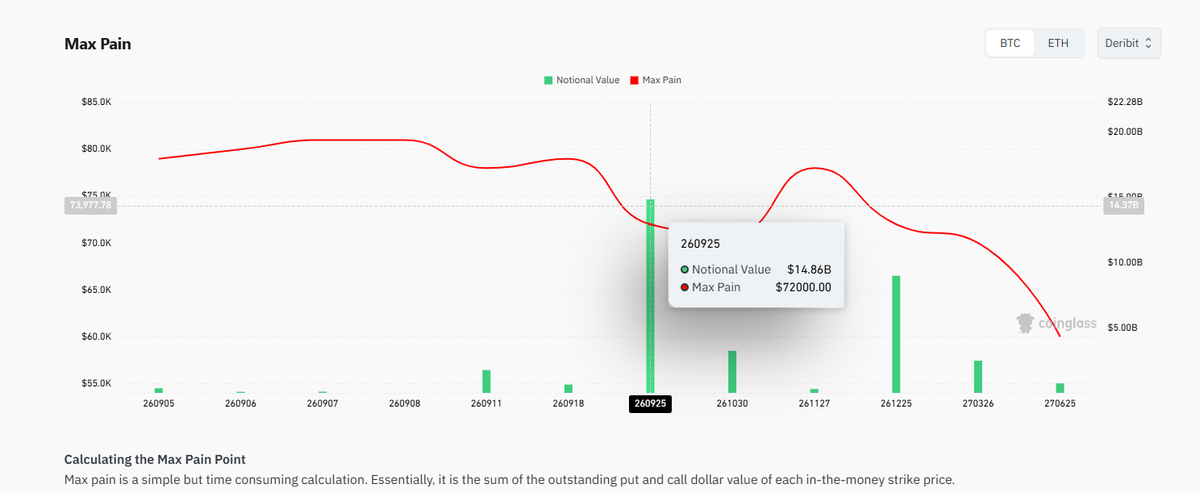
Martin Lee, Market Insights Lead at DWF Labs, told The Crypto Times that Bitcoin was roughly 4% above the $78,000 max-pain level while trading above $81,000 before the jobs report. That gap narrowed sharply when BTC fell below $80,000 following the payroll release.
“A hot print strengthens Warsh’s take on the economy and grows hike fears. We likely see markets dip and bonds drop as yields rise. $78K is the max pain price for the 18 Sept expiry.”
Bitcoin and Gold Reverse as Yields Rise
Bitcoin was not alone in reacting negatively to the job’s surprise. Gold, which had rallied earlier Friday amid expectations for easier Fed policy, dropped about 2% to $4,383 following the report as Treasury yields and the dollar moved higher, according to TradingView data.
The parallel reaction is particularly notable after Bitcoin’s 90-day correlation with gold reached a six-year high, with both assets increasingly responding to bond yields, dollar movements and monetary-policy expectations.
Iggy Ioppe, Chief Investment Officer at Theo and previously head of a more than $1 billion long-short proprietary trading group at Credit Suisse, told The Crypto Times that the payroll print represents a major test for that trade.
“A hot print hands Warsh his hike and is gold’s hardest test. But gold was never about the next 25 basis points; it’s a debt picture no rate hike fixes. Gold is held to earn, not just to hedge.”
The jobs report therefore challenged the dovish macro setup that had helped both Bitcoin and gold move higher earlier in the week.
ETF Demand Helps Bitcoin Recover Above $80K
Bitcoin’s recovery following the initial payroll decline also comes against stronger spot ETF demand.
U.S. spot Bitcoin ETFs recorded $730.8 million in net inflows on September 3, following $101.1 million a day earlier, according to Farside Investors data. BlackRock’s IBIT accounted for $454 million of Thursday’s total.
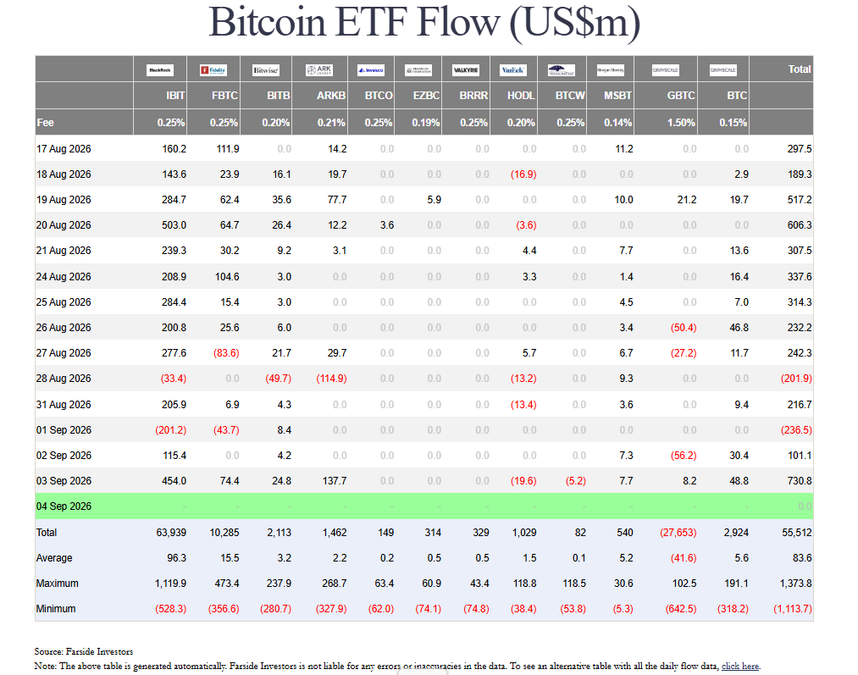
The Crypto Times had earlier reported that Bitcoin reclaimed $80,000 as U.S. spot ETF inflows returned after the market began September under pressure. Those flows provide an important counterweight to Friday’s macro selloff.
Bitcoin’s rebound above $80,000 after the initial payroll reaction suggests spot demand has so far absorbed part of the forced selling triggered by higher yields and leveraged liquidations.
What Comes Next for Bitcoin?
Friday’s payroll report answered one question for markets: the U.S. labor market currently looks considerably stronger than expected.
It did not settle what the Fed will do in September.
The stronger jobs number lifted hike expectations, but policymakers still have another major set of inflation data to assess before the September 15–16 meeting. August CPI is scheduled for release on September 11.
For Bitcoin, that leaves three forces in focus: whether Treasury yields continue rising, whether ETF demand remains strong after Thursday’s $730.8 million inflow, and how BTC trades around the $78,000 options level identified ahead of the September 18 expiry.
The payroll surprise explains why Bitcoin initially fell below $80,000 despite stronger economic data. The next question is whether inflation gives the Fed another reason to tighten—or gives Bitcoin room to recover the post-payroll losses.
Also Read: Bitcoin Cycle Momentum Turns Positive After Eight Bearish Months