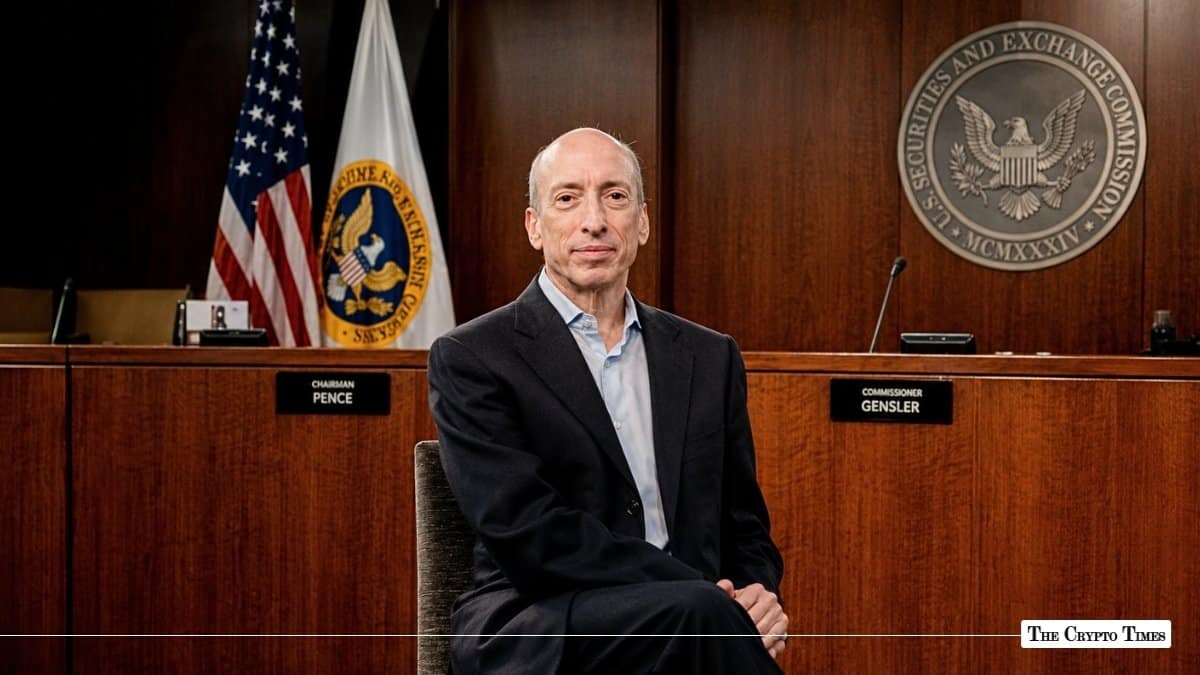
One of the most symbolically charged legal battles between crypto and its regulator has quietly come to an end. The US Securities and Exchange Commission (SEC) has settled a Freedom of Information Act (FOIA) lawsuit brought on behalf of Coinbase seeking records of how the agency shaped its crypto enforcement strategy under former Chair Gary Gensler, a fight that came to hinge on a batch of text messages the SEC admitted it had destroyed.
The settlement was reported on July 22 in connection with a Wall Street Journal opinion piece on the matter. The resolution closes the last major chapter in a years-long confrontation, and it does so on terms that hand the crypto industry a potent talking point about regulatory double standards.
What The Fight Was About
The lawsuit was pursued through History Associates, a research firm acting at Coinbase’s direction, and traces back to FOIA requests the exchange filed in July and August 2023. Those requests sought internal SEC communications that might reveal how the agency was thinking about applying securities laws to digital assets, the very question at the heart of the SEC’s June 2023 enforcement suit accusing Coinbase of operating as an unregistered exchange, broker and clearinghouse.
Rather than produce the records, Coinbase alleged, the SEC issued blanket denials under a FOIA exemption shielding active law-enforcement files. When History Associates sued over those denials in June 2024, the agency backed away from that justification and, according to the filings, said it would need up to three additional years merely to begin its review. The case became a grinding fight over transparency, whether a regulator that refused to write clear crypto rules could also withhold the records showing how it made its enforcement decisions.
The Deleted Texts At The Center
The dispute took on a far sharper edge in September 2025, when the SEC’s own Office of Inspector General revealed the problem was not just delay but destruction. The watchdog found that nearly a year of Gensler’s government text messages, spanning October 18, 2022, to September 6, 2023, had been lost, after the agency’s IT office wiped his device in August 2023 under the mistaken belief it was no longer in use, attempting a factory reset before a proper backup was made.
The timing was extraordinary. That window overlapped precisely with the collapse of FTX and the SEC’s most aggressive stretch of crypto enforcement, including its cases against Coinbase and other exchanges. The OIG further found that 38% of the Gensler texts it was able to recover involved “mission-related” communications, including, in one May 2023 exchange, a discussion between Gensler, his staff and the SEC’s Enforcement Division director about the timing of actions against crypto trading platforms. That detail undercut any suggestion the messages were purely administrative.
The Double Standard Coinbase Hammered
Coinbase’s most effective argument required no legal expertise to grasp. Under Gensler, the SEC had imposed more than $1 billion in fines on financial firms for failing to preserve employee communications, including off-channel text messages, repeatedly insisting, in its own words, that “everybody should play by the same rules” and be held accountable for violating “time-tested recordkeeping requirements.”
Then the agency lost a year of its own chair’s texts during the most consequential enforcement period in crypto’s history. “The Gensler SEC destroyed documents they were required to preserve and produce,” Coinbase’s chief legal officer Paul Grewal wrote when the OIG report landed. “We now have proof from the SEC’s own Inspector General.” The contradiction, a recordkeeping enforcer failing at recordkeeping, became the emotional core of Coinbase’s case and a rallying cry for an industry that had long accused the agency of regulating by enforcement while resisting scrutiny of its own conduct.
Why The Settlement Matters Now
The timing underscores how thoroughly the ground has shifted. The SEC dropped its underlying enforcement case against Coinbase in early 2025 after President Trump returned to office and the agency, now under Chair Paul Atkins, retreated from the Gensler-era strategy of regulation through litigation. This month, Coinbase announced that Grewal, the legal architect of its defense, will depart at the end of July, a move that reads as a victory lap now that the fights defining his tenure have been resolved.
Settling the FOIA case removes one of the last loose threads. For Coinbase, the value was never only the documents; it was the precedent and the narrative. The company has repeatedly framed its transparency litigation, including a parallel, separately settled fight over bank “pause letters” that pressured banks to avoid crypto clients as proof that regulators used opaque, undocumented pressure to hobble the industry without formal rulemaking.
Regulatory Turning Point
Beyond Coinbase, the settlement lands as a marker of an era’s end. The Gensler SEC’s “regulation by enforcement” approach drove companies offshore, generated years of litigation, and became the industry’s central grievance in Washington, the grievance now animating the push for the CLARITY Act and its promise of clear statutory rules rather than case-by-case enforcement. That this saga ends with the regulator settling a transparency suit over its own destroyed records is, for the crypto sector, a fittingly symbolic closing note.
It is worth keeping the win in proportion. A FOIA settlement does not rewrite securities law, and the deleted texts themselves are gone regardless of any agreement. But narratives shape policy, and Coinbase has extracted a durable one: that the agency demanding perfect recordkeeping from everyone else could not manage its own. As Washington debates who should regulate crypto and how, that story will outlast the settlement that produced it.
Note: Full settlement terms were reported via a Wall Street Journal opinion piece and had not been independently detailed at the time of writing; this article will be updated as the agreement’s specifics are confirmed.
Also Read: SEC Asked to Probe Trump’s $100K ‘Truth API’ Over Insider Trading