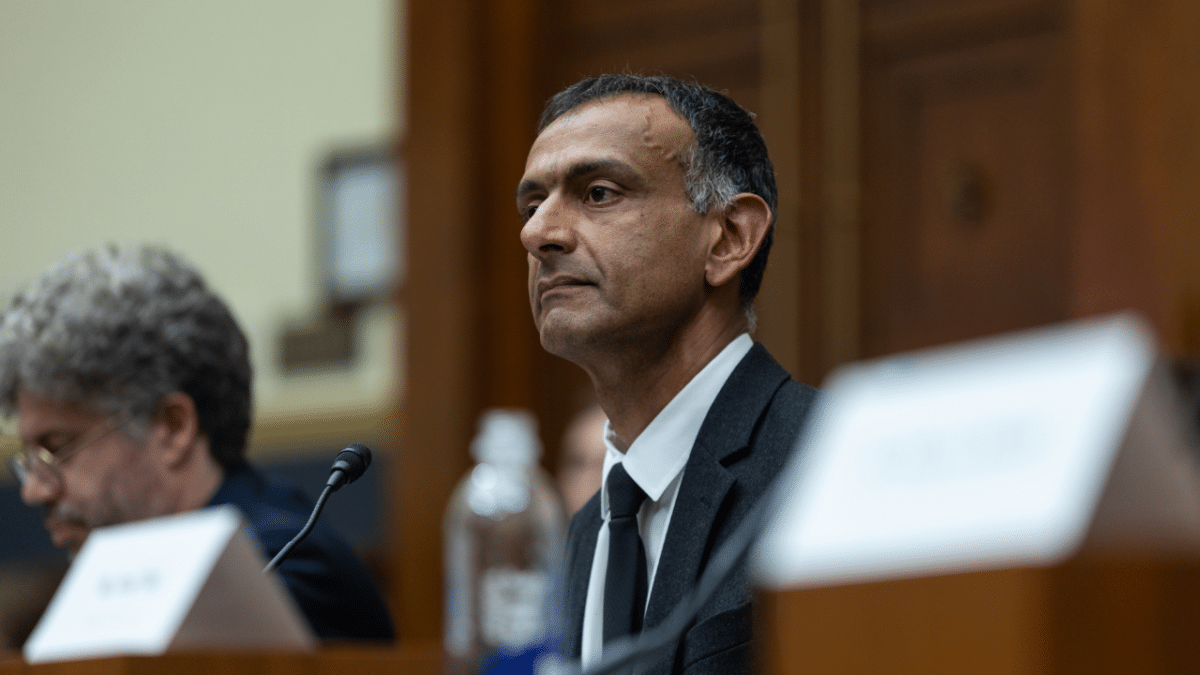
Paul Grewal, the lawyer who carried Coinbase through its defining courtroom war with the US Securities and Exchange Commission (SEC), is stepping down as chief legal officer after six years at the exchange.
Grewal broke the news himself in a post on X on Thursday, telling followers he will transition to an advisory role at the end of the month while continuing to serve on the board of Coinbase National Trust Company.
Why Grewal is Leaving
There is no falling out here and no boardroom drama. According to Coinbase’s announcement, Grewal is departing to work at a startup, though he has declined to name it and says he will reveal his next position in due course.
Instead, the exit reads like a lawyer closing a case file. In his farewell post, Grewal listed taking the company public, defeating the SEC, moving Coinbase’s incorporation from Delaware to Texas, and helping push the GENIUS and CLARITY bills through Washington before concluding that “now is my time for new adventures.”
The paperwork backs up the orderly handover. In an 8-K filing with the SEC, Coinbase disclosed that Grewal notified the company of his resignation on July 8, that it takes effect on July 31, and that he has signed a three-month advisory agreement that keeps him around through October. He will also continue supporting the company’s national trust charter work with the Office of the Comptroller of the Currency.
Six Years That Changed Crypto Law
Grewal joined Coinbase in the summer of 2020, replacing Brian Brooks and taking charge of legal, compliance, and government relations. His resume was unusual for crypto: before Coinbase, he was vice president and deputy general counsel at Facebook, and before that, he spent more than five years on the federal bench as a US magistrate judge in the Northern District of California.
Within a year of his arrival, he had helped shepherd Coinbase through its April 2021 Nasdaq direct listing, the first for a major US crypto exchange. Then came the fight that defined his tenure. In June 2023, the SEC under Gary Gensler sued Coinbase, alleging the company operated as an unregistered securities exchange, broker, and clearing agency. Legal observers widely viewed the case as existential, not just for Coinbase but for every US exchange listing tokens.
Grewal refused to settle. He fought the agency in court, pushed a rulemaking petition to compel the SEC to issue actual crypto rules, and battled for access to the regulator’s internal documents regarding its approach to digital assets. The gamble paid off in February 2025, when the agency, reshaped under the Trump administration, agreed to dismiss the case, a moment Coinbase celebrated in a blog post titled Righting a Major Wrong.
In a statement on Thursday, Grewal called leading Coinbase’s legal team through the industry’s biggest fight “the single greatest achievement of my six-year tenure.”
His fingerprints are on the policy side too. Coinbase became one of the largest donors to the Fairshake political action committee, and Grewal sat at the center of the lobbying push behind the GENIUS Act, the stablecoin law signed in July 2025 that has since triggered a corporate war between banks and crypto firms over its implementation. More recently, he was deep in negotiations on the CLARITY Act, the market structure bill that stalled for months over stablecoin rewards before Armstrong’s dramatic U-turn in April helped it clear a key Senate committee in May.
The timing of his exit is notable. Grewal hands over the legal reins just as the Senate returns from its break and prepares to resume work on CLARITY, the bill he described as one of his final missions at the company.
The New Guard: Abraham and VanGrack
Abraham has been at Coinbase since March 2021 and, in Grewal’s words, has been in the trenches with him on the company’s most important legal battles for more than five years. She framed her chapter as a shift from fighting regulators to building products, made possible by the path Grewal cleared.
VanGrack’s appointment may be the more telling move. A former general counsel at Citadel Securities and a former senior adviser at the SEC, he becomes Coinbase’s first vice chair and head of corporate affairs, a public-facing role representing the company before governments and policymakers worldwide.
He told the priority now is to “unlock products, expand jurisdictions,” and deepen relationships with partners globally. Chief policy officer Faryar Shirzad will continue running the global policy team.
The reshuffle lands as Coinbase accelerates its everything exchange ambitions, stretching beyond crypto into stock trading, prediction markets, and AI-powered investing tools. With the SEC war won and federal legislation within reach, the company is essentially swapping its wartime consigliere for a peacetime cabinet.
How COIN Stock Reacted
COIN shares took the news in stride. In the first full session after the announcement, the stock opened lower at $156.01 and dipped to an intraday low of $154.78 before buyers stepped back in, closing at $158.44, down a modest 0.58% from the previous close of $159.36. The recovery continued after hours, with the stock climbing 1.22% to $160.37 in overnight trading.
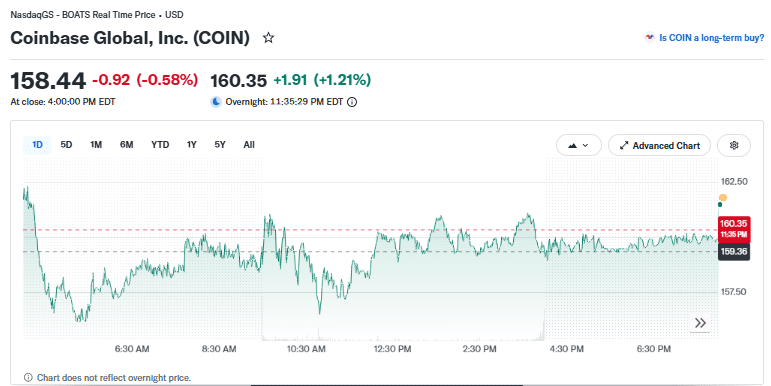
Volume told the same story. Roughly 4.68 million shares changed hands against a daily average of 9.3 million, hardly the signature of investors rushing for the exits over a leadership change. The muted reaction suggests the market sees the transition as planned rather than disruptive, helped by the internal succession and Grewal’s three-month advisory runway.
Zoom out, though, and the stock has bigger battles than a legal handover. COIN, now carrying a market cap of about $41.7 billion, still trades near the bottom of its 52-week range of $139.18 to $444.65 after a string of analyst price target cuts, even as the Street’s one-year consensus target sits far higher at around $229. The next real test arrives on July 30, when Coinbase reports second-quarter earnings, the first scorecard of the post-Grewal era.
Also Read: Nigel Farage Quits as UK MP Over £5M Crypto Gift From Tether Billionaire