Key Highlights
- Robinhood CEO Vlad Tenev defended the company’s tokenized stocks during a CNBC interview on September 9.
- Tenev said public companies control the rights attached to their shares but not necessarily securities issued by other companies that reference those shares.
- He said Robinhood’s stock tokens should not automatically require consent from the companies whose shares they reference.
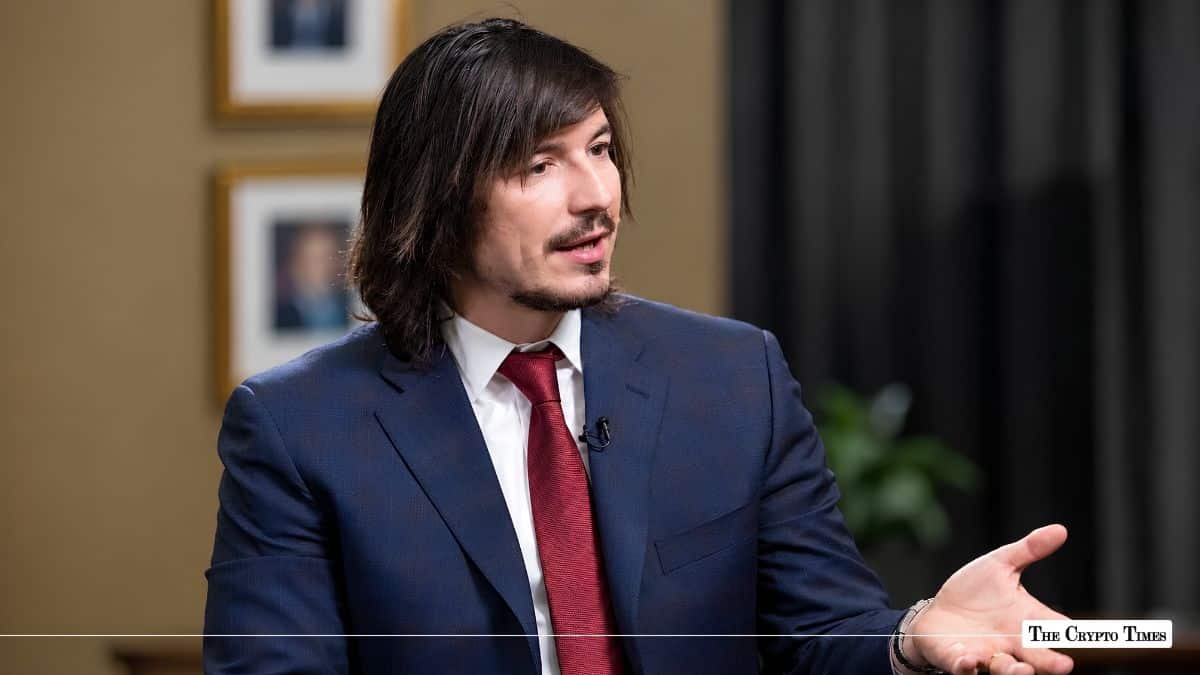
Robinhood CEO Vlad Tenev defended the company’s tokenized stock products during a CNBC interview on September 9, arguing that public companies do not control every financial product created by other companies that references their publicly traded shares.
Speaking on CNBC’s Squawk Box, Tenev said companies control the rights and obligations attached to the shares they issue, but that does not give them control over securities created by third parties.
“Issuers should have control and do have control over the rights and obligations of the stock that they issue, but that doesn’t mean they control everything about it.”
Tenev specifically said companies do not control other firms issuing securities that reference their shares.
Tenev explains Robinhood’s position on issuer consent
During the interview, Tenev was asked whether companies should approve financial products linked to their publicly traded shares.
He said the answer depends on how the product is structured.
“Issuer consent depends on what exactly you’re doing.”
Tenev said Robinhood’s stock tokens, which are issued through a separate entity and backed by underlying shares, should not automatically require consent from the companies whose stock they reference.
That is Robinhood’s position in the dispute and does not establish how regulators or courts would ultimately interpret the structure.
Tenev confirms token holders have no voting rights
Tenev also provided more detail about the rights attached to Robinhood’s stock tokens.
He confirmed that token holders do not receive the voting rights associated with the underlying shares.
CNBC also asked whether Robinhood would use the voting rights attached to those shares on behalf of token holders.
Tenev said Robinhood had not yet announced its plans for voting.
The arrangement means investors can receive economic exposure to the referenced stock without receiving the same shareholder rights attached to direct ownership.
What Robinhood’s stock tokens represent
Tenev said Robinhood’s stock tokens are debt securities backed 1:1 by the underlying shares, rather than direct ownership of those shares.
The tokens are issued by Robinhood Assets (Jersey) Limited, a separate entity from Robinhood’s U.S. brokerage operation. The underlying shares are held as collateral for the tokens.
The products are offered under Regulation S and are not available to U.S. customers.
The structure means the token provides economic exposure to the underlying stock without giving holders direct ownership or the associated shareholder rights.
Why AMC challenged Robinhood’s tokens
Tenev’s interview followed criticism from AMC Entertainment CEO Adam Aron, who said AMC had not authorized or endorsed Robinhood’s token linked to its shares.
Aron questioned the arrangement and said AMC would have outside securities counsel examine the product. He also raised concerns about the relationship between tokenized products, companies and their shareholders.
Aron described Robinhood’s approach as “contemptible, outrageous, disgusting, detestable, inexcusable, vile” and called for the AMC token to stop trading.
Tenev had previously responded to Aron’s criticism with “What’s the concern?” before providing a more detailed defense during the CNBC interview.
Tokenization executives raise different concerns
The debate has also drawn comments from executives working on other forms of tokenized equities.
Armani Ferrante, co-founder and CEO of Backpack, said some of AMC’s concerns about capital formation had substance. He argued that demand for a token does not necessarily translate into the same demand for the underlying stock.
Graham Rodford, CEO of Archax, similarly distinguished between putting an actual share on a blockchain and issuing a separate financial instrument that tracks the share.
“A tokenized stock should mean the stock, tokenized.”
The comments reflect different approaches to how traditional securities can be represented through blockchain infrastructure.
Broader questions around tokenized stocks
The disagreement comes as financial companies and digital-asset platforms explore different ways to bring traditional securities onto blockchains.
The structure of each product can affect ownership rights, voting, custody, redemption, and the role of the companies whose shares are referenced.
Robinhood’s model separates the token from direct ownership of the underlying stock, while other tokenization models seek to maintain a closer connection between the blockchain-based asset and the underlying security.
What comes next
AMC’s outside securities counsel review remains pending, while Robinhood has continued to defend its stock-token structure.
The dispute now centers on how these products should be classified, what rights token holders should receive, and how existing securities rules apply to blockchain-based instruments linked to public-company shares.
Also Read: RBI Official Warns on Legal, Privacy Risks in Tokenization