Key Highlights
- Michael Saylor said BIP-110 lacks meaningful economic consensus despite reported node adoption.
- He argued Bitcoin is not “one node, one vote,” stressing that economic participants carry greater influence.
- Saylor claimed more than 99% of Bitcoin’s economic weight has not adopted BIP-110 and reiterated his opposition.
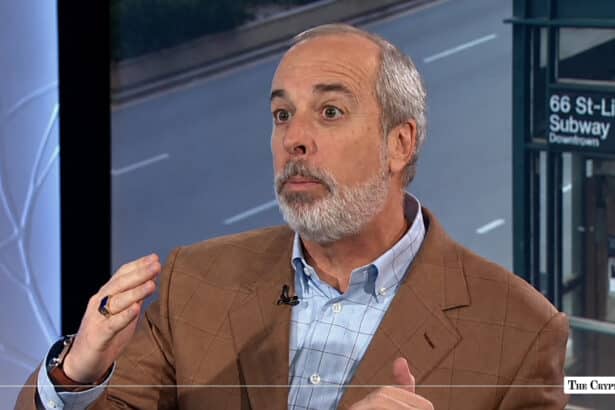
Michael Saylor, Executive Chairman of Strategy Inc. and one of Bitcoin’s most vocal advocates, has pushed back against claims of support for Bitcoin Improvement Proposal 110 (BIP-110), arguing that the proposal lacks meaningful economic consensus.
In a detailed X post on August 1, 2026, Saylor said less than 1% of Bitcoin’s economic weight has adopted BIP-110. He criticized claims that 16%-18% node adoption reflects broad support, arguing that they confuse software distribution with true economic consensus.
“Bitcoin is not one node, one vote,” Saylor emphasized.
He further explained that reachable node counts represent software endpoints, not economic actors. According to Saylor, a hobbyist node running on a personal computer is not economically equivalent to nodes operated by major exchanges, custodians, wallets, or payment applications serving millions of users. While every node is sovereign, he said they do not carry equal voting power over Bitcoin’s direction.
Why Saylor says BIP-110 lacks real support
Saylor said publicly available evidence shows BIP-110 adoption remains largely limited to Knots users and a few miners associated with OCEAN and DATUM pools. He added that no major exchange, custodian, ETF platform, wallet, or payment network has been identified as enforcing the proposal. He concluded that more than 99% of Bitcoin’s economic weight has not adopted BIP-110.
The latest comments build on his earlier criticism of the proposal. On July 15, 2026, Saylor described BIP-110 as a “Bitcoin Iatrogenic Proposal,” using the medical term “iatrogenic,” meaning harm caused by the treatment itself, to suggest the proposal could unintentionally damage Bitcoin’s core principles.
On July 19, he also published a list of 110 reasons explaining why he believes Bitcoin should reject BIP 110.
What BIP-110 aims to change
BIP-110 is a proposed temporary soft fork designed to limit non-financial data storage (often referred to as “junk” or arbitrary data) on the Bitcoin blockchain. Proponents argue it aims to preserve the network’s primary function as sound money by reducing blockchain bloat and improving efficiency.
However, critics argue it could set a precedent that could lead to increased centralization or censorship, potentially undermining Bitcoin’s permissionless and censorship-resistant nature.
Bitcoin community remains divided
The proposal has sparked debate within the Bitcoin community, highlighting long-standing tension between those who view Bitcoin primarily as a store of value versus those who support its use for broader data applications. Saylor’s comments add to the opposition from some institutional Bitcoin supporters, while the broader discussion over BIP-110 continues.
As the discussion continues, the Bitcoin community remains divided on whether BIP-110 represents a necessary safeguard or an unnecessary intervention. Saylor’s emphasis on economic consensus over node count serves as a reminder of the unique governance challenges facing the world’s largest cryptocurrency.
Also Read: Binance Founder Warns Crypto Users After Coldcard Hack Tops $70M