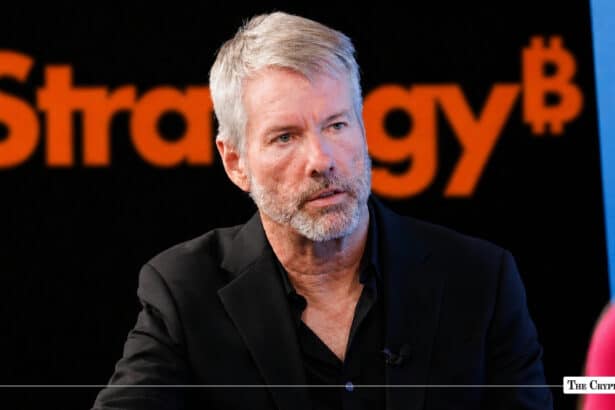
The long-simmering controversy over Bitcoin Improvement Proposal 110 (BIP-110) exploded back into the spotlight on July 15, as prominent Bitcoin advocate and Strategy Inc. co-founder Michael Saylor posted a terse critique on X: “BIP 110: Bitcoin Iatrogenic Proposal.”
The single-line statement instantly amplified an already polarized discussion about the temporary soft fork proposal, which seeks to limit non-financial data storage on the Bitcoin blockchain.
Saylor’s use of the medical term “iatrogenic”—referring to harm caused by a treatment itself—framed the proposal not as a solution but as a potential self-inflicted wound to Bitcoin’s core principles.
The Spark: Data Storage on Bitcoin
Bitcoin’s blockspace has faced increasing pressure since the 2022 activation of Taproot and the subsequent rise of Ordinals. This protocol allows users to inscribe arbitrary data—such as images, text, or even NFTs—directly onto satoshis, creating Bitcoin-native digital collectibles. Protocols like BRC-20 tokens and Runes followed, turning parts of the blockchain into a canvas for non-monetary uses.
Proponents of these innovations argue they represent organic demand for blockspace and generate fees that support miners, especially as the block subsidy halves over time. Critics, however, label much of this activity as “spam” that bloats the blockchain, increases node operating costs, raises fees for everyday transactions, and diverts developer attention from Bitcoin’s primary role as sound money.
The debate over what Bitcoin “should” be used for has intensified, echoing earlier conflicts like the block size wars.
What Is BIP-110?
BIP-110, also known as the Reduced Data Temporary Soft Fork (RDTS or sometimes referenced alongside BIP-444), proposes a one-year temporary consensus change authored primarily by a pseudonymous developer Dathon Ohm. It aims to restrict the embedding of arbitrary data while preserving monetary use cases.
The proposal includes key technical elements like limiting new outputs to 34 bytes (with OP_RETURN capped at 83 bytes), restricting data pushes and witness elements to 256 bytes, and temporary constraints on certain Taproot features and opcodes.
With this development, pre-activation UTXOs would be permanently exempt, and the rules would automatically expire after approximately 52,416 blocks (about one year). The proposal uses miner signaling via version bit 4, with potential early lock-in at 55% support in a retarget period or mandatory signaling around August 2026.
Supporters describe it as a focused intervention to correct distorted incentives created by the standardization of data storage, reduce burdens on full nodes, and refocus the ecosystem on Bitcoin as peer-to-peer electronic cash.
Saylor’s Critique: “Iatrogenic” Harm
Saylor’s July 15 post built on earlier comments where he warned that turning a spam dispute into a consensus-level change risks invalidating valid, fee-paying transactions and sets a dangerous precedent. He has argued that Bitcoin’s strength lies in its neutrality and that changes must achieve overwhelming alignment to avoid becoming “iatrogenic.”
In related statements, Saylor emphasized that hard consensus acts as Bitcoin’s “immune system,” allowing bad ideas to fail before they cause damage. Critics aligned with his view, including Blockstream co-founder Adam Back, contend that the proposal could lead to chain splits, undermine immutability, and erode trust in the protocol’s permissionless nature.
They argue that miners should not be forced into subjective judgments about transaction validity beyond fee payment and basic consensus rules.
Arguments Supporting the Proposal
Advocates, including some long-time developers associated with Bitcoin Knots, maintain that unchecked data storage harms decentralization by increasing resource requirements for running nodes. They point to periods of high inscription activity that spiked fees and argue the temporary nature of BIP-110 provides breathing room without permanent restrictions.
The proposal explicitly aims to keep all known monetary functions intact while discouraging what proponents see as abuse. It could also signal to the market that Bitcoin prioritizes its monetary properties, potentially attracting more conservative institutional capital. Supporters view opposition as defending niche use cases at the expense of the network’s long-term health.
As of mid-July 2026, miner signaling for BIP-110 remains minimal—hovering around or below 1% in recent periods. This falls far short of the thresholds needed for smooth activation.
The proposal faces an important window around early August 2026 for mandatory signaling phases. Without a dramatic surge in support, activation appears unlikely. Bitcoin’s governance model requires broad consensus across miners, node operators, developers, and users—not unilateral enforcement.
Broader Implications and Community Reactions
The BIP-110 saga highlights fundamental questions about Bitcoin’s evolution:
- Who decides what constitutes legitimate use of the network?
- How should temporary vs. permanent changes be evaluated?
- Can subjective policy preferences be encoded into consensus rules without compromising neutrality?
It has reignited discussions about User Activated Soft Forks (UASF) mechanics and the risks of forking the chain. Some see it as a healthy stress test of Bitcoin’s resilience; others worry it distracts from more pressing issues like miner revenue sustainability post-halving or scaling solutions at the edges (Lightning, sidechains, etc.).
Reactions on X and forums have been swift and divided since Saylor’s post. Some users thanked him for highlighting risks, while others accused critics of prioritizing corporate interests over protocol purity or defending “spam.”
Amid the chatter, Bitcoin’s price has shown resilience, trading in a range consistent with broader market conditions, which suggests the debate has not yet translated into a complete narrative. However, prolonged uncertainty could affect developer focus and ecosystem projects built around inscriptions or advanced scripting.
Outlook
Whether BIP-110 activates or fades remains uncertain, but its impact on the conversation is already significant. The proposal has forced the community to confront trade-offs between flexibility, neutrality, and resource management.
As Bitcoin continues maturing into a global monetary asset, episodes like this underscore that its greatest strength—and vulnerability—lies in its decentralized governance. Proposals must earn genuine, broad support or risk being labeled as cures worse than the disease.
For now, the “Iatrogenic Proposal” label has stuck, ensuring BIP-110 will be remembered as a flashpoint in Bitcoin’s ongoing quest to define itself. The coming weeks of signaling will provide clearer signals on whether this chapter closes quietly or escalates further.
Also read: Tax Rules Push 80% of India’s Crypto Trading Into Unregulated Futures