The cryptocurrency market showed resilience on July 14, 2026, as Bitcoin (BTC) and major altcoins largely held steady following a volatile session. Bitcoin traded around $62,650, up approximately 0.25% in the past 24 hours, with the total crypto market capitalization sitting near $2.16 trillion—a modest 0.24% decline. Despite the slight pullback in overall market value, several assets posted gains, underscoring selective strength amid lingering caution.
Renewed geopolitical tensions, particularly developments surrounding the fragile U.S.-Iran situation and broader Middle East dynamics, triggered risk-off sentiment across global markets. This led to a brief but sharp dip in Bitcoin below the $62,000 level earlier in the day before a recovery took hold. Trading volumes remained elevated, reflecting active participation from both spot and derivatives traders.
Bitcoin’s Brief Breach Below $61K Sparks Volatility
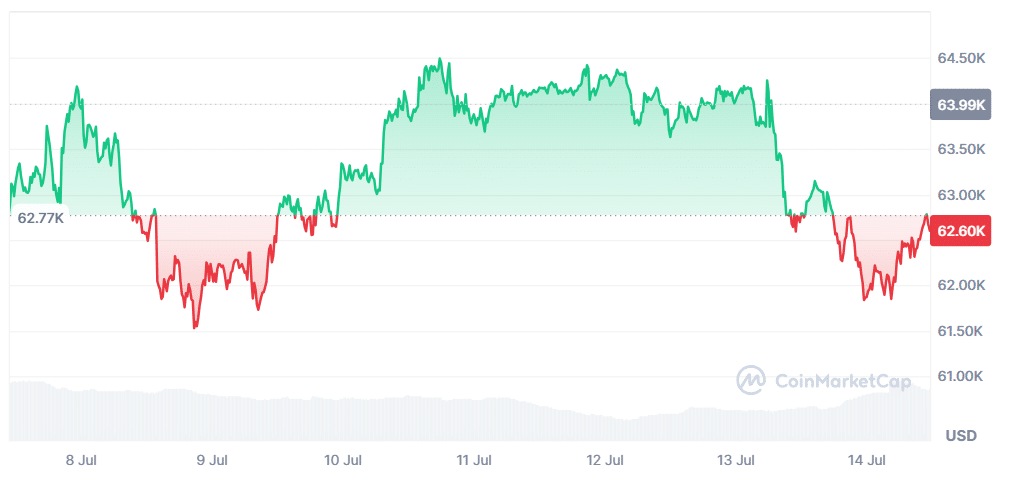
Bitcoin experienced notable intraday swings as geopolitical headlines intensified selling pressure. The leading cryptocurrency briefly slipped below $62,000 from the weekly high above $64,500, touching lows around the $61,800 area according to CoinMarketCap data, before rebounding toward current levels near $62,650. This move erased some recent gains but stayed within a relatively contained 24-hour range, with highs approaching $63,300 in earlier trading.
Analysts attributed the dip primarily to escalating concerns over Middle East stability, including reports tied to the U.S.-Iran dynamic and potential disruptions in energy routes. Such events often prompt investors to reduce exposure to risk assets, with Bitcoin—despite its “digital gold” narrative—frequently correlating with broader equity and commodity moves during acute geopolitical flare-ups.
The price action highlighted Bitcoin’s sensitivity to macro headlines even as institutional adoption via ETFs and corporate treasuries continues. Market dominance held firm near 58%, with Bitcoin’s market cap hovering around $1.25 trillion. Trading volume exceeded $32 billion in the last 24 hours, indicating healthy liquidity despite the volatility.
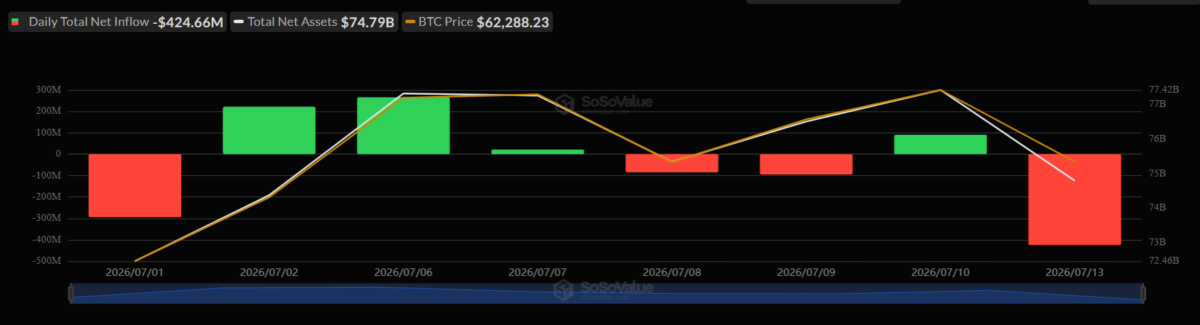
U.S. spot Bitcoin ETFs experienced significant pressure on July 13, recording a net outflow of approximately $424.7 million. BlackRock’s IBIT saw outflows of around $185.5 million, while Fidelity’s FBTC led redemptions with $245.6 million withdrawn. Grayscale’s GBTC contributed an additional $53.1 million in outflows, though a few smaller funds like VanEck’s HODL posted modest inflows.
Traders noted that the dip was relatively short-lived, with buying interest emerging near key support levels. This quick recovery suggested underlying demand and limited panic selling from long-term holders.
Liquidation Wave Sweeps Through Leveraged Positions
The brief price decline triggered a wave of liquidations in the futures market, as overleveraged long positions were forcibly closed. Coinglass data reported significant liquidations in the past 24 hours, with estimates pointing to hundreds of millions of dollars wiped out, potentially aligning with figures around $289 million in broader recent sessions amid similar pressures. The majority were long liquidations, amplifying the downward move through cascading forced sales.
Derivatives markets, which often amplify spot price movements, saw heightened activity. Platforms recorded spikes in liquidations as Bitcoin tested lower levels, contributing to the intraday volatility. Short liquidations were comparatively muted, reflecting the predominantly bullish positioning ahead of the geopolitical-driven selloff.
This liquidation event served as a reminder of the risks inherent in high-leverage trading. While painful for affected traders, such episodes can help clear excess speculation and establish firmer support. Open interest data suggested some deleveraging occurred, potentially setting the stage for more sustainable moves higher if macro conditions stabilize.
Broader market participants monitored funding rates and perpetual swap metrics closely, with many viewing the liquidations as a healthy reset rather than a sign of deeper weakness. Ethereum and other major assets experienced milder impacts, with fewer outsized liquidation clusters reported.
Market Outlook and Key Takeaways
Overall sentiment remained cautious, with the Crypto Fear & Greed Index lingering in “Fear” territory near 29. The session underscored crypto’s dual nature: sensitive to geopolitical shocks yet capable of quick recoveries driven by underlying adoption trends and liquidity.
Looking ahead, traders will watch for further developments in global geopolitics, upcoming macroeconomic data, and ETF flows. Bitcoin’s ability to hold above key supports after the dip bodes well for bulls, while altcoin resilience hints at diversification opportunities.
The market’s measured response—contained liquidations relative to total open interest and selective gains—suggests maturing infrastructure and participant behavior. As of press time, crypto continues to trade in a consolidation phase, balancing macro headwinds with long-term structural tailwinds. Investors are advised to monitor leverage levels and headline risks closely in the coming sessions.
Also read: White House Loses Top Crypto Negotiator Before CLARITY Act Vote