Key Highlights
- IREN shares dropped nearly 7% after the company awarded its co-founders $700 million in restricted stock units.
- Investors raised concerns about shareholder dilution and the timing of the large equity award as IREN continues to report losses.
- Rival Bitcoin miners are expanding into AI data centers, creating new revenue streams and outperforming companies focused primarily on Bitcoin mining.
Bitcoin mining company IREN (NASDAQ: IREN) saw its share fall nearly 7% on Monday. At the time of this writing, the stock was trading around $38.13, down from an intraday high of around $41.5.
Average daily trading volume stood at more than $41.58 million, while the company’s market capitalization was approximately $13.64 billion.
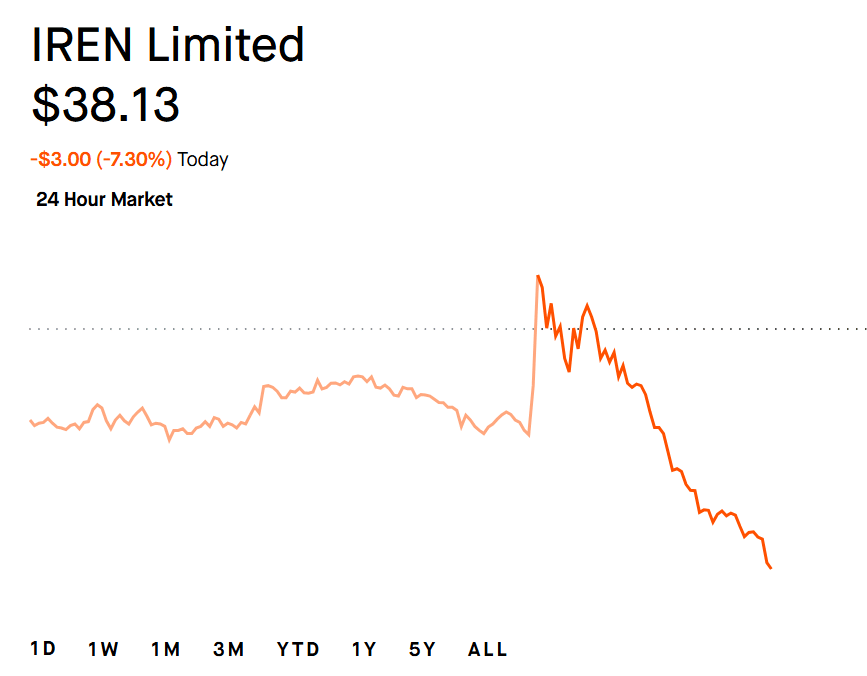
The decline came days after IREN awarded its co-founders approximately $700 million in restricted stock units (RSUs), representing about 5% of the company. The board approved the award on June 30 after receiving a recommendation from its Compensation Committee.
The $700M stock award sparks investor concerns
The package includes a total of 18,198,656 RSUs, with co-founders and co-CEOs Daniel Roberts and William Roberts receiving 9,099,328 RSUs.
Unlike cash bonuses, restricted stock units are not paid immediately. Instead, they give executives the right to receive company shares over time. This means the two CEOs will not get the full value of the award at once. They will receive the shares gradually based on the terms set by the company.
However, the size of the award appeared to worry investors because it represents about 5% of IREN’s outstanding shares.
Issuing millions of new shares can dilute existing shareholders by reducing their ownership percentage. Investors also questioned the timing of the award as the company continues to report net losses, contributing to selling pressure in the stock.
IREN continues to report losses
The company is still working to improve its financial performance. For the quarter ended December 31, 2025, IREN reported $184.7 million in revenue.
Despite the revenue growth, the company posted a net loss of $155.4 million during the same period, indicating that expenses continued to exceed revenue. Such earnings volatility remains common across the Bitcoin mining industry, where profitability is closely tied to Bitcoin prices and mining economics.
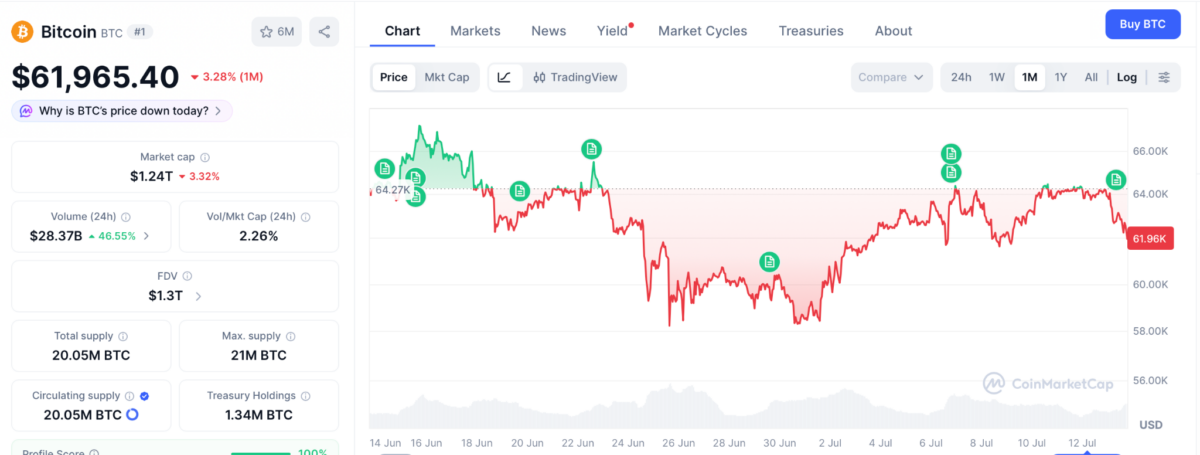
Bitcoin has also experienced increased volatility after reaching an all-time high of around $126,000 in 2025.
At the time of this writing, Bitcoin was down 3% today from an intraday high of around $64,000. This resulted in a 2.69% drop in the last seven days. Trading activity has improved to around $45% over the last 24 hours, pushing the volume to about $238.27 billion, but these are just traders selling the market.
In short, when mining becomes more expensive or Bitcoin prices fall, mining companies often face pressure on their earnings.
Rivals expand into AI infrastructure
At the same time, many of IREN’s competitors have diversified beyond Bitcoin mining. Companies including Riot Platforms, Cipher Mining, MARA Holdings, and TeraWulf have expanded into artificial intelligence (AI) data center infrastructure.
These firms use their computing infrastructure not only for Bitcoin mining but also to provide high-performance computing services to AI customers, creating an additional revenue stream that is less dependent on cryptocurrency prices.
Investors have generally responded positively to this strategy, with several AI-focused mining companies posting stronger share performance this year than miners focused primarily on Bitcoin.
Also Read: American Bitcoin (ABTC) Falls 7%, Down 95% From Peak