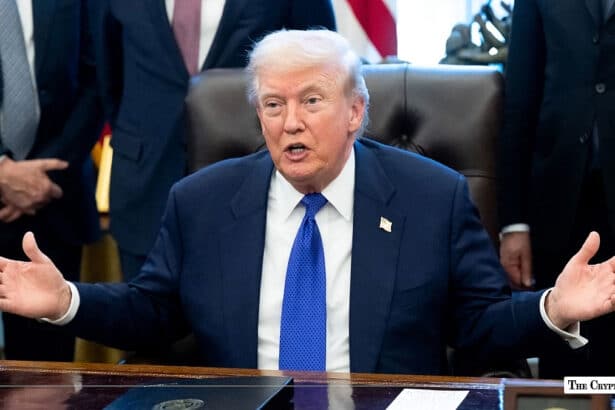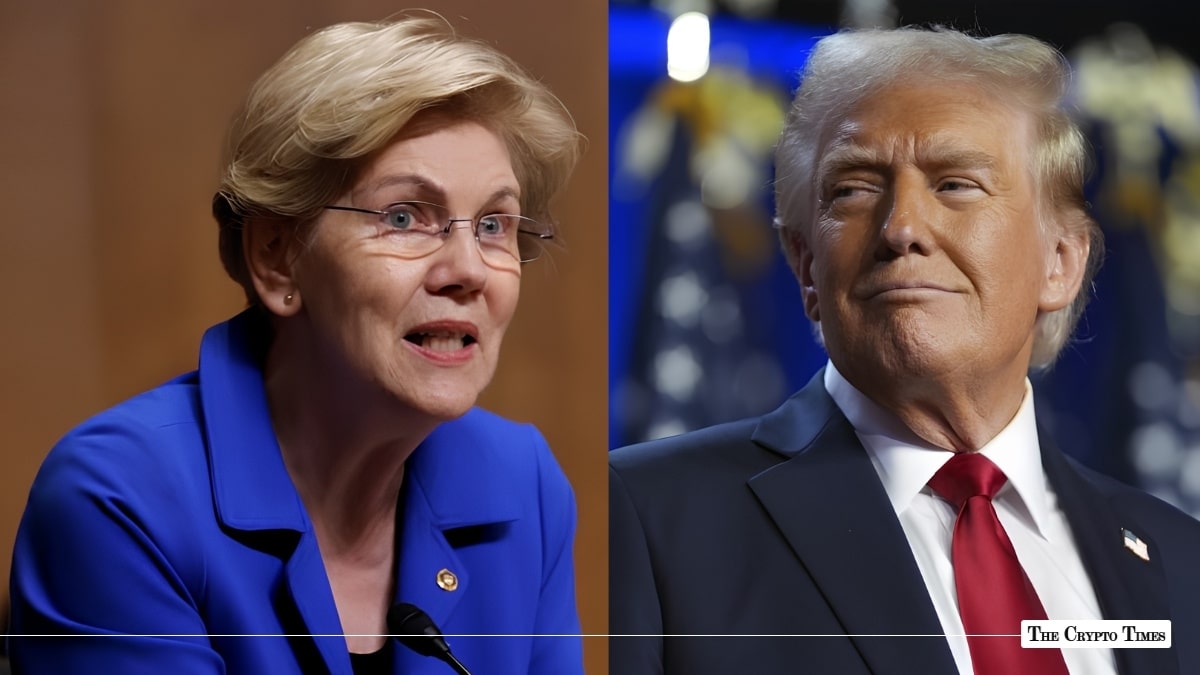
The fight over whether America’s crypto rulebook should restrain the President’s own crypto empire has reached a new pitch. On July 13, Senator Elizabeth Warren (D-MA), the ranking member of the Senate Banking Committee and Congress’s most prominent crypto skeptic, wrote to Majority Leader John Thune and Minority Leader Chuck Schumer arguing that President Trump’s newly disclosed cryptocurrency fortune makes robust ethics rules non-negotiable in any market-structure bill brought to the floor.
Her demand was blunt: the legislation “must prevent the President, Vice President, senior administration officials, members of Congress, and their families from profiting off the crypto industry.” Anything less, she wrote, “would be a flagrant giveaway to the President and his family at the expense of the public.”
The disclosure at the center
Warren’s letter is built around President Trump’s Public Financial Disclosure Report for 2025, released by the Office of Government Ethics on June 30. By her account of the filing, Trump earned roughly $1.4 billion from his cryptocurrency ventures in 2025 alone — more than double his total income the prior year, more than any publicly traded US crypto company earned last year, and enough to make crypto the vast majority of his income.
The letter walks through the family’s holdings in detail. Trump family members hold a 30% stake in an entity called DT Marks Defi LLC, which the disclosure ties to Coinbase accounts worth over $100 million and a 38.25% interest in WLF Holdco LLC, the vehicle that owns World Liberty Financial, the DeFi company Trump and his sons founded. DT Marks Defi LLC alone generated over $590 million in income in 2025, per the filing. The family also holds a stake, through an intermediary, in “Stablecoin Holdco LLC,” described as the President’s stablecoin business.
Warren flagged two further concerns from the disclosure: that unknown “third parties” own 61.75% of both the stablecoin and WLF holding companies, and that a deal struck four days before Trump’s 2025 inauguration, in which affiliates of UAE national security adviser Sheikh Tahnoon bin Zayed Al Nahyan purchased a 49% stake in World Liberty Financial, generated a $263 million windfall for the President.
Warren’s argument
The senator’s core contention is a conflict of interest: that Trump is urging Congress to pass crypto deregulation that “will almost certainly boost the value of his crypto holdings.” She paired that with a populist appeal, citing a CoinDesk survey showing crypto ranks at the bottom of voters’ priorities — just 1% named it their top concern, against 36% citing the cost of living — to argue the Senate is prioritizing a bill that could enrich the Trump family over Americans’ real economic worries. With Thune signaling a floor vote this month, Warren wrote, the President’s disclosure “underscores the severity of his crypto-related conflicts of interest.”
Warren’s broader campaign
The letter is the latest salvo in a sustained offensive. Days earlier, Warren branded the same bill “a ticket to sanctions evasion,” citing national-security concerns over its treatment of DeFi.
She has previously warned that passing the legislation without guardrails would “turbocharge Donald Trump’s brazen crypto corruption,” called for an SEC probe of World Liberty Financial, and co-sponsored the End Crypto Corruption Act, a Democratic bill that would prohibit the president, vice president, lawmakers, and their families from issuing or profiting from digital assets. As ranking member, she is the central figure marshaling Democratic resistance to the bill in its current form.
The CLARITY Act ethics fight
The ethics question Warren is pressing is one of three interlocking disputes that have stalled the CLARITY Act on the Senate calendar, alongside the Section 604 developer-protection provision and a battle over stablecoin yield. Democrats including Warren, Kirsten Gillibrand, and Angela Alsobrooks have insisted the bill cannot pass without ethics language covering the president and his family. The bill needs roughly seven Democratic votes to clear a 60-vote cloture threshold, making their demands difficult to dismiss.
The politics are knotty. The White House, through crypto adviser Patrick Witt, has said it will accept ethics rules that apply “across the board, from the president to the intern,” but will reject anything that singles out a specific office, official, or family. Republican Senator Cynthia Lummis has sought a middle path, promising “strong ethics provisions” ensuring “no elected official, regardless of party, can use their position to profit.” The debate has been complicated further by revelations that Gillibrand’s own son runs a crypto-backed derivatives startup — a reminder that conflict-of-interest concerns are not confined to one party.
The other side
The Trump administration and the bill’s supporters see it very differently. The White House has consistently maintained there are no conflicts of interest in the President’s crypto activities, and no finding of wrongdoing has been established; the disclosure figures Warren cites are drawn from a legally required filing, and her characterization of the bill as a “giveaway” is a political framing the administration rejects.
Backers also argue that market-structure legislation is about US competitiveness, not personal enrichment — a case House Republicans are set to press at a July 17 field hearing in New York titled “How the CLARITY Act Unlocks Innovation,” where the emphasis is on keeping crypto development onshore. Industry advocates contend that clear rules protect consumers and investigators alike, regardless of who profits.
Why it matters
The ethics provision has become the pivot on which the CLARITY Act’s fate may turn. Warren is using the President’s own disclosure, and its eye-watering numbers, including the $635 million his memecoin generated and the broader $1.4 billion crypto haul, as leverage to either force binding ethics language into the bill or deny it the Democratic votes it needs.
With a merged Senate text expected imminently and Thune targeting a floor vote before the August recess, the coming weeks will determine whether negotiators can craft ethics rules that satisfy Democrats without triggering a White House veto threat. Beyond this one bill, the standoff raises a question that now cuts across both parties: how a government should regulate an industry from which its most powerful officials are personally profiting.