Key Highlights
- A UAE-backed entity quietly acquired 49% of a Trump-linked crypto firm for $500 million just before the 2025 inauguration.
- Large portions of the investment flowed to Trump and Witkoff-linked entities, while Emirati tech executives gained board influence
- Months later, the U.S. eased restrictions and allowed the UAE expanded access to advanced AI chips critical for global AI leadership.
Three powerful forces are connected with each other: foreign money, a Trump-linked crypto venture, and U.S. control over advanced AI technology. Just days before Donald Trump returned to the White House in January 2025, an Abu Dhabi–based investment vehicle quietly made a massive move.
According to WSJ report, entities controlled by Abu Dhabi royal Sheikh Tahnoon bin Zayed Al Nahyan—one of the most influential figures in the UAE & the country’s national security adviser—signed a deal to purchase a 49% stake in the Trump family’s cryptocurrency venture, World Liberty Financial (WLF).
The $500 million agreement—which saw $187 million flow directly to Trump family entities—coincided with the UAE’s successful lobbying for access to highly restricted U.S. artificial intelligence chips.
The “Spy Sheikh” and the Half-Billion Dollar Stake
Sheikh Tahnoon, often referred to as the “Spy Sheikh” due to his role as the UAE’s National Security Adviser, oversees a $1.3 trillion empire that includes the AI firm G42 and the investment powerhouse MGX.
Roughly half of the investment was paid immediately, from that upfront payment, approximately $187 million to Trump family-linked entities, with additional millions tied to families of other co-founders.
$31 million was slated for entities tied to Steve Witkoff, Trump’s Middle East envoy and WLF co-founder. Executives tied to the Sheikh’s tech empire took board positions inside the crypto company. Two top executives from Tahnoon’s G42, including CEO Peng Xiao, reportedly joined WLF’s five-person board alongside Eric Trump and Zach Witkoff. In effect, the Emirati-backed group became the largest outside owner of the project.
A “Coup” for UAE: Chips for Crypto?
The timing of the investment has raised significant questions regarding potential conflicts of interest and national security. For years, the U.S. had blocked the UAE’s access to advanced AI chips over fears of technology leakage to China—specifically through Tahnoon’s G42.
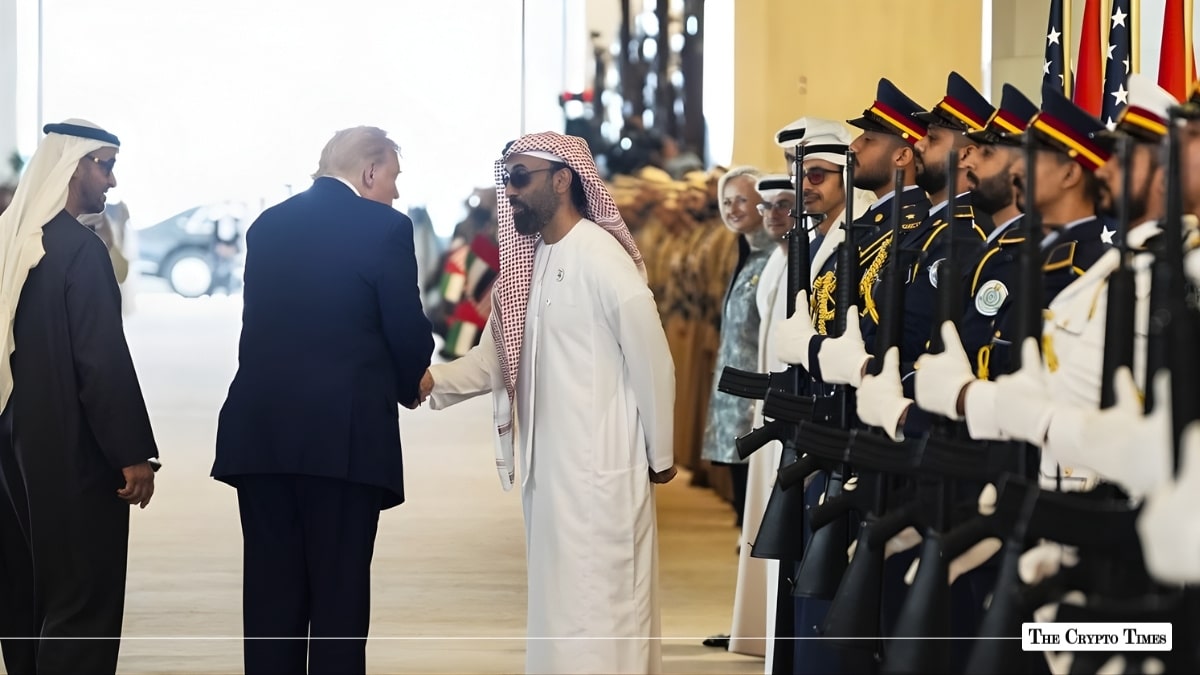
Two months after, in March, the WLF deal was signed, Tahnoon met with President Trump and Steve Witkoff at the White House. In May 2025, the Trump administration committed to providing the UAE with 500,000 advanced AI chips annually—enough to build one of the world’s largest AI clusters.
Shortly before the chip deal, WLF CEO Zach Witkoff announced that Tahnoon’s MGX would use WLF’s stablecoin to facilitate a $2 billion investment into the Binance exchange.
“Ridiculous and Un-American”: The Defense
World Liberty Financial and the White House have vehemently denied any wrongdoing or policy influence.
Spokesman David Wachsman defended the investment, stating, “The idea that, when raising capital, a privately held American company should be held to some unique standard that no other similar company would be held is both ridiculous and un-American.”
White House spokespeople emphasized that President Trump’s assets are in a trust managed by his children and that Steve Witkoff has divested from World Liberty Financial to avoid conflicts with his role as envoy.
Sources close to Tahnoon claim the investment was a “business decision” and was never discussed directly with President Trump during the due diligence process.
The deal marks the first known instance of a foreign government official taking a nearly half-ownership stake in a sitting U.S. President’s private company. While the Trump Organization has long courted international real estate deals, the integration of sovereign wealth, national security policy (AI chips), and decentralized finance (WLF) represents a new frontier in political-financial entanglements.
How Power Moves In Modern Economy?
First, large investments in digital assets are no longer just speculative bets — they can shape financial systems, create new forms of money, and influence how countries and companies move capital across borders.
Second, AI chips have become one of the most valuable resources in the world. These chips are essential for building advanced artificial intelligence.
Third, foreign money is now deeply connected to government decision-making. When powerful oversea investors are involved in companies linked to political figures, business decisions and public policy can appear closely intertwined – even if no laws ar broken.
Also Read: Could Kevin Warsh’s Crypto Ties Boost Trump’s Financial Play?