In a striking reminder that Bitcoin’s decentralized ethos still rewards the little guy, a solo miner using inexpensive hobbyist hardware has claimed a full block reward worth approximately $200,000. The event, which unfolded on July 9, 2026, highlights both the lottery-like nature of solo mining and the enduring accessibility of the Bitcoin network.
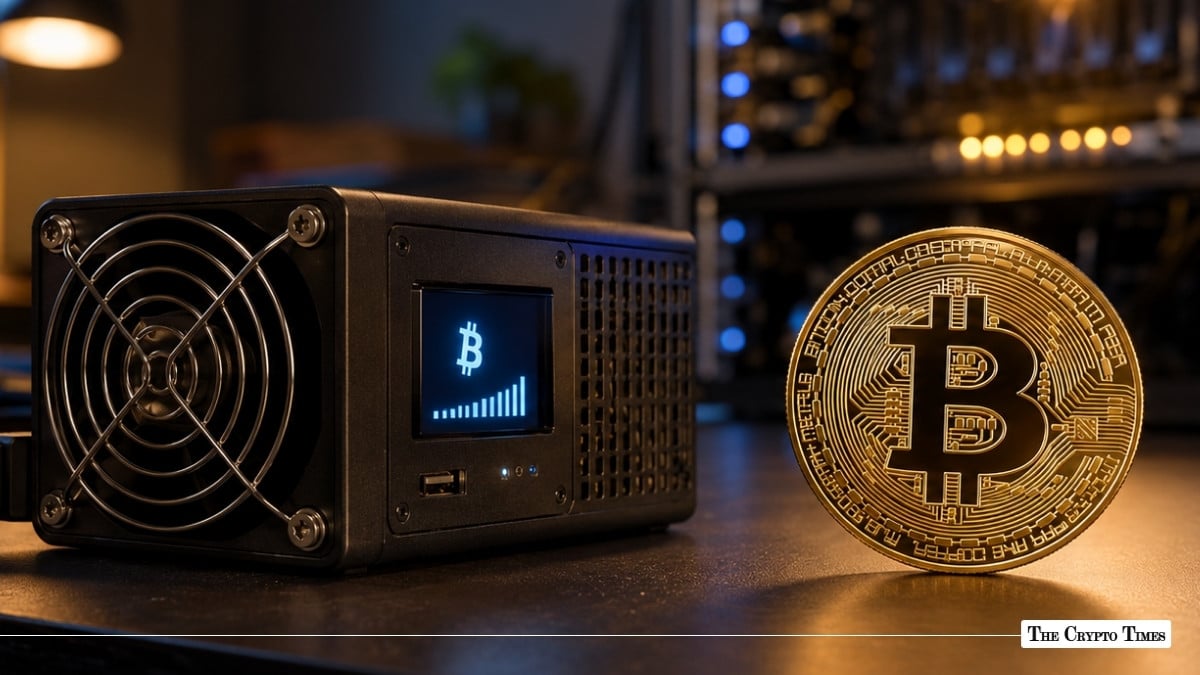
On July 9, 2026, a single Bitaxe Gamma device operating at roughly 1 terahash per second (TH/s) successfully mined Bitcoin block 957382 through Public Pool, a zero-fee solo mining service. The miner received the entire block reward of 3.1382 BTC, comprising the 3.125 BTC subsidy plus transaction fees, valued at around $200,000 at prevailing prices.
The device reportedly ran for only about eight hours before hitting the block. For context, the global Bitcoin network hash rate hovers near 900 exahashes per second (EH/s). A 1 TH/s machine represents a minuscule fraction of that total, making the probability of any single device finding a block in a given period extraordinarily low — estimates place the odds for such hardware at roughly 1 in 16,000 years of continuous operation. Yet lightning struck. This marks the second known instance of a Bitaxe device solo-mining a block via Public Pool.
The discovery was first highlighted by mining hardware providers and quickly verified via the on-chain transaction on explorers. Public Pool’s transparent, open-source design ensured the full reward flowed directly to the miner’s Bitcoin address with zero fees deducted. Early posts from accounts associated with Bitaxe communities celebrated the win, with one noting the “lucky share” achieved more than double the required difficulty threshold.
Bitaxe Gamma: Democratizing High-Stakes Mining
The Bitaxe Gamma is an open-source, palm-sized ASIC miner built around Bitmain’s BM1370 chip — the same silicon family used in industrial-scale Antminer equipment. Retail versions typically deliver 1.0–1.3 TH/s while consuming only 15–21 watts of power, making them ideal for home or even solar-powered setups. Units sell for $60–$150 depending on configuration.
Unlike traditional pooled mining, where rewards are shared proportionally, solo mining through services like Public Pool gives participants 100% of any block they find. This “lottery ticket” approach has gained popularity among enthusiasts precisely because of stories like this one. The Gamma model improves on earlier Bitaxe versions with better efficiency, quieter fans, and easier Wi-Fi connectivity, lowering the barrier for everyday users.
Public Pool itself plays a key role. Launched as a fully open-source, no-fee alternative to commercial pools, its routes work directly to individual miners. If their hardware solves a block, the reward bypasses any intermediary. This setup has proven especially attractive for low-hashrate devices that would earn negligible daily payouts in percentage-based pools but retain full upside potential in solo mode.
While the vast majority of Bitcoin mining is now dominated by large operations with massive ASIC farms, events like this underscore that the protocol itself remains permissionless. No minimum hash rate is required to participate — only electricity, compatible hardware, and patience.
What This Means for Bitcoin’s Future and Decentralization
This headline-grabbing win arrives at a time when concerns about mining centralization continue to surface. Industrial players with access to cheap power and cutting-edge chips control the bulk of network hash rate. Yet the possibility, however remote, for a garage miner to claim a six-figure reward reinforces Bitcoin’s core value proposition: anyone can join the network’s security and consensus mechanisms.
For the broader ecosystem, such stories serve as powerful marketing for accessible mining hardware. Manufacturers of devices like the Bitaxe have seen renewed interest, with some sellers noting spikes in orders following similar past wins. At the same time, they temper expectations: these events are statistical outliers, not reliable income sources. Most solo miners will run for years without success, treating the activity more like a hobby with occasional windfall potential.
From a technical standpoint, the block find also validates ongoing improvements in small-scale ASIC design. The BM1370 chip’s efficiency allows meaningful participation without industrial infrastructure. Combined with innovations in open-source firmware (such as AxeOS) and user-friendly pools, the barrier to entry keeps dropping.
Critics of proof-of-work often point to energy consumption and economies of scale as barriers to true decentralization. Moments like this push back against that narrative, showing that even modest contributions can occasionally pay massive dividends. The network’s difficulty adjustment ensures that no single class of participant can be permanently locked out.
As Bitcoin matures into an asset class with institutional adoption, these human-interest stories remind observers of its grassroots origins. A $150 device, a few hours of runtime, and one fortuitous nonce produced a reward that many full-time miners chase for months.
Whether this inspires more hobbyists to plug in their own Bitaxe units remains to be seen. What is certain is that Bitcoin’s protocol continues to deliver on its promise of open, borderless, and every once in a while, spectacularly rewarding participation. For the anonymous winner, it was the ultimate validation of a long-shot bet on the world’s first cryptocurrency.
Also read: US Government Sends $288M in Seized Bitcoin, Ether to Coinbase Prime