
Bitcoin is under pressure again, but the character of this pullback matters as much as the size of it. BTC traded down 1.84% over the past 24-hours to $62,790, modestly underperforming the total crypto market’s 1.38% decline. The move was not a broad rush for the exits so much as a mechanical cleanse of leveraged bets, with the market’s attention already fixed on Wednesday’s US inflation data.
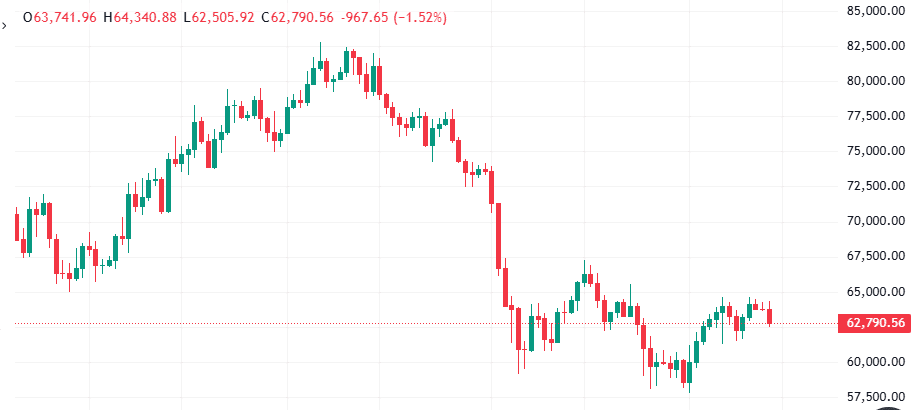
– Souce: Bitcoin (July 13) Price Chart, CoinMarketCap
A leverage flush, not a spot exodus
The primary driver was a concentrated wave of forced position closures. Bitcoin liquidations totaled $73.15 million, and the imbalance told the story: long liquidations of $62.63 million dwarfed the $10.52 million in shorts. In other words, over-extended bullish leverage was the fuel for the drop, and this was a futures-led reset, with spot selling pressure comparatively contained.
That distinction is important for what comes next. A purge of weak, leveraged longs can lay a healthier foundation for a market if genuine spot demand steps back in, because it clears out the fragile positioning that tends to amplify downside cascades. The risk is that leverage simply rebuilds too quickly, so traders will be watching for sustained high funding rates or another sharp climb in open interest as a sign the froth is returning.
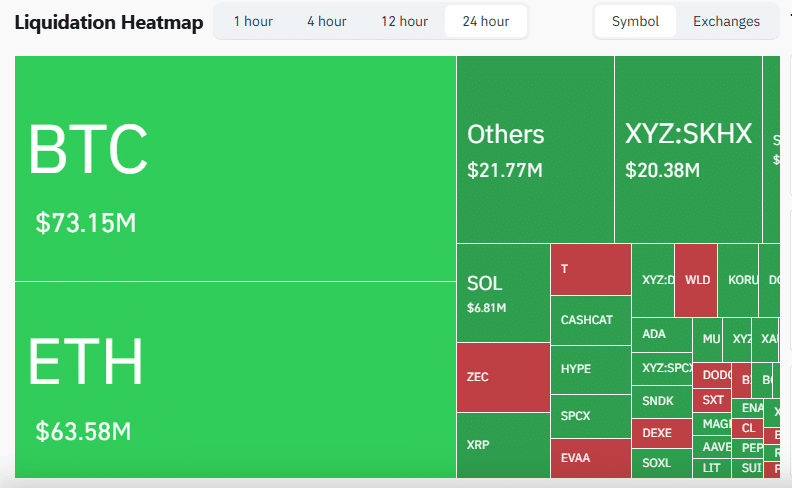
– Source: Coinglass 24-Hour Liquidations data
Macro risk-off: US-Iran and rate fears
The deleveraging did not happen in a vacuum. Bitcoin’s slide came amid a broader risk-off tone in traditional markets, driven by escalating US-Iran tensions following American strikes near the Strait of Hormuz that pushed oil prices higher and revived fears of stickier inflation. A hotter energy-cost backdrop feeds directly into worries that the Federal Reserve will hold rates higher for longer, an unfriendly environment for non-yielding risk assets like Bitcoin.
Yet there was a note of relative resilience. Bitcoin’s 24-hour move showed a 76.5% correlation with gold, underscoring a shared, macro-driven trade. BTC’s 1.84% dip was actually shallower than gold’s 1.6% drop, performing roughly in line with the classic safe-haven, and notably firmer than in past geopolitical shocks. That relative composure comes against a fragile liquidity backdrop: spot Bitcoin ETFs bled billions in June before flows turned marginally positive in recent sessions, leaving institutional demand cautious rather than committed.
The levels that matter
Technically, Bitcoin is defending a pivotal line. As per data from CoinMarketCap, price is testing the 50% Fibonacci retracement near $62,498, a level bulls need to hold. A successful defense could see BTC consolidate and grind back toward the $63,600-$64,000 zone, which aligns with the 38.2% Fibonacci level. A failure, however, opens the door to the 61.8% retracement near $61,370.
The near-term signposts are clear: a daily close below $62,400 would confirm a bearish breakdown and risk another wave of liquidations, while a reclaim of $63,600 would signal stabilization. The broader structure remains cautious: Bitcoin continues to trade below its major moving averages, keeping the near-term bias defensive within a well-worn range.
All eyes on CPI
The immediate trigger sits just ahead. June’s US Consumer Price Index (CPI) lands on Wednesday, and it is the single most important variable for Bitcoin’s next move. A cooler-than-expected print would revive hopes of eventual Fed easing, pressuring yields and the dollar and potentially giving BTC the fuel to challenge overhead resistance. A hotter number would reinforce the higher-for-longer narrative and could knock Bitcoin toward the lower end of its range. The oil-to-inflation channel opened by the Iran conflict only sharpens the stakes, and the reading feeds directly into rate expectations heading into the July 28-29 FOMC meeting, and into Fed Chair Kevin Warsh’s congressional testimony the same week.
The takeaway
This dip reads as a technical deleveraging event, amplified by cautious macro sentiment rather than a fundamental break. Bitcoin flushed out weak leverage while showing more poise than traditional havens, but it remains hostage to the same forces pressuring all risk assets: geopolitics and the rate outlook. As Bitcoin continues to navigate a choppy range, the question is straightforward: can it defend the $62,500 support into the CPI release, or does a hot print tip the balance lower? The answer likely sets the tone for the sessions ahead.
Also Read: “110 Things More Dangerous Than Spam”: Saylor Says BIP-110 Could Invalidate Bitcoin Transactions