Crypto Times Logo Black
Google News Follow Banner
  • News
    • Market
    • Bitcoin
    • Ethereum
    • Altcoins
    • Regulations & Policies
    • DeFi News
    • Blockchain News
    • Industry
  • Exclusive
    ExclusiveShow More
    The Wall Around Mint Street: How the RBI Spent a Year Shutting Crypto Out of Indian Banking
    The Wall Around Mint Street: How the RBI Spent a Year Shutting Crypto Out of Indian Banking
    Michael Saylor’s Strategy
    Why Michael Saylor’s Strategy Is Selling Bitcoin After Years of Buying
    Anthropic’s Claude Fable 5 Crypto Hacks
    Anthropic’s Claude Fable 5: The AI That Could Supercharge Crypto Hacks and Defenses
    CLARITY Act Stalls Why Senate's August Recess Puts US Crypto Rules at Risk
    CLARITY Act Stalls: Why Senate’s August Recess Puts US Crypto Rules at Risk
    Three Stories, One Pattern Why Binance Is Having Its Worst Week Since the Pardon
    Three Stories, One Pattern: Why Binance Is Having Its Worst Week Since the Pardon
  • Opinion
    OpinionShow More
    The Bitcoin Treasury Blueprint What Stress Testing on Strategy Inc.’s MSTR-STRC Reveals
    The Bitcoin Treasury Blueprint: What Stress Testing on Strategy Inc.’s MSTR-STRC Reveals
    Why Wall Street is Divided Michael Saylor’s Scarcity vs. Tom Lee’s Staking Empire
    Why Wall Street is Divided: Michael Saylor’s Scarcity vs. Tom Lee’s Staking Empire
    The Arthur Hayes Paradox Macro Prophet or Market Opportunist
    The Arthur Hayes Paradox: Macro Prophet or Market Opportunist?
    RBI Denies Gold Sale Amid Oil Crisis: Could It Speed Up India's Digital Rupee Push?
    RBI Denies Gold Sale Amid Oil Crisis: Could It Speed Up India’s Digital Rupee Push?
    The CLARITY Act War Starts Jamie Dimon Vs Armstrong
    The CLARITY Act War Starts: Jamie Dimon Vs Armstrong
  • Learn
    • Explained
    • How To
    • Insights
  • Videos
  • More
    • About Us
    • Our Authors
    • Contact Us
    • Editorial Policy
The Crypto TimesThe Crypto Times
  • All News
  • Market
  • Bitcoin
  • Ethereum
  • Altcoins
  • Regulations & Policies
  • Blockchain
  • DeFi
  • Industry
  • Exclusive
  • Opinion
Search
  • News
    • Market
    • Bitcoin
    • Ethereum
    • Altcoins
    • Regulations & Policies
    • Blockchain
    • DeFi
    • Industry
    • Exclusive
    • Opinion
  • Learn
    • Explained
    • How To
    • Insights
  • Quick Links
    • About Us
    • Our Authors
    • Contact Us
    • Editorial Policy
    • AI Policy
    • Sponsored & Advertorial Policy
  • Videos
  • Glossary
Follow US
© 2026 By Crypto Times. All Rights Reserved.
Bitcoin News

“110 Things More Dangerous Than Spam”: Saylor Says BIP-110 Could Invalidate Bitcoin Transactions

Michael Saylor echoed Adam Back's opposition to Bitcoin's BIP-110, warning the proposal could set a dangerous precedent by invalidating currently valid, fee-paying transactions.

Written By Dishita Malvania
Published 1 hour ago
Make The Crypto Times preferred on GoogleGoogle
Share
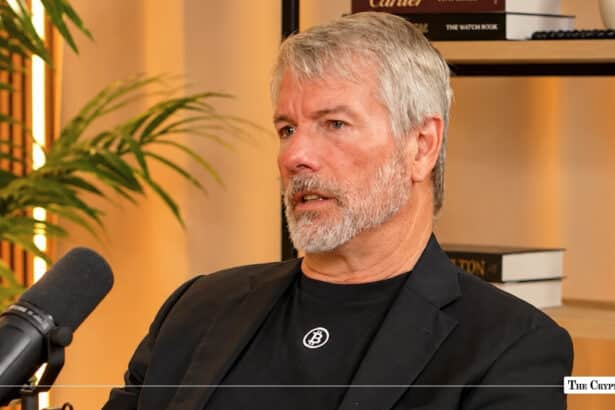
110 Things More Dangerous Than Spam Saylor Says BIP-110 Could Invalidate Bitcoin Transactions

Strategy executive chairman Michael Saylor and Blockstream CEO Adam Back have escalated their opposition to BIP-110, the contentious proposal seeking to restrict non-monetary data on the Bitcoin network, just weeks before the plan reaches its make-or-break activation window.

In a post on X on Saturday, Saylor dismissed the spam concerns driving the proposal and framed the fix itself as the real threat to the network.

There are 110 things more dangerous to Bitcoin than spam.

BIP 110 turns a spam dispute into a consensus change that would invalidate some currently valid, fee-paying transactions.

That precedent is the danger. We should save our energy for threats that really matter. $BTC https://t.co/LoSkl9XSo1

— Michael Saylor (@saylor) July 11, 2026

“There are 110 things more dangerous to Bitcoin than spam. BIP 110 turns a spam dispute into a consensus change that would invalidate some currently valid, fee-paying transactions. That precedent is the danger. We should save our energy for threats that really matter,” Saylor wrote.

Saylor’s warning came as a quote post of a lengthy statement from Adam Back, the Blockstream co-founder whose Hashcash design is cited in the Bitcoin whitepaper. In his post, Back addressed the newcomers supporting the propoMichael Saylor, Adam Back Draw a Line Against Bitcoin’s BIP-110sal directly, saying he listened to a Twitter Space hosted by BIP-110 supporters earlier in the week and came away concerned they were “about to fork off and get disillusioned without understanding why Bitcoin rejected 110 robustly.”

Show AI Summary
Michael Saylor and Adam Back oppose BIP-110, a proposal to restrict non-monetary data on Bitcoin, just weeks before its activation window
Adam Back warned BIP-110 supporters they may fork off and get disillusioned without understanding why Bitcoin rejects the proposal, citing decentralization
BIP-110 faces low miner signaling and node adoption, with activation projected for September 1, and critics argue it may produce a minority chain rather than a protocol upgrade

Back Says Bitcoin “Respectfully Says No”

Back argued that the decentralization underpinning Bitcoin is precisely what works against BIP-110, describing the proposal at its most basic level as “a quest to police other people.” He said supporters mean well and articulate ideas that make emotional sense, but that their approach conflicts with permissionless, censorship-resistant money.

“You can modify your software, but not anyone else’s,” Back wrote, adding that Bitcoin’s IETF-like technical consensus process creates a protective change resistance where no developer can push through changes without agreement from hundreds of other developers and protocol observers.

The Blockstream CEO also pushed back against suspicion of developer motives, a recurring theme among BIP-110 supporters. He said he hates spam “with a passion” and noted that fighting it was how he came to design Hashcash while researching decentralized bearer money nearly three decades ago.

Back closed with what he called the tough pill: supporters are free to club together and create a fork, “but Bitcoin won’t be joining it.” He invited them to rejoin Bitcoin now, or later, “if you’re not convinced and need to experience 110 forking off and fizzling for yourself.”

What is BIP-110 and Why the Fight Matters

BIP-110, formally titled the Reduced Data Temporary Softfork, was introduced in December 2025 under the pseudonym Dathon Ohm, with Bitcoin Knots maintainer Luke Dashjr credited on the original draft. The proposal first circulated as BIP-444 before being renumbered.

The plan would impose seven consensus rules restricting arbitrary data in Bitcoin transactions for roughly one year, capping OP_RETURN outputs at 83 bytes and data pushes at 256 bytes. The rules primarily target Ordinals inscriptions, BRC-20 tokens, and Runes, which store images and token data in Bitcoin block space that supporters of the proposal consider spam.

The dispute intensified after Bitcoin Core v30 removed the long-standing default OP_RETURN relay limit in 2025, a policy change that BIP-110 backers see as opening the door to blockchain bloat. Their answer is to move data limits into consensus rules, where no single software release can undo them.

The activation mechanism is where the risk concentrates. BIP-110 uses a user-activated soft fork, a design in which nodes enforce the new rules regardless of miner agreement, with a 55% miner signaling threshold rather than the customary 90% to 95%. A mandatory signaling window arrives near block 961,632, projected for early August 2026, with activation targeted around block 965,664 near September 1.

The Numbers Are Not There

The support data paints a stark picture. Miner signaling for BIP-110 sits under 1% as of July 2026, with no major mining pool backing the proposal. Node adoption hovers in the low single digits, most of it from Bitcoin Knots, the alternative node implementation maintained by Dashjr.

Back has been hammering this point for weeks. In early June, he called the proposal technically flawed, rejected comparisons with the 2017 SegWit activation, and warned that forcing a UASF without genuine ecosystem backing produces a minority chain rather than a protocol upgrade. 

Critics have also flagged that the specification concedes rare pre-signed Taproot transactions could freeze funds, and that a split would carry no replay protection, leaving transactions valid on both chains.

Proponents counter that Ordinals-driven bloat is a serious threat requiring an imminent fix, and argue the fork’s temporary one-year design means it would not invalidate fee-paying transactions over the long term. Ordinals activity has, however, fallen sharply from its 2023 peak, which raises questions about whether a contentious consensus change is needed at all.

The BIP-110 episode is now widely viewed as the most significant protocol-level dispute since the Blocksize Wars of 2015 to 2017, and its resolution will shape how Bitcoin handles contested changes going forward. On the evidence so far, with major economic and technical stakeholders lined up against it, BIP-110 appears headed toward either a failed activation or a small minority chain in August, exactly the outcome Back has been predicting.

Also Read: StarkWare CEO Says Bitcoin’s 21M Supply Cap ‘Doesn’t Make Sense’

Disclaimer: The information researched and reported by The Crypto Times is for informational purposes only and is not a substitute for professional financial advice. Investing in crypto assets involves significant risk due to market volatility. Always Do Your Own Research (DYOR) and consult with a qualified Financial Advisor before making any investment decisions.

Follow The Crypto Times on Google News to Stay Updated!      Google News

Share This Article
Whatsapp Whatsapp LinkedIn Telegram Copy Link

Latest News

Pakistan's Top Islamic Scholar Rules Bitcoin, Ethereum, and USDT Haram
Pakistan’s Top Islamic Scholar Rules Bitcoin, Ethereum, and USDT Haram
Ethereum Crosses $1,800, and Eric Trump Has Just Three Words
The Wall Around Mint Street: How the RBI Spent a Year Shutting Crypto Out of Indian Banking
Hedera's Biggest DeFi Lender Bonzo Lend Hacked for $9M, $5.25M Bridged to Ethereum
Hedera’s Biggest DeFi Lender Bonzo Lend Hacked for $9M, $5.25M Bridged to Ethereum
Ethereum L1 Tops Public Networks With Over $19B in Tokenized Assets

Find Us on Socials

You may also like

Empery Digital Sells 1,400 BTC to Cut Debt, Fund Expansion

Satoshi’s 16-Year-Old Prediction Rings True as Corporate Giants Stack BTC Amid 2026 Correction

Satoshi’s 16-Year-Old Prediction Rings True as Corporate Giants Stack BTC Amid 2026 Correction

Leverage Returns to Bitcoin Futures as Market Sits in Squeeze-Prone Zone

Leverage Returns to Bitcoin Futures as Market Sits in Squeeze-Prone Zone

Bitcoin Holds Steady Near $62,500 Amid Renewed US-Iran Tensions

Bitcoin Holds Steady Near $62,500 Amid Renewed US-Iran Tensions

The Crypto Times Logo PNG

Providing real-time, accurate Crypto reporting. Your trusted source for Crypto News and Research.

Stay Updated

All News
Exclusive
Opinions
Learn
Videos
Glossary

Company

About Us
Our Authors
Editorial Policy
AI Policy
Advertorial Policy

Get In Touch

Contact Us
Career

Find Us on Socials

X-twitter Linkedin Telegram Youtube Instagram

© 2026 The Crypto Times | A BITROCK TECHNOLOGIES L.L.C. Company.

DMCA.com Protection Status
  • Terms and Conditions
  • Disclaimer
  • Privacy Policy
  • Cookie policy
Do Not Sell or Share My Personal Information