
As Bitcoin hovers near key technical levels in early July 2026, derivatives markets show early signs of stabilization following recent volatility. With the asset attempting to claw back ground after dipping below $60,000 in late June, analysts are closely watching on-chain and futures data for clues about the next leg.
While leverage appears to be returning to the ecosystem, broader conviction remains elusive, leaving the market in a delicate, squeeze-prone balance.
According to CryptoQuant data, Bitcoin’s Estimated Leverage Ratio across all major exchanges has surged to 0.25 as of July 9, marking its highest level in the observed period and a sharp recovery from the June 30 low of 0.156.
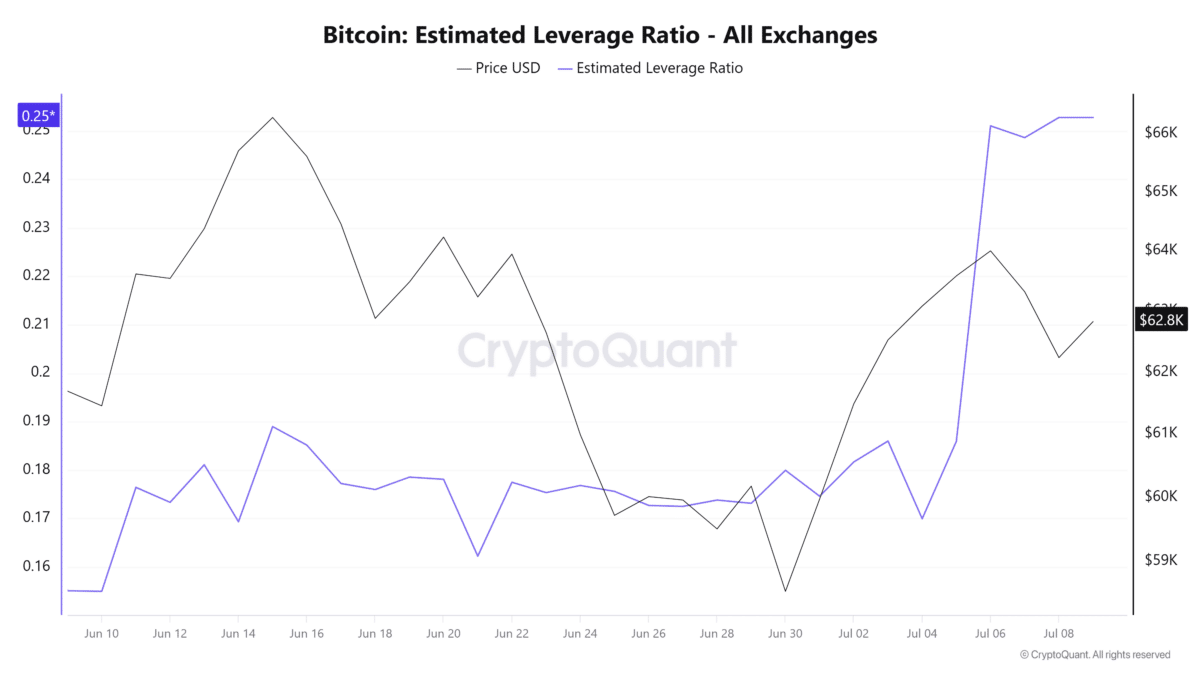
This metric, which approximates average trader leverage by comparing open interest to exchange BTC reserves, shows a dramatic breakout in early July. While Bitcoin’s price currently trades at $62,800, within a broader June–July range of roughly $59,000 to $66,000, the leverage ratio has climbed steeply from the 0.17–0.18 zone, indicating traders are rapidly rebuilding exposure through derivatives even as spot prices consolidate.
However, the divergence between rising leverage and relatively muted price action underscores the cautious nature of the current recovery. Such elevated leverage levels increase the market’s sensitivity to volatility, raising the potential for both sharp upside squeezes and cascading liquidations if support levels fail.
With the ratio now at its recent peak, analysts will be watching closely to see whether spot inflows and on-chain capital flows can catch up, or if this leverage rebuild remains a derivative-only phenomenon that could unwind quickly in the absence of stronger conviction.
Derivatives Markets Show Leverage Rebuilding
Bitcoin futures and perpetual contracts have registered notable shifts in recent sessions. Open interest, a key measure of outstanding derivative positions, has stopped its downward slide and begun stabilizing. This halt in deleveraging suggests that traders are no longer rushing to exit positions en masse, with some even adding fresh exposure as prices test support zones.
Leverage metrics are rising alongside this stabilization. Funding rates on major perpetual futures platforms have turned positive, indicating that long positions are paying shorts to maintain their bets. Annualized rates have hovered in the mid-single digits to low double digits in recent days, reflecting a mild bullish bias without reaching the extreme euphoria seen in prior rallies.
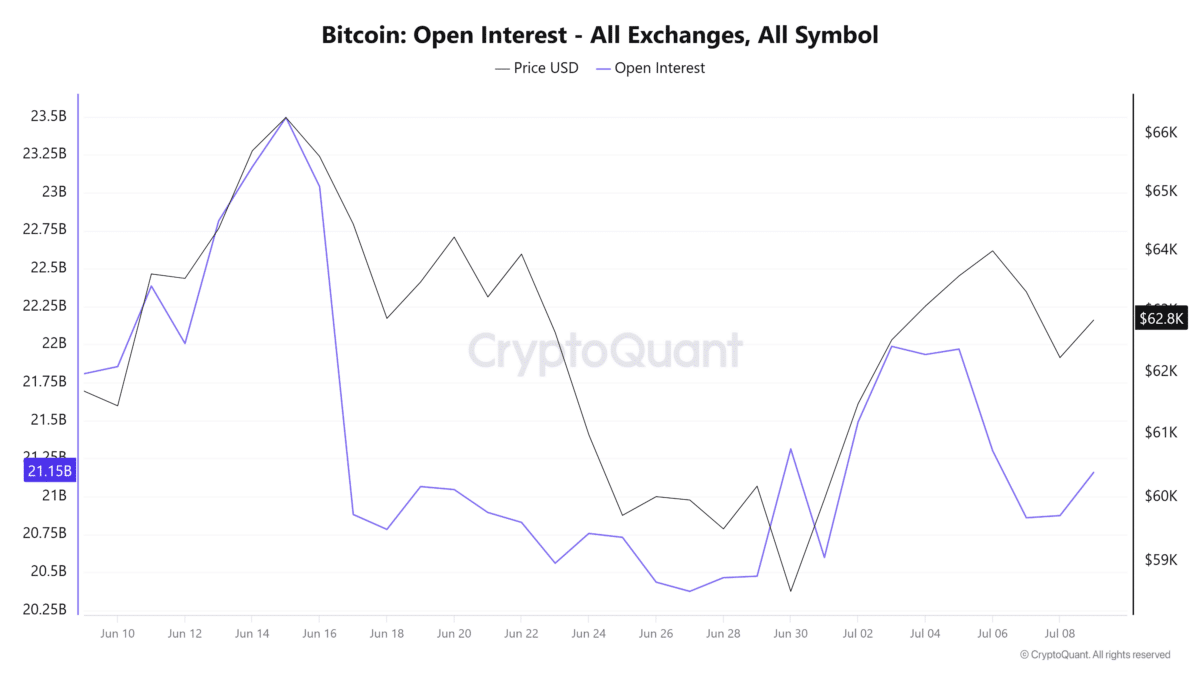
For context, open interest across Bitcoin futures recently stood around $21 billion, down modestly in the very short term but up over the past 30 days, pointing to measured position-building rather than a full capitulation cleanup.
Price action mirrors this tentative optimism. After trading below $70,000 in June amid broader risk-off sentiment, Bitcoin is attempting a recovery. This rebound occurs even as some deleveraging events earlier in the year had pushed funding rates temporarily neutral or negative. The return of positive funding combined with steadying open interest creates a classic setup where leveraged longs are re-entering, potentially amplifying moves in either direction.
Spot Market Lacks Fresh Conviction
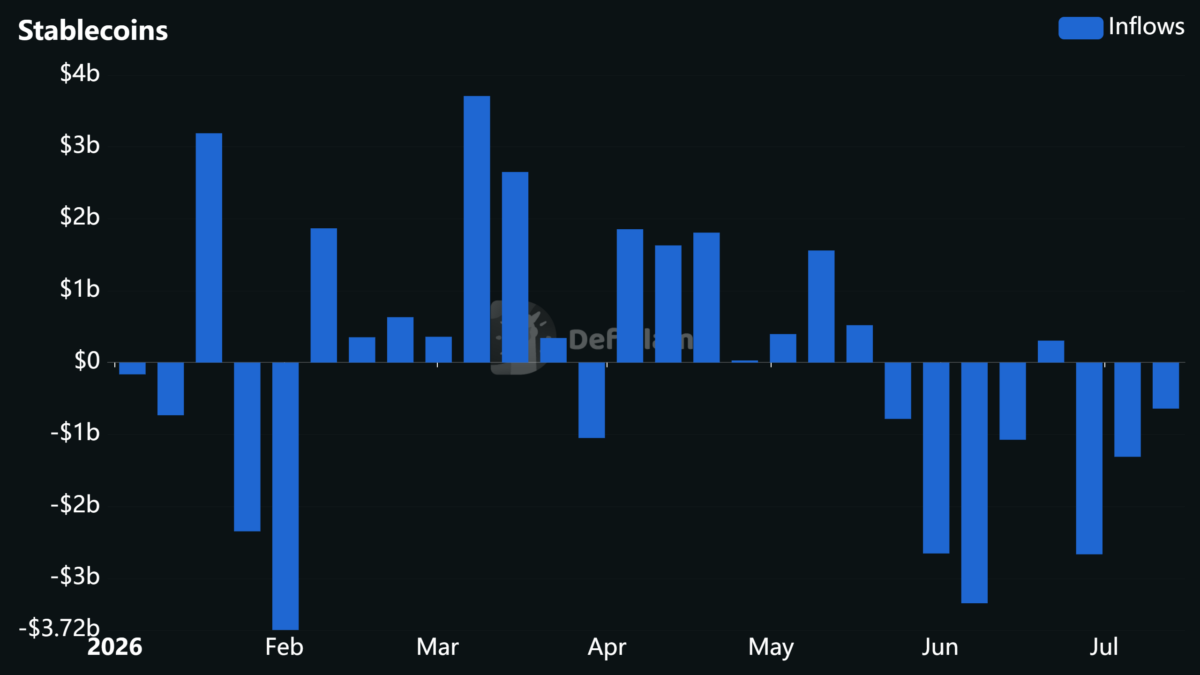
Despite the derivative green shoots, on-chain and capital flow indicators tell a more subdued story. Stablecoin inflows, often a precursor to spot buying pressure, have shown limited growth. The 60-day change in stablecoin market capitalization remains in negative territory, suggesting that new retail or institutional capital is not flooding into the ecosystem at a pace sufficient to underwrite a strong uptrend.
Spot Cumulative Volume Delta (CVD) and ETF flow data further underscore this gap. While derivatives traders appear willing to bet on upside, actual spot absorption of selling pressure has been inconsistent. Bitcoin ETF inflows have been sporadic, failing to match the scale seen during previous bull phases. Without robust spot demand, any derivative-driven rally risks being front-running rather than fundamentally supported.
This divergence between derivatives and spot activity is a recurring theme in Bitcoin cycles. In past instances where leverage rebuilt faster than spot conviction, such as periods of elevated funding with flat or declining on-chain activity, markets often experienced sharp but short-lived squeezes followed by resets. Current readings place Bitcoin in a similar zone: leverage is returning, but the foundational capital flows that drive sustained moves are still developing.
Risks of Squeeze Setups and Broader Outlook
The current configuration leaves Bitcoin vulnerable to volatility spikes. A market with rising open interest, positive funding, and recovering price sits in what analysts describe as a “squeeze-prone zone.” Long liquidations could accelerate on any downside wick, while a breakout above recent resistance might trigger a short squeeze, rapidly pushing prices higher as forced covering adds fuel.
Meanwhile macro factors continue to influence the setup. Global liquidity conditions, U.S. regulatory developments around crypto, and correlation with risk assets like equities and gold all play roles. With the broader economy showing mixed signals — cooling inflation but persistent growth concerns — Bitcoin’s narrative as a risk asset remains intact but sensitive to external shocks.
Looking ahead, the path depends on whether spot metrics catch up to derivatives optimism. If stablecoin supply expands and ETF flows accelerate, the rebuilding leverage could catalyze a more durable recovery toward $80,000 or higher by late summer. Conversely, failure to attract fresh capital may lead to another round of deleveraging, with funding rates normalizing lower and open interest contracting once more.
July 2026 finds Bitcoin at an inflection point. Derivatives are flashing early recovery signals through rebuilt leverage and positive funding, yet the absence of strong spot conviction keeps the outlook cautious. Investors would do well to watch the interplay between futures positioning and on-chain capital flows closely.
In a market this leveraged, the difference between a squeeze and a sustainable trend often comes down to who brings real money to the table — and right now, that question remains open.
Also read: Crypto User Loses $999,999 in USDT to a Single Phishing Signature