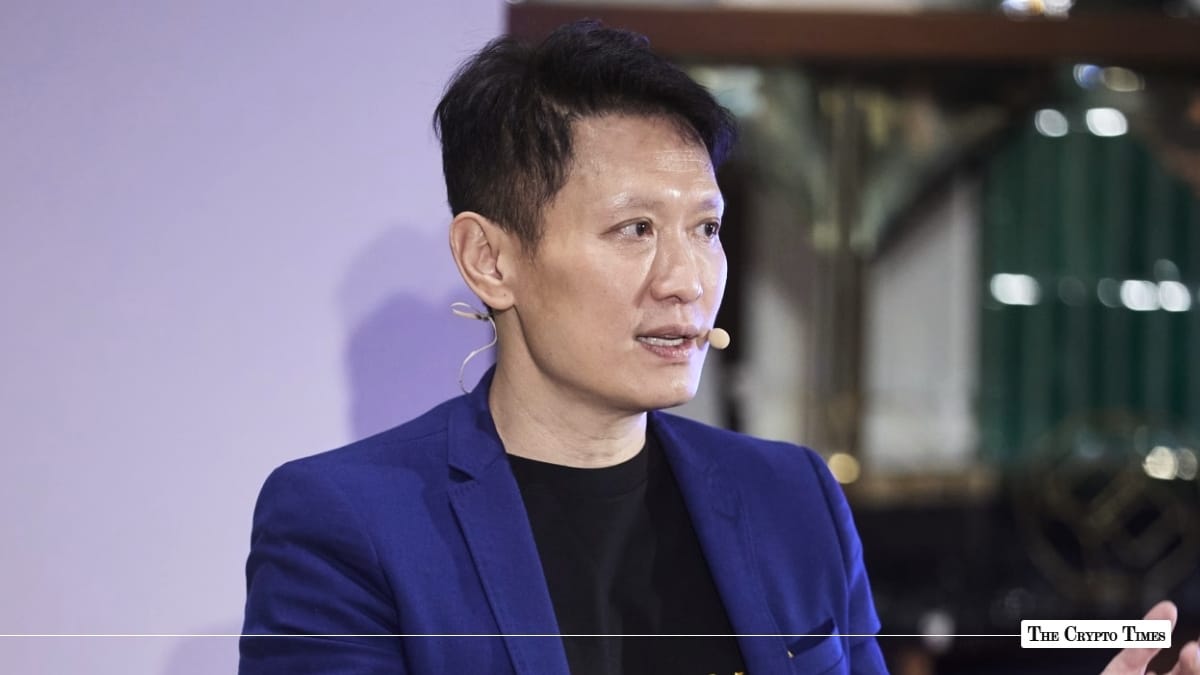
Binance’s most senior executive used a high-profile Singapore stage to address the elephant in the room: the world’s largest crypto exchange has been locked out of the European Union.
Speaking in an interview at the Reuters NEXT Asia event on July 9, Binance Co-CEO Richard Teng struck a defiant but conciliatory tone on the bloc’s Markets in Crypto-Assets (MiCA) regime, revealed fresh data on where its European users have gone, and laid out an aggressive pivot toward Asia.
MiCA: ‘Invited to apply,’ but staying tight-lipped
The headline development concerned Binance’s path back into Europe. Teng disclosed that regulators have approached the exchange in the wake of its licensing setback. “We are in close talk with regulators that invited us to apply to their regime,” he said, adding that it was “premature” to name which jurisdictions and that Binance continues to work closely with EU regulators. The talks, he indicated, remain at an early stage.
The comments follow Binance’s withdrawal on June 24 of its MiCA application in Greece, submitted through the Hellenic Capital Market Commission, after reports that the regulator was poised to reject it before the July 1 deadline that reshaped the European market. Teng maintained that the outcome blindsided the company. “It caught us by surprise, because we submitted a fully compliant” application, he said, echoing Binance’s position that the Greek regulator had completed its review, deemed the filing compliant, and referred it to the European Securities and Markets Authority, only for no formal decision to be issued.
Teng reiterated that Binance is not leaving Europe and expects to secure authorization in another member state in the coming months.
A telling migration to self-custody
Perhaps the most revealing data point concerned where Binance’s affected European users actually went. According to Teng, of those who moved assets off the platform after the MiCA transition, roughly 70% transferred funds to self-hosted wallets, while only about 30% moved to MiCA-regulated platforms.
He pointedly noted that self-custody arrangements generally fall under far less regulatory oversight than licensed exchanges; an implicit argument that the deadline may have pushed users toward less-supervised alternatives rather than into the regulated venues MiCA was designed to channel them into. Market data underscored the disruption: net outflows from Binance spiked to roughly $1.23 billion in the week beginning June 29, up about 207% from the prior week, with rival exchanges reporting increased activity and app downloads.
The fragmentation warning
Teng’s broader message on MiCA was a pointed one aimed at Brussels and national regulators alike: the framework’s success now hinges entirely on how consistently it is applied. Europe’s first-mover advantage in crypto regulation, he argued, means little without uniform execution. “Leadership requires more than being first,” he said, cautioning that “frameworks are only as strong as their implementation.”
His warning was blunt: if MiCA’s rollout becomes fragmented, unpredictable, or inconsistent across the 27 member states, Europe risks pushing users, companies, investment, jobs, and tax revenue elsewhere. It is a critique with obvious self-interest, given Binance’s own exclusion, but it touches a genuine question about whether MiCA’s single-market promise can survive uneven national enforcement.
An aggressive pivot to Asia
If Europe’s door has narrowed, Teng made clear where Binance intends to grow instead. The exchange is expanding its regulatory footprint across Asia, establishing or strengthening operations in Japan, South Korea, Thailand, Indonesia, and Australia, and has reentered the Philippine market through a partnership with a local technology firm after earlier access restrictions. “A few more are coming,” Teng said of pending licenses. “We are going to expand our footprint quite aggressively.” The contrast is stark: shut out of a 450-million-person European market, Binance is doubling down on the fast-growing, increasingly regulated economies of Asia.
Teng also pointed to a structural shift in who is driving the current market. Binance recorded a 9% increase in institutional clients onboarded this year, outpacing the 7% growth in its overall new-customer base. “Unlike the previous cycle, which was mainly a retail play,” he said, “this cycle you see a lot more institutions, a lot more corporates.” That institutional tilt has become a recurring theme across the industry, cited as a stabilizing force even amid a broad downturn.
Also Read: Binance Co-CEO Richard Teng Warns Crypto Users: Education Matters More Than Hype
Bullish through the bear market
That downturn is real. Bitcoin is down nearly 30% this year and has fallen more than 50% from its October record high, and Citigroup this month cut its 12-month forecasts for Bitcoin and Ether, citing weakening investor appetite, persistent ETF outflows, and a lack of progress on US digital-asset legislation. Teng, however, leaned into contrarian optimism about the long-term outlook, framing weakness as opportunity. “Every time people say that bitcoin is dead,” he said, “that’s the time that I’ll go all in.”
Why it matters
Teng’s appearance captured a defining moment for Binance and for European crypto policy. The world’s largest exchange is simultaneously fighting to re-enter the EU, warning that the bloc could squander its regulatory lead, and redirecting its ambitions toward Asia — all while insisting the long-term trajectory of crypto remains up. The self-custody migration figures give ammunition to critics who argue MiCA’s hard cutoff had unintended consequences, though Binance’s own regulatory history, including a $4.3 billion US settlement in 2023, is precisely why some European authorities have been cautious, and why compliant rivals like Coinbase and Ripple secured licenses while Binance did not. Which EU regulator ultimately opens the door, and whether Europe’s implementation lives up to its ambitions, are now among the most consequential open questions in the market.
Also Read: EU Eyes MiCA Changes to Keep Pace With Crypto Innovation