Key Highlights
- Glassnode says Bitcoin may be nearing a market bottom, but the recovery is not yet confirmed.
- Long-term holders are driving most of the current selling pressure, keeping Bitcoin under pressure.
- ETF demand is improving slightly, but institutional investors remain cautious despite positive signs in the derivatives market.
Bitcoin (BTC) may be nearing the end of its latest downturn, but a full recovery is still not in sight, according to blockchain analytics firm Glassnode.
In a report titled “Bottom Building in Progress,” published on Wednesday, the analytic firm said Bitcoin is showing signs that a bottom could be forming. However, heavy selling from long-term holders remains one of the biggest challenges holding back a stronger recovery.
Bitcoin recently recovered from $58,300 to $64,400 over the past week before settling. At the time of this writing, the cryptocurrency is trading for $62,199, still up 3.37% in a week.
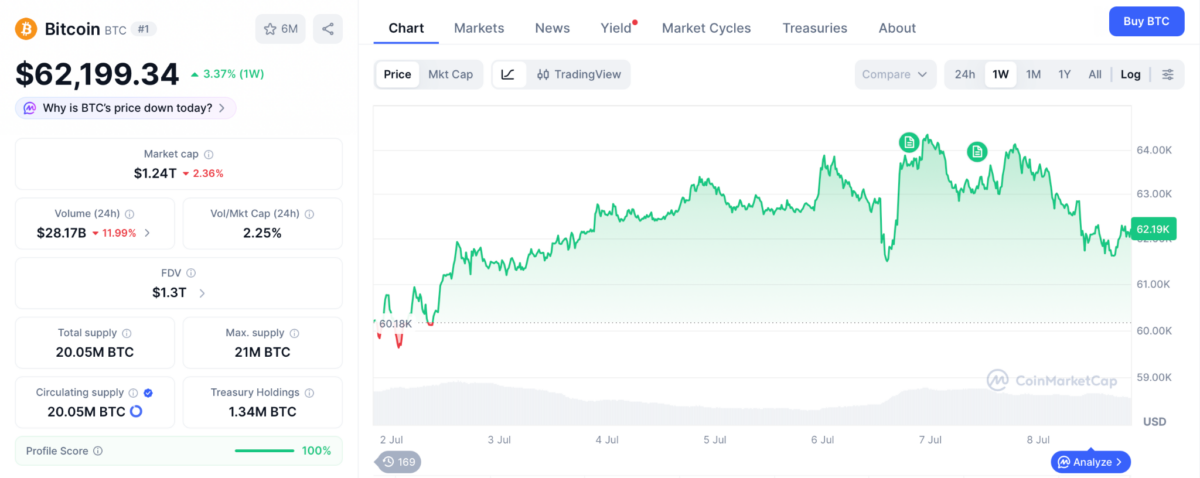
Bitcoin may be finding a bottom
While the move gave the market some relief, Glassnode explained that Bitcoin is still far from fully recovering. The asset is still below two important levels. The first is the True Market Mean at $76,600, and the second is the Short-Term Holder Cost Basis at $72,200. These levels show the average price at which many investors bought Bitcoin, meaning a large number of holders are still waiting to return to profit.
According to Glassnode, Bitcoin has spent about five months trading below key investor cost levels since early February 2026. This extended period of low prices has placed Bitcoin in what the firm calls a “deep value” zone.
Historically, such periods have often appeared when weaker investors sell and stronger investors begin accumulating at lower prices. However, Glassnode warned that the market is not completely out of danger, as Bitcoin could still move toward the Realized Price level near $53,000 if selling pressure increases again.
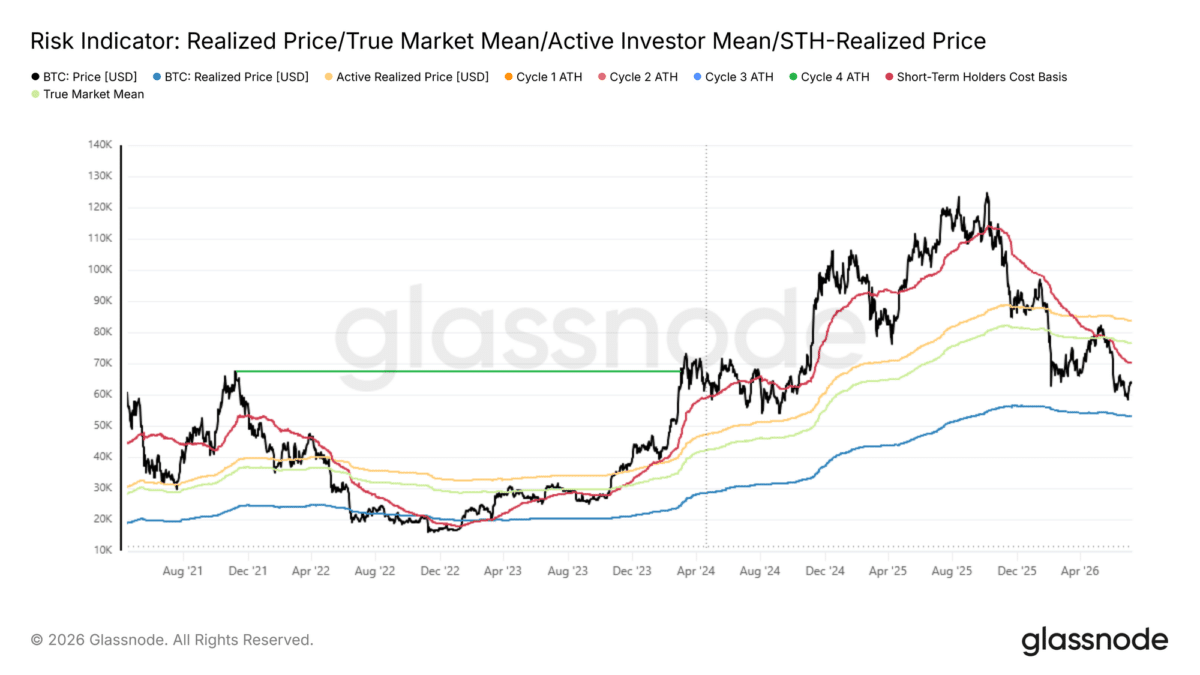
Long-term holders are still selling
Glassnode identified long-term holders as the primary source of current selling pressure. These investors are usually seen as the strongest believers in Bitcoin because they hold through different market conditions.
However, Glassnode’s data shows that some of these holders are now selling after months of watching their investments decline. The firm found that long-term holders are currently responsible for the largest share of realized losses in the market, which has reportedly increased from 15% in early February to 43%
Many of these investors purchased Bitcoin closer to the market peak and have continued selling after holding through months of price declines.
In addition, Glassnode’s Entity-Adjusted Long-Term Holder Realized Loss indicator reached a new peak of around $280 million in daily losses, its highest level since December 2022. The firm said this marks the second major wave of long-term holder selling during this downturn. Unlike the previous wave, however, this latest round of selling has yet to show meaningful signs of easing.
ETF investors are slowly regaining confidence
Institutional demand has also remained subdued. Glassnode reported that spot Bitcoin ETF net flows turned negative in mid-May 2026, with average daily outflows peaking at $193 million in early June. That pace has since slowed to around $88.9 million per day, although outflows continue to exceed inflows.
Trading activity from ETF investors remains quiet as well. Daily ETF volume has stayed between $650 million and $950 million, far below the $4.4 billion daily peak recorded in October 2025.
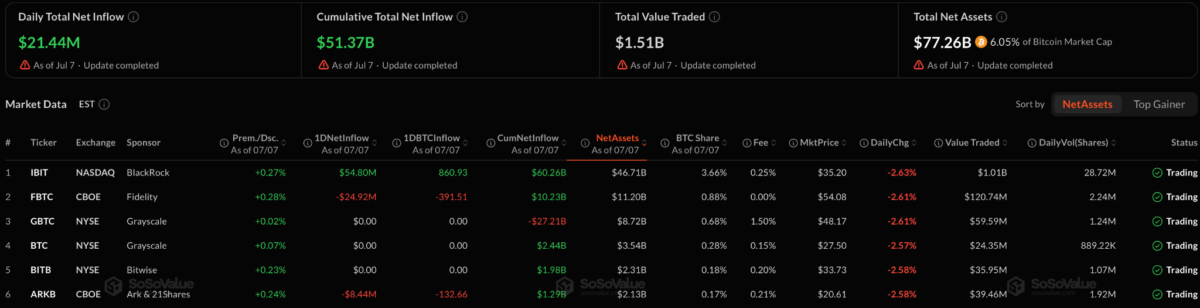
Data from SoSoValue paints a similar picture. Spot Bitcoin ETFs recorded inflows on only three trading days in June after a broader outflow trend that began on May 7. However, sentiment has shown signs of improving, with funds recording renewed inflows beginning on July 2.
Derivatives data paints a mixed picture
The derivatives market looks promising. Traders appear less fearful than before. Bitcoin’s options put/call ratio has fallen to 0.56, its lowest level of 2026, which means traders are holding more call options than put options. Perpetual funding rates also remain low.
Despite this, traders are still protecting themselves against possible price drops. Glassnode noted that options traders continue to pay higher prices for downside protection, showing that uncertainty remains in the market.
Bitcoin is also trading about 6% below the options market’s $66,000 max pain level, a point where price often moves around during expiry periods.
Overall, Glassnode’s findings highlight that Bitcoin is trying to recover but currently still faces some pressure. The assets are experiencing conditions often seen near market bottoms, but the current sell pressure from whales and institutional investors is holding them back.
Also Read: Bitcoin Price Down as Trump Declares U.S.-Iran MoU “Over” at NATO Summit