
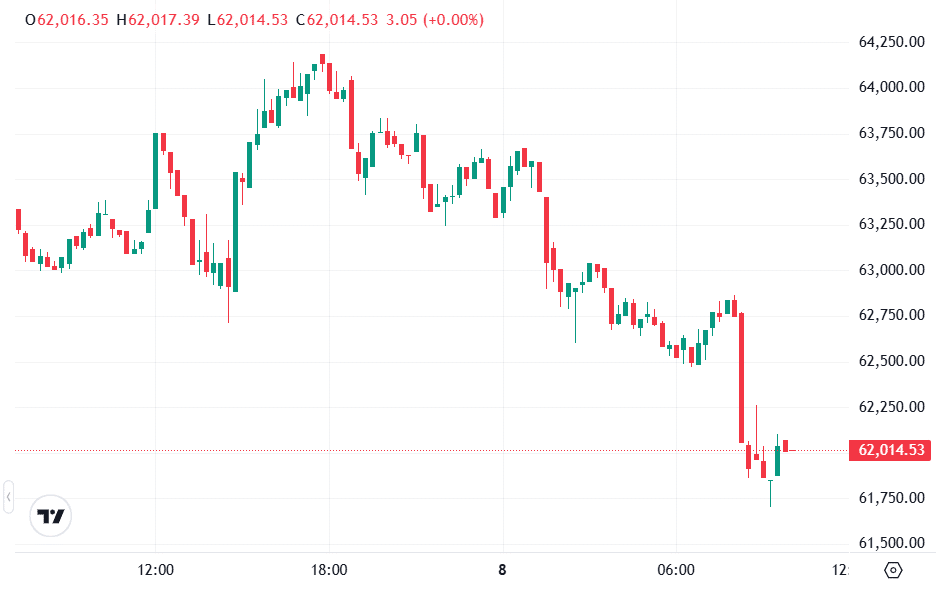
Cryptocurrency markets faced fresh selling pressure on Wednesday as Bitcoin dipped below the key $62,000 level following sharp comments from the U.S. President Donald Trump on the status of the U.S.-Iran agreement.
The move came amid broader risk-off sentiment triggered by heightened geopolitical tensions in the Middle East.
Trump’s remarks at the NATO summit in Ankara marked a notable shift in tone regarding the fragile ceasefire framework reached in June. Bitcoin traded as low as the low $61,000s intraday before stabilizing around $62,000, reflecting a roughly 2% decline over 24 hours amid elevated trading volumes.
President Trump stated that the memorandum of understanding (MoU) with Iran is effectively over from the U.S. perspective. He described dealing with Iranian leadership as a “waste of time,” using strong language to accuse them of being unreliable partners. While he indicated that negotiators could continue discussions, the overall message conveyed frustration and a potential hardening of stance from the Unites States.
The episode underscores Bitcoin’s continued sensitivity to macroeconomic and geopolitical headlines, even as the asset matures. With the cryptocurrency having already endured a challenging second quarter marked by significant drawdowns, today’s reaction highlights how quickly sentiment can shift on developments involving major global powers.
Why is Bitcoin and Crypto Market Down Today?
Bitcoin’s drop below $62,000 represents the latest chapter in a volatile 2026 for the leading cryptocurrency. Having traded in a wide range throughout the year, recovering toward $63,000–$66,000 ranges on earlier de-escalation hopes, the asset has repeatedly demonstrated correlation with traditional risk assets during periods of uncertainty.
The June MoU had provided a modest tailwind, with Bitcoin climbing on reduced fears of wider conflict and lower oil price pressure. Today’s reversal illustrates the opposite dynamic: renewed tensions weigh on sentiment, prompting leveraged positions to unwind and contributing to liquidations across crypto derivatives markets.
Crypto’s reaction stems from its status as a high-beta risk asset. In environments where investors seek safety or reduce exposure to volatility, Bitcoin often moves in tandem with equities rather than acting as a consistent hedge. Today’s session saw gold also under pressure in some reports, while oil gained, painting a classic risk-off picture despite mixed safe-haven flows.
Broader context includes Bitcoin’s performance year-to-date and post its earlier cycle highs. After strong gains tied to regulatory and institutional developments earlier in Trump’s term, the asset has faced headwinds from macroeconomic factors and profit-taking.
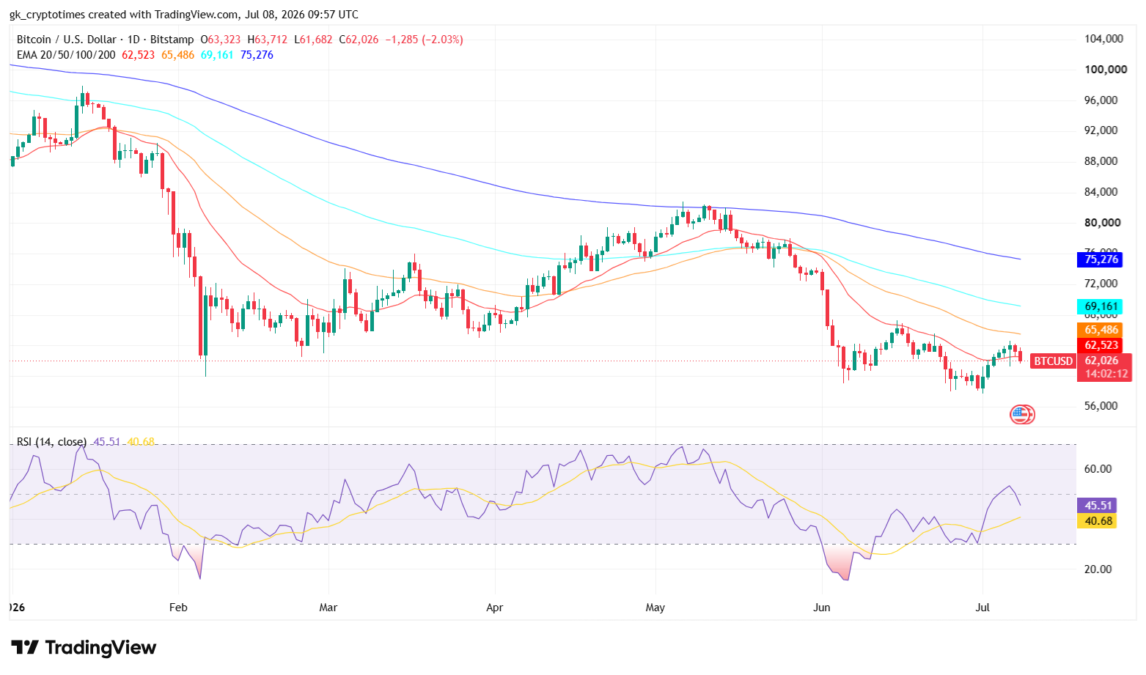
The current level near $62,000 sits at a psychologically important support zone that traders are monitoring closely for signs of stabilization or further breakdown.
On-chain metrics and ETF flows have shown resilience in recent weeks, with some analysts viewing dips as potential accumulation opportunities. However, short-term price action remains dominated by news flow. A sustained move below key supports could trigger additional selling, while any clarification or positive diplomatic signals from ongoing talks might spark a relief rally.
Also read: Strike Launches ‘Volatility-Proof’ Bitcoin Loans With No Margin Calls or Liquidations