Key Highlights
- AAVE fell 7% as traders cashed out before the weekend, pushing the token below $90.
- Aave wants to shut down six underperforming blockchain deployments to cut costs and focus on more active networks.
- The proposal will not force users to close their positions, but it will stop new deposits, borrowing, and collateral on the affected networks.
Aave (AAVE), the governance token of the decentralized lending protocol, fell almost 7% on Saturday as traders appeared to cash out, pushing the token below the $90 mark.
At the time of writing, AAVE was trading for $89.64 after dropping from an intraday high above $97.21, with increased market activity reflecting heavy selling.
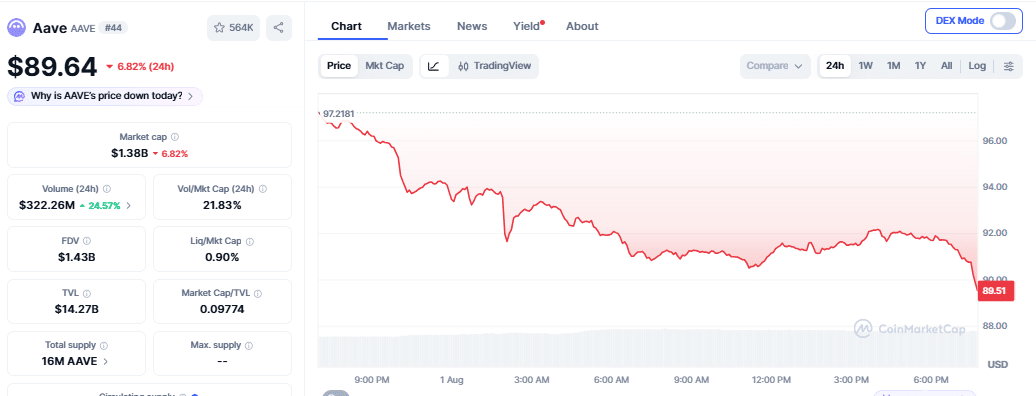
Despite the price decline, trading volume rose 24.57% over the past 24 hours to about $322 million. The higher volume suggests more traders were active in the market, but the latest price movement points to investors selling their holdings rather than adding new positions. The drop erased part of the gains the token had recorded earlier in the week.
Why AAVE is under pressure today
This drop comes as investors monitor a new proposal that could see Aave wind down deployments across six blockchains where activity has remained very low. The proposal suggests shutting down Aave’s deployments on Sonic, Scroll, zkSync, Metis, Soneium, and Aptos. It also plans to remove 21 expired Pendle principal token markets across 11 Aave deployments as part of a wider cleanup.
The main reason behind the proposal is simple. Running these blockchain deployments now costs more than they earn. According to the proposal, each of the six networks brings in less than $5,000 in revenue every quarter. Metis, Soneium, and Aptos earn even less, generating under $1,000 each.
That amount is not enough to cover the cost of keeping those markets running, including maintaining price feeds, liquidation systems, and regular monitoring. The difference becomes much clearer when compared with Aave’s larger operations. The protocol’s Ethereum deployment brings in more than $142 million every year, while its Base deployment generates about $4.7 million annually.
Metis, however, produces only about $3,000 over the same period. The large gap shows why Aave is now focusing on the parts of its business that continue to attract users and generate meaningful income.
User activity on the six blockchains has also dropped sharply over the past six months. Deposits on Soneium have fallen by 95%, while Aptos has lost 94% of its deposits. zkSync has seen deposits fall by 88%, Scroll by 86%, Metis by 79%, and Sonic by 74%, leaving it with just under $8 million.
Together, the six networks now hold only about $13 million in deposits. In comparison, Aave manages roughly $14 billion across 23 blockchains, meaning these six account for less than 1% of the protocol’s total assets.
Recent gains disappear as selling accelerates
The pullback comes just a few days after AAVE climbed above the $100 level. On July 27, the token gained 4.86% over 24 hours to trade at $100.96 as positive sentiment returned to the DeFi market. At the time of that rally, data from CoinMarketCap showed that Aave’s Total Value Locked (TVL) stood at about $14.63 billion.
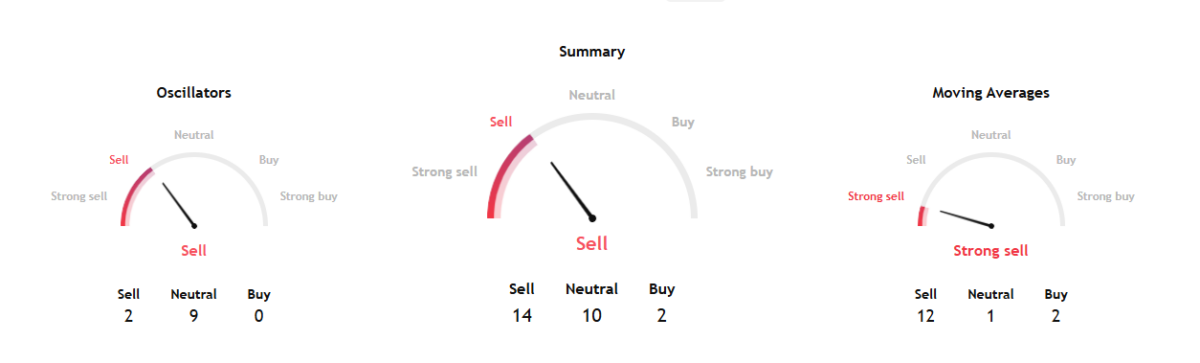
Technical indicators on platforms like TradingView now suggest weakening momentum. Multiple moving averages have shifted to “Strong Sell” signals, while oscillators also point to a “Sell” rating, indicating that bearish pressure is increasing in the short term.
What the proposal means for Aave users
The proposal does not mean users will suddenly lose access to their funds. Existing positions will remain open, but the affected markets will stop accepting new deposits, borrowing, and collateral.
Supply and borrowing limits will be reduced to one token, while 99% of borrower interest will be sent to Aave’s treasury. A 5% base borrowing rate will also be introduced, making it more expensive to stay in those markets and encouraging users to leave over time instead of forcing them out immediately.
The latest proposal is not a surprise for people who have been following Aave’s plans. Back in December, the Aave Chan Initiative suggested rolling back deployments on zkSync, Metis, and Soneium, saying they had “proven to lack product market fit.”
The group also proposed that any new blockchain deployment should be expected to generate at least $2 million in yearly revenue before it is considered worthwhile.
Also Read: SHIB Rallies 7% as Trading Volume Jumps 73% in 24 Hours