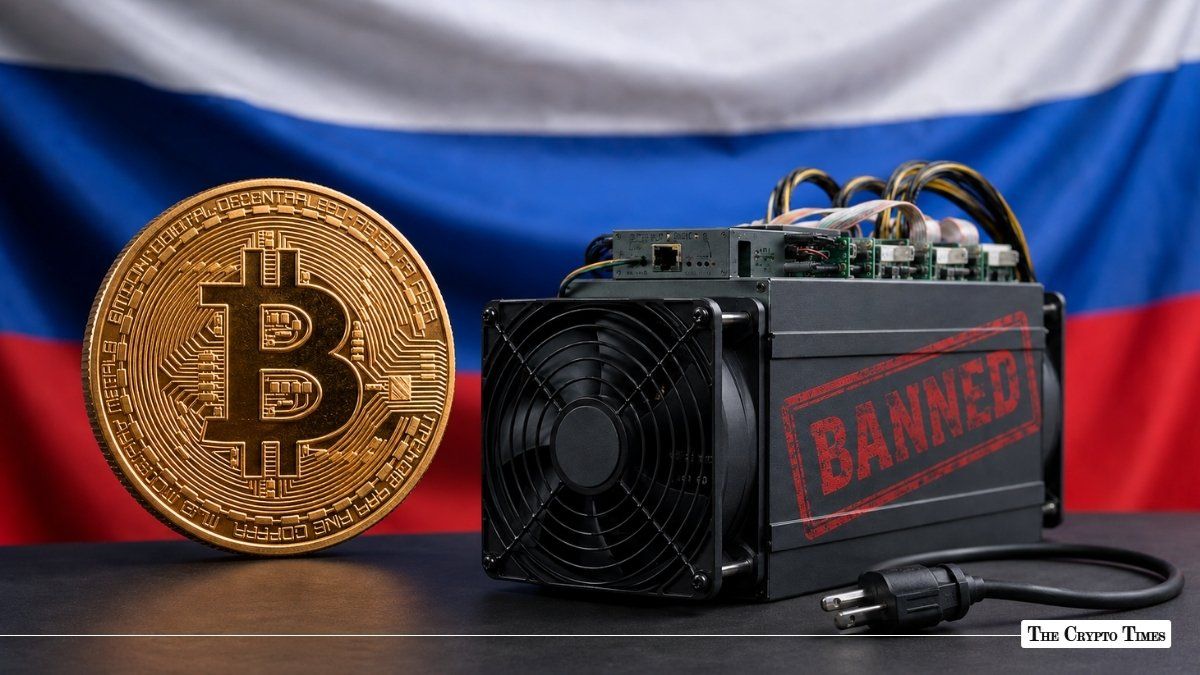
Russia has expanded its crackdown on cryptocurrency mining, banning the activity in Moscow, the Moscow Region, and parts of the Kursk Region from August 15, 2026, through December 31, 2032, citing concerns that power-hungry mining operations could strain electricity supplies.
According to a local news report, the decision, published on the Russian government’s official legal information portal on Friday, marks the latest step in Moscow’s effort to balance its growing digital asset industry with rising energy demand. The restrictions come despite Russia remaining one of the world’s largest Bitcoin mining hubs.
Power grid concerns
According to Russia’s Ministry of Energy, connecting large cryptocurrency mining facilities to the regional power grid risks creating electricity shortages as demand continues to rise. Authorities said restricting mining is necessary to preserve generating capacity for households, businesses, and other consumers.
The government had initially planned to impose the restrictions on July 1, 2026, after the Energy Ministry drafted a resolution targeting Moscow, the Moscow region and parts of the Kursk region. However, authorities have postponed the implementation and the ban will now come into effect on 15 August.
The move is a significant policy change. Russia’s Energy Ministry has said it has no immediate plans to ban cryptocurrency mining in Moscow, saying that restrictions could only be imposed by regional authorities, according to an April 2026 statement from the ministry.
Russian state media reported that 65 data centers with a combined capacity of 734 megawatts operate across Moscow and the surrounding region, including 19 facilities in the Moscow Region totaling 233 megawatts.
Russia’s mining hub
The move carries significance beyond Russia because the country remains one of the largest contributors to the global Bitcoin network.
According to estimates from Hashrate Index, Russia has about 17.2% of the world’s Bitcoin hash rate as of Q3 2026, second only to the United States.
The Russian business daily Kommersant has previously put Russia’s share at around 15.5%, while the Association of Industrial Mining has put it at 13%-17%, noting that measuring global mining activity with precision is difficult.
The latest restrictions could speed the relocation of mining operations to the United States, Kazakhstan and other parts of Central Asia. A reduction in Russian mining capacity could also lead to a temporary decrease in Bitcoin mining difficulty, which would make it more profitable for miners elsewhere until the network adjusts.
Wider mining crackdown
The Moscow restrictions are the latest step in Russia’s broader effort to regulate cryptocurrency mining.
In December 2024, the government announced a ban on crypto mining and participation in mining pools across 10 regions, including Dagestan, Chechnya, Ingushetia, Kabardino-Balkaria, Karachay-Cherkessia, North Ossetia, and the Russian-controlled territories of Donetsk, Luhansk, Zaporizhzhia, and Kherson. The restrictions took effect on January 1, 2025, mainly to reduce pressure on regional power grids.
The latest move is a reflection of the changing priorities of Russia. In August 2024, the country legalized cryptocurrency mining, and later allowed some cross-border crypto payments to help businesses deal with Western sanctions, but policymakers are now more focused on protecting the electricity grid.
If power demand continues to rise, more Russian regions could introduce similar mining restrictions to safeguard their electricity supplies.
Also Read: White House to Review CLARITY Ethics Deal This Weekend Before Recess