Key Highlights
- Elizabeth Warren urged every senator to vote against advancing the CLARITY Act, while saying she still supports bipartisan crypto regulation.
- Warren argued the revised ethics language would not prevent President Donald Trump from continuing to profit from existing crypto ventures.
- She also raised concerns over enforcement, national security, securities rules, bank exposure to crypto and financial stability.
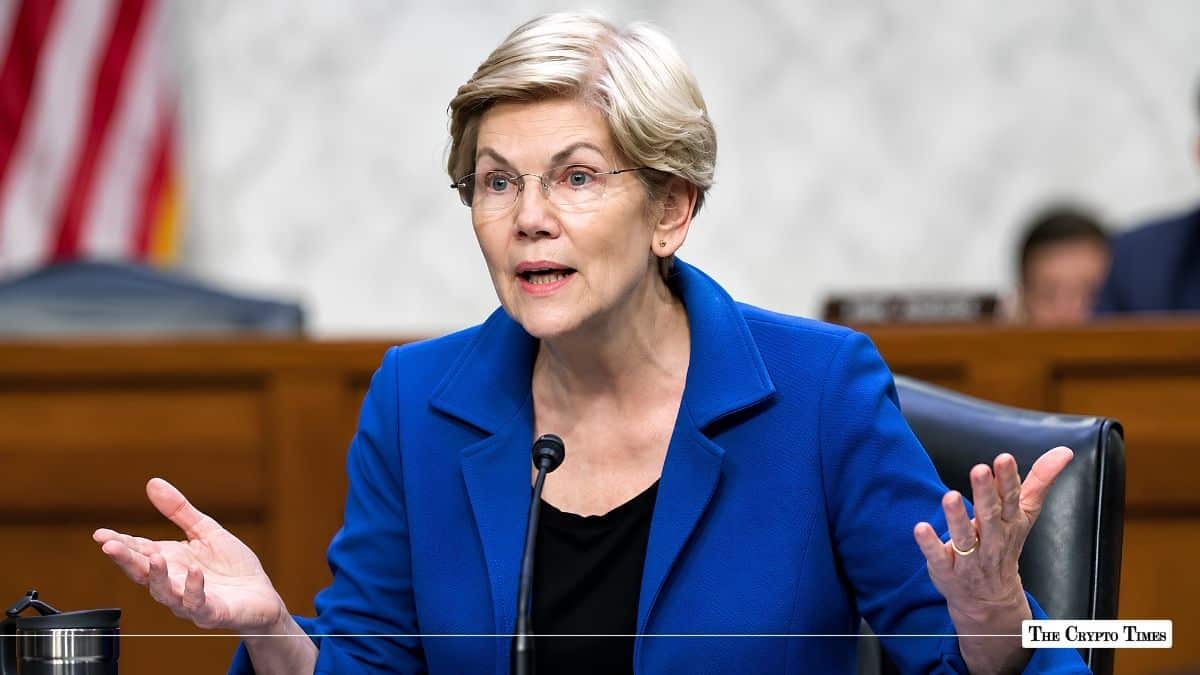
U.S. Senator Elizabeth Warren urged every member of the Senate to vote against the CLARITY Act on Tuesday, mounting a lengthy floor attack on the bill’s presidential ethics provisions and warning that the legislation could expose consumers and the financial system to broader risks.
The Massachusetts Democrat, who serves as ranking member of the Senate Banking Committee, made clear that her opposition was directed at the current bill rather than crypto regulation itself.
“I believe we can get crypto legislation that both Republicans and Democrats can agree on, but not this bill,” Warren said during the floor debate.
The Senate is considering cloture on the motion to proceed to H.R. 3633, the Digital Asset Market Clarity Act. The official Senate schedule set the procedural vote for approximately 2:15 p.m. ET, with 60 votes needed to advance the legislation to debate.
Warren Targets Trump Crypto Ethics Provision
Warren devoted a large portion of her remarks to President Donald Trump’s crypto interests, arguing that the latest ethics compromise still leaves avenues for the president to benefit financially from existing businesses.
“This bill would turbocharge Donald Trump’s unprecedented corruption,” Warren said.
Warren cited Trump’s reported $1.4 billion in crypto-related income and argued that legislation regulating an industry in which a sitting president holds substantial financial interests requires stronger conflict-of-interest safeguards.
Trump disclosed around $1.4 billion from crypto ventures in 2025, while the latest Republican bill text added further restrictions on public officials profiting from crypto activities.
Warren rejected those changes as inadequate, describing the ethics provision during her speech as “a tiny little fig leaf.”
Her argument centered partly on the distinction between restricting new activity and forcing officials to separate themselves from existing holdings and businesses.
The revised proposal strengthened restrictions on political officials and expanded the role of state attorneys general, but it does not require complete divestiture of all existing investments, one of the measures Democrats had sought during negotiations.
Warren Questions Who Would Enforce Ethics Rules
Warren then focused on how the ethics restrictions would actually be enforced if a president were accused of violating them.
She argued that the structure would leave critical enforcement decisions with officials serving under the same president who could potentially face an investigation.
“Trump’s lapdogs would have the power to shut down any enforcement of the ethics provisions against Donald Trump,” Warren said.
Warren also attacked the role given to the U.S. attorney general, arguing that presidential ethics restrictions would have little force if enforcement ultimately depended on an administration appointee.
She described the attorney general during her remarks as “Trump’s lawyer, not America’s lawyer.”
Democratic concerns over enforcement predate Tuesday’s floor debate, Warren and Senate Banking Committee minority staff have repeatedly argued that an ethics regime relying heavily on the Justice Department would not provide sufficient independent enforcement against a sitting president
Warren also disputed claims that the latest state-level enforcement mechanism had resolved that problem, arguing that state attorneys general would still face restrictions on directly pursuing violations involving the president.
Warren Warns of Wider Financial Risks
Her objections extended beyond presidential ethics.
Warren argued that provisions dealing with tokenized financial assets could weaken existing securities protections if traditional financial products were placed on blockchains and subsequently treated differently under federal law.
She also warned that the legislation could increase the connection between banks and volatile digital-asset markets by allowing institutions to conduct a broader range of crypto-related activities.
Warren pointed to crypto lending, direct digital-asset holdings, derivatives and blockchain infrastructure while arguing that greater integration between banks and crypto could transmit losses into the traditional financial system.
She warned senators against creating conditions for what she called a “crypto-fueled economic crash.”
The financial-stability issue has also emerged outside Warren’s criticism. Banking groups have objected to parts of the revised legislation, particularly provisions involving stablecoin rewards, warning that greater competition for deposits could affect banks’ ability to extend credit.
National Security and State Protections Also Draw Criticism
Warren also argued that the CLARITY Act does not go far enough in addressing the use of digital assets by sanctioned entities, terrorist organizations, drug cartels and other illicit-finance networks.
She said Congress should strengthen authorities for combating crypto-related financial crime rather than create additional gaps in enforcement.
Warren separately criticized provisions affecting state and tribal authority, arguing that federal rules could limit some existing consumer-protection measures available against crypto businesses.
Those concerns echo issues Warren raised during the Senate Banking Committee’s earlier consideration of the legislation, when she argued that the bill could weaken investor protections, state anti-fraud laws and national-security safeguards.
Warren Urges Every Senator to Vote No
Despite the criticism, Warren ended her remarks by stressing that she does want Congress to establish a federal regulatory framework for digital assets.
“We need crypto regulation. Yes, we do,” Warren said.
She called instead for Republicans and Democrats to resume negotiations on legislation that addresses consumer protection, illicit finance, financial stability and conflicts involving public officials.
Warren then urged senators across both parties to reject the CLARITY Act in its current form.
Her opposition adds to uncertainty surrounding the bill’s procedural vote, which requires 60 senators to advance. Republicans released revised text over the weekend after months of negotiations with Democrats, but support remained unresolved heading into Tuesday’s floor proceedings.
Also Read: CLARITY Act Senate Vote Live: Will Crypto Bill Move Forward?