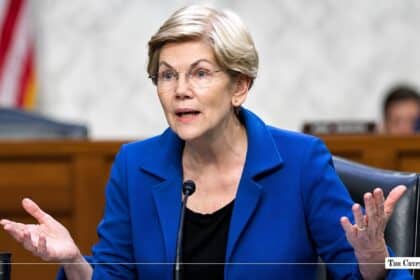
The Digital Asset Market Clarity Act has failed to clear its first floor test in the United States Senate. The chamber did not invoke cloture on the motion to proceed to H.R. 3633, commonly known as the CLARITY Act, on Tuesday afternoon, after more than 40 senators voted against the procedural motion, leaving the crypto market structure bill short of the 60-vote threshold needed to end debate and advance to full floor consideration.
The vote followed weeks of negotiation and a series of last-minute drafting changes, and its outcome effectively halts comprehensive crypto market structure work in the Senate for 2026.
The official floor record was 49 yeas to 50 nays, a result that was not only short of the 60-vote cloture threshold but short of a simple majority.
Cloture Math: 60 Votes That Never Materialised
Under Senate Rule XXII, cloture on a motion to proceed requires the support of 60 senators to end debate on whether the chamber should even take up a bill. Republicans currently hold 53 seats in the 100-member chamber, meaning at least seven Democratic or independent senators had to cross the aisle for cloture to succeed. That coalition never came together.
Majority Leader John Thune had filed the motion to proceed and the cloture petition on Aug. 8, 2026, with the motion set to ripen at 2:15 p.m. Eastern Time on Tuesday, Sept. 15. The unofficial tally on the Senate floor webcast crossed 40 nays before the roll call closed, a threshold that mathematically foreclosed a 60-yea outcome.
Per the Senate Daily Press floor log, voting on cloture began at 2:18 p.m. and the result was announced at 3:00 p.m. Because zero voting Democrats supported the motion and four Republicans opposed it, the coalition fell 11 votes short of cloture and one vote short of a simple majority.
The Roll Call Breakdown
The four Republicans who voted no did so for different reasons. Senators Collins, Hawley, and Moran opposed the bill on the merits, with community-bank pressure on stablecoin yield and broader skepticism of the market-structure framework flagged as sticking points in the days leading up to the vote.
Senator Tillis’s no vote was procedural. He initially voted yes and then switched to no so that, under Senate rules, he could file a motion to reconsider as a member of the prevailing side, a mechanism that preserves the ability for leadership to bring the same cloture question back without restarting the process from zero.
Senator Chris Coons of Delaware did not vote. Among the Democrats who had spent months at the negotiating table on the bill, Kirsten Gillibrand of New York, Mark Warner of Virginia, Cory Booker of New Jersey, Raphael Warnock of Georgia, Ruben Gallego of Arizona, Angela Alsobrooks of Maryland, and Catherine Cortez Masto of Nevada all voted no.
What the Bill Would Have Done
H.R. 3633, formally titled the CLARITY Act, was introduced by Representative French Hill of Arkansas on May 29, 2025, and passed the House of Representatives on July 17, 2025 by a vote of 294-134. The Senate Committee on Banking, Housing, and Urban Affairs reported an amended version on June 1, 2026, and it was placed on the Legislative Calendar as Calendar No. 423.
The measure would have divided oversight of digital assets between the Securities and Exchange Commission (SEC), which regulates securities in the United States, and the Commodity Futures Trading Commission (CFTC), which regulates commodities and derivatives. Digital commodities, defined as digital assets that rely on a blockchain for their value, would generally have fallen under CFTC spot-market rules for exchanges, brokers, and dealers.
On the House side, the 294-134 tally included 78 Democrats in favor, with every no vote coming from the Democratic conference. In the Senate, the Banking Committee reported the bill 15-9 on May 14, 2026, following months of stablecoin-yield and ethics disputes, with Senator Ruben Gallego of Arizona the only Democrat to vote it out of committee.
The House-passed text also carried an Anti-CBDC title barring the Federal Reserve from issuing a central bank digital currency, a provision that had drawn opposition from some Senate Democrats during negotiation.
Final Substitute and Rejected Counteroffer
Republican sponsors Senator Cynthia Lummis of Wyoming, Senate Banking Committee Chairman Tim Scott of South Carolina, and Senate Agriculture Committee Chairman John Boozman of Arkansas released what they described as a final substitute on Sept. 14, saying it incorporated 126 changes requested by Democrats.
The updated draft added tougher ethics limits on covered officials and their spouses, a role for state attorneys general in ethics enforcement, and Treasury authority to impose a circuit breaker on stablecoin rewards if deposit flight from community banks is detected.
Senate Democrats sent a late counteroffer overnight seeking stricter ethics language and broader coverage of federal officials’ relatives, which Republican negotiators publicly rejected before the roll call opened. Speaking to reporters ahead of the vote, Lummis warned that negotiations could collapse outright, saying sponsors had already accepted more than 120 Democratic requests over the past year.
The 635-page final substitute, circulated as draft EHF26724, contained ethics language the sponsors said reflected “substantially all” of the Tillis-Gallego ethics proposal, including a role for state attorneys general in enforcement, alongside Treasury circuit-breaker authority tied to payment-stablecoin rewards and deposit flight from community banks. It also included edits to the Blockchain Regulatory Certainty Act, adding a civil safe harbour and relief from money-transmitter registration for non-custodial software developers, with the accompanying Section-by-Section summary and consumer, anti-money-laundering, and stablecoin-yield fact sheets posted to the sponsors’ office alongside the bill text.
“After a year of intense daily bipartisan negotiations, this bill is ready,” Lummis said in the sponsors’ Sept. 14 release. She warned before the vote that a no result would mean the ethics, self-custody, best-execution, and Office of the Retail Commodity Advocate provisions in the final draft would fall with it, telling reporters that if cloture failed, “I think we’re done. It’s over.”
Why Democratic Negotiators Voted No
Several Democratic senators who had been at the negotiating table publicly explained their no votes shortly after the roll call. Senator Mark Warner of Virginia said negotiators “got close to resolving some of the toughest outstanding issues around law enforcement and national security,” but that the “failure to address this fundamental conflict of interest made it impossible for me to support moving forward,” referring to the president personally profiting from the industry the bill would regulate.
Senator Elissa Slotkin of Michigan said the ethics package was “simply too thin,” naming President Trump, his children, and Cabinet officials including Commerce Secretary Howard Lutnick, and also citing what she described as insufficient CFTC staffing and illicit-finance tools. Senator Ruben Gallego of Arizona, who had voted the bill out of Banking, said advancing the motion would have given the president “time to crime,” faulting Republicans for what he called an effort to “twist themselves into knots to appease President Trump” instead of working more closely with Senate Democrats on stronger ethics provisions. Senator Catherine Cortez Masto of Nevada said Republican leaders “shut down conversations at the last minute” and called the current text “a step backward” from what the Banking Committee had advanced, citing illicit finance, presidential ethics, and prediction-market provisions.
Outside Opposition Piled on in the Final 24 Hours
Eighteen state attorneys general, led by New York Attorney General Letitia James and including Republican AGs from Kansas and Ohio, wrote to Senator Scott and Senator Elizabeth Warren on Sept. 14 urging a no vote unless the bill’s “qualified transaction” and preemption language expressly preserved state police powers. Their letter cited Federal Bureau of Investigation (FBI) figures of $11.4 billion in reported cryptocurrency fraud losses in 2025 and warned the current draft could allow defendants to block state cases.
Separately, eight bank trade groups, including the American Bankers Association (ABA) and the Independent Community Bankers of America (ICBA), asked Majority Leader Thune and Democratic Leader Chuck Schumer to tighten the stablecoin-yield circuit-breaker language.
Market Reaction After the Announcement
Cryptocurrency markets sold off into and after the 3:00 p.m. Eastern Time announcement. Bitcoin (BTC) slipped below $76,000 in the immediate aftermath, with feeds printing a dip through $75,000 in afternoon trade.
Coinbase Global (COIN) shares were reported down roughly 8%, and Circle Internet Group (CRCL) shares fell about 11% as of afternoon trading. Prediction-market odds of 2026 enactment, which had sat in the high 20s to mid-30s before the vote, dropped below 20% following the roll call.
What Happens Next
The failed cloture vote does not remove H.R. 3633 from the Senate calendar, but it halts the current push. With the November midterms approaching, floor time for comprehensive crypto legislation is expected to be scarce, and any renewed effort would require Majority Leader Thune to refile cloture and rebuild the coalition.
The bill also remains a House-passed measure, meaning any Senate substitute would still require House concurrence before it could reach the president. The official record will be the Senate roll call and Congress.gov, not the on-screen tally.
Senator Tillis’s motion to reconsider, filed at 3:01 p.m. Eastern Time immediately after the result was announced, keeps a procedural path open for leadership to bring the same cloture question back without starting the process from zero, though it does not, by itself, create the additional votes needed to reach 60.
Senator John Kennedy of Louisiana told reporters he was not surprised by the outcome and suggested any renewed attempt at market-structure legislation may have to wait for the lame-duck session, while Senator Ted Cruz of Texas said there is “a big difference between dead and mostly dead.” Lummis, asked whether the bill would return to the floor, said no.
In the meantime, the SEC’s “Regulation Crypto Assets” workstream and CFTC spot-market drafting under existing Commodity Exchange Act authority remain the live administrative tracks for U.S. digital asset policy through the end of 2026.
Also Read: Warren Calls for Senate No Vote on CLARITY Act Over Trump Ethics