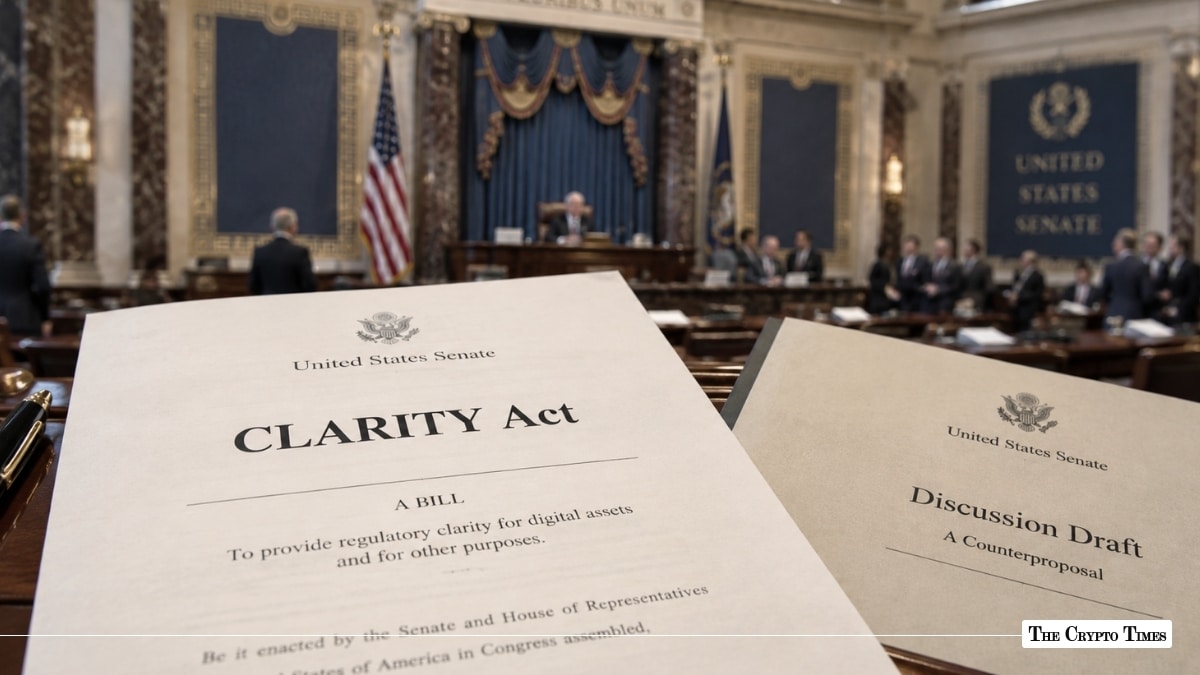
Senate Democrats have delivered a counterproposal on the Digital Asset Market Clarity Act to Republican negotiators, keeping crypto market structure talks alive just hours before the chamber’s first floor test of the legislation. The overnight handoff sets up a decisive procedural showdown at 2:15 p.m. Eastern Time on Tuesday, September 15, 2026, when senators are scheduled to vote on cloture for the motion to proceed to H.R. 3633.
Politico congressional reporter Jasper Goodman first reported the counterproposal late Monday, citing three people familiar with the talks. The Democratic response came after negotiators met in the office of Senate Minority Leader Chuck Schumer of New York, and hours after Republican sponsors circulated a revised draft they described as their “last, best, and final” offer.
The cloture vote is not a final passage vote. It is a procedural motion that requires the support of 60 senators to formally begin floor debate on the House-passed bill, known as the Digital Asset Market Clarity Act or CLARITY Act. If cloture succeeds, Republicans plan to offer the new Senate text as an amendment in the nature of a substitute. If it fails, floor consideration of a 2026 market structure law stalls sharply before the midterm elections.
How the Counteroffer Landed
Sen. Mark Warner of Virginia, a Democrat involved in the talks, told Politico as he left the Schumer meeting that “the Democrats who’ve been working on this in good faith are sending a counterproposal.” Goodman confirmed hours later that the text had been delivered to Republican staff.
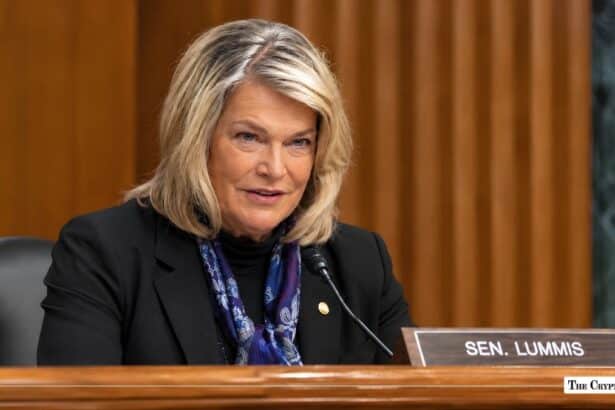
The Democratic move followed the Sunday night and early Monday circulation of a revised Republican draft. Sens. Cynthia Lummis of Wyoming, John Boozman of Arkansas, and Tim Scott of South Carolina, all Republicans, released the text and accompanying fact sheets on Lummis’s official Senate website, saying it reflected more than a year of negotiations and 126 substantive changes requested by Democrats.
“Democrats got what they wanted; now they need to take yes for an answer,” Lummis said in the release. Later reporting captured a firmer line from the Wyoming senator, who said some Democrats “simply won’t get to yes” and that “there’s nothing left to give.” Crypto Times has covered the sponsors’ now-or-never framing heading into Tuesday’s vote.
White House crypto adviser Patrick Witt struck a similar note at a Monday event in Washington, saying Republicans had “gone to great lengths” to address Democratic concerns and that any remaining edits were approaching “punctuation.” Witt added that the final call still belongs to senators.
What the Republican Draft Contains
The Senate substitute is the upper-chamber version of the CLARITY Act. The House of Representatives passed its version, H.R. 3633, on July 17, 2025, by a vote of 294 to 134, with 78 Democrats joining Republicans in support. The Senate Banking Committee advanced its version on May 14, 2026, by a 15-to-9 vote. Only two Democrats, Sen. Ruben Gallego of Arizona and Sen. Angela Alsobrooks of Maryland, voted yes in committee, and both stated at the time that their committee votes did not lock in their floor support.
According to the sponsors, the final Senate text would:
Split oversight of digital assets between the Commodity Futures Trading Commission (CFTC) and the Securities and Exchange Commission (SEC), with the CFTC given jurisdiction over digital commodities on mature blockchains.
Impose ethics limits on the president, the vice president, members of Congress, federal judges, officials-elect, and their spouses. Those limits include a ban on issuing or sponsoring digital assets and a requirement to divest or place a “significant financial interest” in a qualified blind trust.
Give state attorneys general (AGs) a role in enforcing those ethics rules.
Grant the Treasury Secretary a “circuit breaker” authority in the event that payment stablecoin rewards trigger deposit flight from community banks.
Revise the Blockchain Regulatory Certainty Act (BRCA) so that software developers receive a civil safe harbor from money transmission registration, while dropping references to the criminal money-transmitter statute, 18 U.S.C. § 1960, that had appeared in earlier drafts.
Add consumer guardrails covering affiliate trading and conflicts at digital commodity intermediaries.
Alex Thorn, head of research at Galaxy Digital, said in a public analysis that the ethics sunset previously scheduled to expire at noon on January 20, 2029, has been removed in the latest draft. He said the new language is permanent, broader in scope, and pairs a lower ownership threshold with higher civil penalties. Reporting has cited a $15,000 equity floor in token-issuing businesses. Thorn also flagged the removal of the criminal shield under 18 U.S.C. § 1960 as a significant developer-protection compromise.
Why Democrats Still Objected
Ethics enforcement has been the central sticking point in the talks since spring. Democratic negotiators pressed for tougher rules on official crypto holdings after President Donald Trump’s financial disclosures showed more than $1.4 billion in crypto-related income for 2025. An earlier draft backed by the White House had confined enforcement to the Department of Justice (DOJ), carried a 2029 sunset, and was rejected by swing Democrats.
Gallego told Politico in July that the earlier offer was “not a serious effort.” The Arizona Democrat then worked with Sen. Thom Tillis of North Carolina, a Republican, on a bipartisan ethics counteroffer that was sent to the White House in late July.
Republicans now say the September text reflects “substantially all” of that Tillis-Gallego package, including state AG enforcement, and that Trump has personally agreed to the restrictions.
Democratic negotiators still see gaps. Reporting from Washington indicates that some senators who might be open to voting for the bill object that the revised language would prevent state attorneys general from suing the president directly, and would allow the Office of Government Ethics (OGE) to issue a notice permitting officials to keep certain crypto business ties.
That context framed both the Monday meeting in Schumer’s office and the overnight counterproposal. The contents of the new Democratic text have not been made public, and claims about specific new demands remain unconfirmed until the paper is released or described by multiple named sources.
The Vote Math and the Calendar
Republicans hold 53 Senate seats. Cloture requires 60. If the Republican conference stays united, Democrats and independents would need to supply at least seven votes. If Sens. Rand Paul of Kentucky and Josh Hawley of Missouri, both Republicans, vote no, as several vote-count analyses have anticipated, the Democratic target rises further.
Senate Majority Leader John Thune of South Dakota filed cloture on the motion to proceed on August 8, locking in the September 15 ripen date after the bill missed the pre-recess window. The House of Representatives is expected to leave Washington after September 17, which leaves little time to reconcile a Senate substitute if cloture succeeds and floor debate drags.
Securities and Exchange Commission Chair Paul Atkins has said publicly that he expects the Senate to advance the bill, and that the agency’s Regulation Crypto Assets proposal is designed to align with the CLARITY Act. House Financial Services Committee Chair Rep. French Hill of Arkansas has pointed to the 78 Democratic yes votes in the House as evidence that a bipartisan product can be constructed. Treasury Secretary Scott Bessent has urged senators to advance the motion to proceed and continue legislating.
Witt has separately warned that a failed cloture vote would not kill the House-passed bill on paper, but could push the next realistic legislative window past the 2026 midterms.
Other Fights Still on the Table
Ethics is not the only pressure point heading into the vote.
Banking groups, including the American Bankers Association (ABA), the Independent Community Bankers of America (ICBA), and dozens of state associations, want tighter limits on stablecoin rewards. They argue that the Treasury Secretary’s circuit-breaker authority is too slow because it contemplates an assessment period only after the bill is enacted. Witt has previously called deposit-flight claims a “myth” and said bank deposits have continued to grow even as platforms already pay stablecoin rewards.
A coalition of state attorneys general led by New York Attorney General Letitia James sent Senate Banking Committee leaders a letter on September 14 warning that the bill could weaken state-level enforcement tools against crypto scams.
Developer protections remain contested. The revised BRCA language keeps the civil safe harbor but drops the criminal exemption that Thorn highlighted in his public analysis. Crypto Times has previously reported on the revised CLARITY Act’s approach to decentralized finance rules ahead of the September 15 vote.
Industry groups have continued to press for the procedural vote to succeed. Blockchain Association Chief Executive Officer (CEO) Summer Mersinger said that building a majority required “difficult compromises” and that the industry had already made meaningful concessions to bring a framework to the Senate floor.
What Tuesday Does and Does Not Decide
A yes vote on cloture would only begin Senate consideration of the bill. Amendments, a substitute fight, a later passage vote, and House action on any Senate changes would still remain. A no vote would leave H.R. 3633 on the Senate calendar but would freeze the current motion and compress an already narrow September window.
The public record as of Tuesday morning stands as follows: Republicans say they have accepted more than 120 Democratic requests, including Trump-backed ethics limits and state AG enforcement, in what they are calling the final text of the CLARITY Act. Democrats say that package is not sufficient and have now put a written response on the table. The Senate will show at 2:15 p.m. Eastern Time whether that gap can be closed on the floor or whether the CLARITY Act stalls again before the midterm elections.
Also Read: SEC Clears Near 24-Hour Wall Street Trading as Binance Flags Overnight Demand