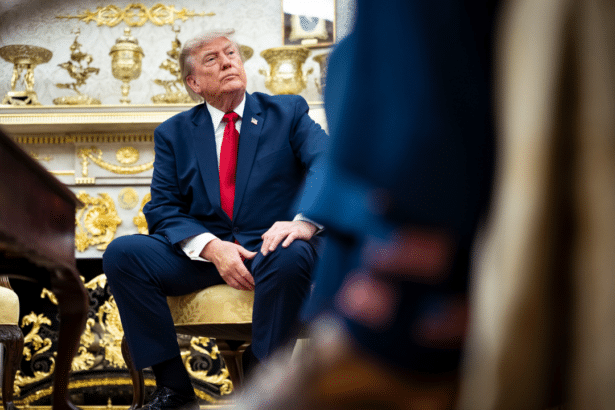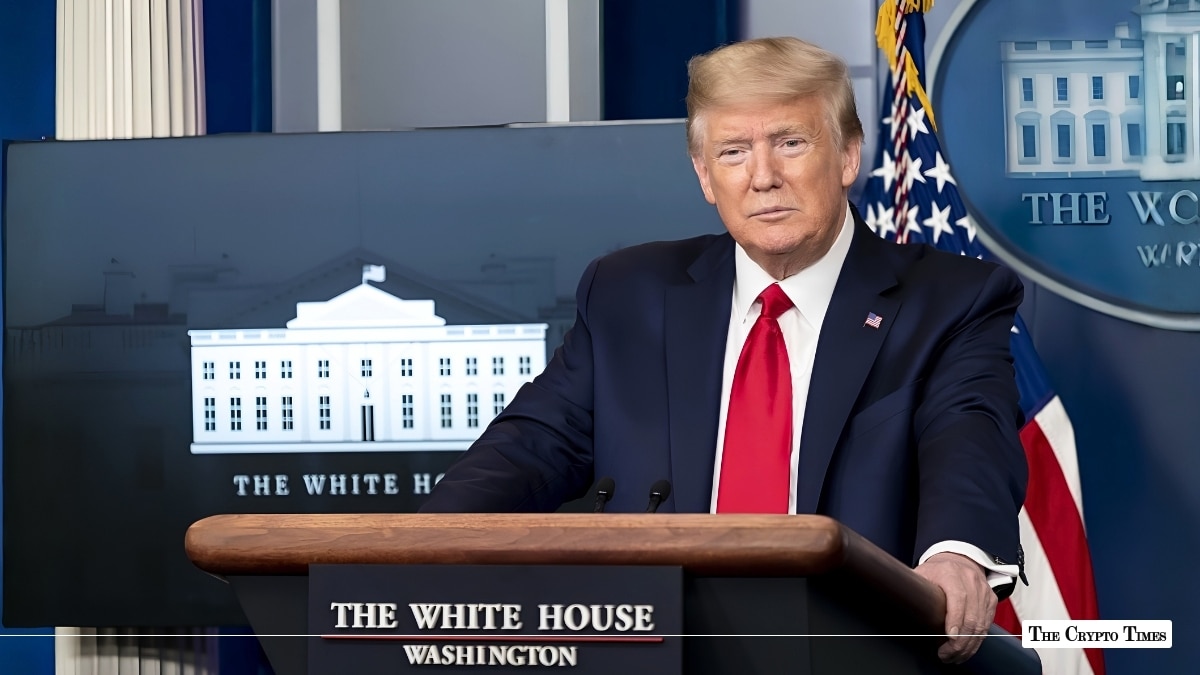
President Trump has agreed to ethics restrictions covering himself, his fellow federally elected officials, judges, and their spouses—with state attorneys general given a role in enforcing them. No Democrat has yet said it is enough.
The concession removes the last of three obstacles that have held the CLARITY Act since last summer. The same text hands the Treasury Secretary circuit-breaker authority over stablecoin deposit flight and shields developers from money transmission registration.
Senators Cynthia Lummis, John Boozman, and Tim Scott released the final draft of the Digital Asset Market Clarity Act on September 14, a day before the cloture motion ripens at 2:15 p.m. ET.
What Changed on Ethics
The ethics language reflects substantially all of the proposal put forward by Senators Thom Tillis and Ruben Gallego, including what the sponsors describe as a meaningful role for state attorneys general in enforcement.
That was the sticking point. The White House agreed to ethics language in late July, but Democrats objected to the Justice Department holding sole enforcement authority. The release does not specify how enforcement is divided between state attorneys general and federal prosecutors.
Lummis said Trump voluntarily agreed to unprecedented restrictions holding every federally elected official, judge, and their spouse to some of the toughest ethics rules in US history, and that more than 120 Democratic demands are reflected in the text. A Senate Republican aide told The Hill that Trump agreed to about 80% of what was requested.
Developer Protections Added
The final text edits the Blockchain Regulatory Certainty Act to shield developers from money transmission registration requirements and establish what the sponsors call a strong civil safe harbor.
That addresses the condition set by Senators Chris Murphy, Chris Van Hollen, and Jeff Merkley, who had said they would not support cloture unless developer liability language was tightened. Whether the drafting satisfies them is a separate question from whether it appears.
The Agriculture Committee provisions add guardrails on affiliate trading and conflicts of interest, clarify how state consumer protection laws apply, and protect software developers without altering derivatives regulation or existing CFTC authority.
The Stablecoin Yield Change
The text gives the Treasury Secretary new authority to prevent deposit flight tied to payment stablecoins, which the sponsors describe as a circuit breaker protecting community banks and the farmers and small businesses that rely on them.
That addresses the objection behind Senator Josh Hawley’s opposition and the campaign run by bank trade groups, which argued yield-bearing stablecoins would draw deposits out of the banking system. The Crypto Times set out the arithmetic facing the bill earlier this month.
What Tuesday Actually Decides
The vote is on cloture on the motion to proceed, not on the bill. If cloture is invoked on Tuesday afternoon, this text would then be offered as an Amendment in the Nature of a substitute—replacing the House-passed version.
So the document released this weekend is not yet the bill. It becomes the operative text only if sixty senators first agree to let the Senate take the matter up.
Republicans hold 53 seats, so at least seven Democrats or independents must join, assuming every Republican votes yes.
Where the Support Stands
Lummis framed a no vote as opposition to ethics reform on politicians’ personal investments and said Democrats got what they wanted and now need to take yes for an answer.
The sponsors list backing from BlackRock, Fidelity, Franklin Templeton, Goldman Sachs, Charles Schwab, and SoFi, alongside the National Fraternal Order of Police and the National Organization of Black Law Enforcement Executives. The National Sheriffs Association and the Majority County Sheriffs Association both dropped their opposition recently, which the sponsors attribute to law enforcement provisions in the text.
Scott said the final text further empowers law enforcement and gives the Treasury Secretary tools to protect community banks, farmers, and rural Americans. Boozman said the legislation reflects more than a year of negotiation and that waiting longer is not affordable.
Democratic negotiators including Kirsten Gillibrand, Gallego, and Angela Alsobrooks have been central to the talks. None has publicly confirmed support for the final text.
How It Reached Here
Lummis and Gillibrand introduced the Responsible Financial Innovation Act in 2022 and reintroduced it in 2023. A Senate discussion draft followed in July 2025 from Lummis, Scott, Bill Hagerty, and Bernie Moreno. The Digital Asset Market Clarity Act cleared the Banking Committee 15-9 in May 2026.
The ethics fight began because of Trump’s own crypto interests and those of his family. The Crypto Times reported on July 21 that the White House had reached an agreement with Lummis and Moreno, with Trump signing off late that Monday and the language going to selected Senate Republicans the same afternoon. Democrats were not shown it.
Within hours, the enforcement question surfaced. Senator Angela Alsobrooks—one of only two Democrats who voted the bill out of the Banking Committee—called the proposal to have the Justice Department enforce the ethics provisions an unserious offer and said she would not support the bill if that were the only enforcement route. Senate Republicans released the draft the following day; Democrats rejected it within hours.
Senator Elizabeth Warren’s committee staff subsequently described the compromise as full of loopholes, a characterization Lummis disputed.