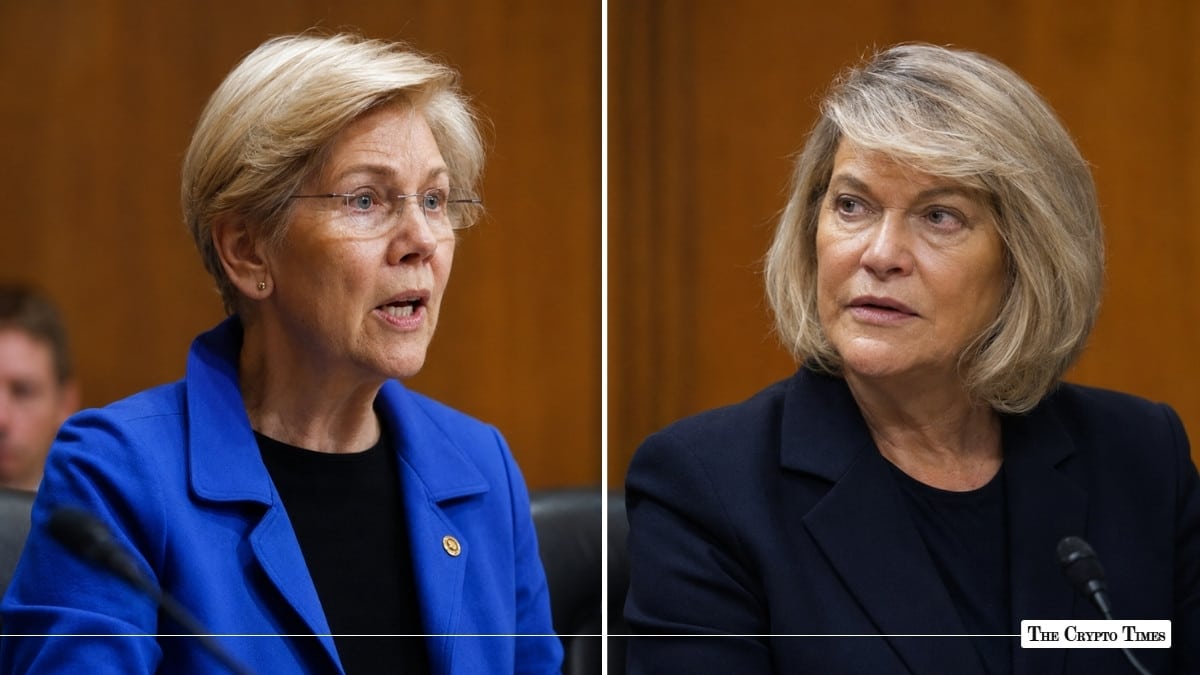
The fight over the CLARITY Act’s ethics rules spilled into public view this week, as Senators Cynthia Lummis (R-WY) and Elizabeth Warren (D-MA), two central figures in U.S. crypto legislation, clashed directly over whether the bill’s proposed conflict-of-interest provisions would actually prevent President Donald Trump from profiting off cryptocurrency.
Warren’s committee staff issued an analysis calling the Republican compromise a set of loopholes; Lummis responded on X, accusing Warren of spreading falsehoods and defending the language point by point.
The exchange is the latest flashpoint in a months-long standoff over a single ethics provision that has stalled the most significant U.S. crypto-regulation effort to date.
Warren’s case: “Riddled with major loopholes”
The document at the center of the dispute is a fact sheet from the Democratic minority staff of the Senate Banking Committee, which Warren leads as ranking member. Reviewing the Republican ethics language released on July 22, the staff argued the provisions are “riddled with major loopholes” and would not stop the president from earning “his next $1.4 billion” in crypto.
The fact sheet’s core objections concern enforcement and scope. It contends that only the Department of Justice, headed by an attorney general the analysis describes as Trump’s own appointee, could enforce the rules, while state attorneys general and private parties would be barred from bringing actions, and that a sunset clause would end even DOJ enforcement once Trump leaves office. On scope, it argues the bill would still let Trump hold and trade unlimited amounts of crypto he did not personally issue, continue profiting from ventures such as World Liberty Financial through intermediaries and licensing arrangements, launch new ventures structured through family members or affiliated entities, and keep earning from his existing $TRUMP memecoin under a clause that grandfathers in prior use of his name, image or likeness.
The staff’s figures, which it attributes to Trump’s 2025 financial disclosures, state that he made more than $1.4 billion from crypto in 2025, nearly two-thirds of his income, including $799 million from World Liberty Financial and $636 million from the $TRUMP memecoin, and that he held at least $100 million in Bitcoin and Ethereum. The Trump family’s crypto interests have been the subject of repeated Democratic letters and probes over the past year.
Lummis’s rebuttal
Lummis, one of the Senate’s most prominent crypto advocates, pushed back in a pointed post on X, telling readers to “get the facts straight” on Warren’s fact sheet and rejecting three of its claims.
First, on the argument that Trump’s blind trust is a “shell game,” Lummis said federal law bars a trustee from disclosing a trust’s holdings back to the official, arguing that this secrecy “is literally what makes a blind trust blind” rather than a loophole, and pointing readers to the underlying trust statute. Second, on the $TRUMP memecoin, she said the token launched while Trump was still a private citizen, before he took office, and that the ethics ban applies to conduct while serving, so, she argued, it cannot retroactively prohibit something that predated both the law and the presidency. Third, on the role of Trump’s adult children in running World Liberty Financial, she said federal ethics law has never imputed the financial interests of independent adult children to an official, only those of spouses and minor children, and that the bill follows decades of existing practice. She characterized Warren’s overall analysis as dishonest.
What’s settled, and what’s genuinely disputed
Some of the underlying facts are not in question; the disagreement is over what they mean.
On timing, both sides agree the $TRUMP memecoin launched three days before the January 2025 inauguration; the fact sheet says so itself. The dispute is not the launch date but whether the bill should let Trump continue earning from the coin while in office, which the grandfather clause would permit.
On the blind trust, Lummis is correct that a qualified blind trust legally prevents a trustee from disclosing holdings to the official. What critics, including Warren, contest is whether Trump’s specific arrangement functions as a true blind trust, given that it is managed by his children and holds assets he placed there himself and is aware of. The White House has said Trump’s assets are held in a trust managed by his children and that no conflicts of interest exist. Whether that arrangement meets the standard is a contested legal question, not a settled one.
On the adult-children point, Lummis’s description of existing federal imputation rules, which generally attribute the interests of spouses and minor children, not independent adult children, is a fair statement of current law. Warren’s counter is not that the law currently imputes those interests, but that it should in this case, because Trump’s sons run the family’s crypto businesses. That is a policy disagreement about whether existing ethics law is adequate, rather than a dispute over what the law now says.
Why it matters
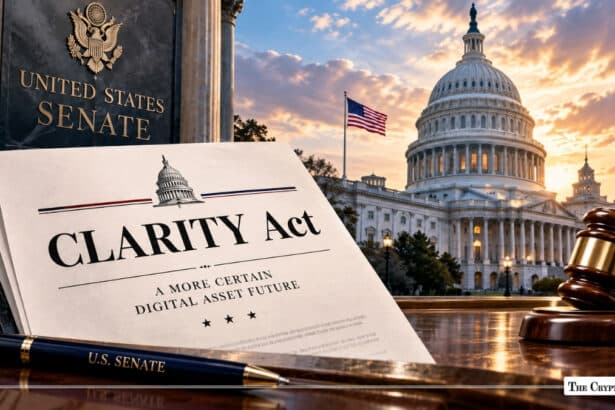
The clash is not merely rhetorical. The ethics provision is widely seen as the final hurdle to passing the CLARITY Act, the market-structure bill that would set rules for most U.S. crypto activity. Republicans and the White House have called their language historic, a White House official previously described it as “the most comprehensive and wide-ranging ethics provision in history,” while Warren and other Democrats say it is too weak to support the broader bill. With the provision’s enforcement mechanism, sunset date and scope still contested, the standoff between the two senators reflects the larger question that will determine the bill’s fate: how far crypto-ethics rules should reach, and who should be empowered to enforce them.
Also Read: Abra CEO Bill Barhydt Backs CLARITY Act to Advance Tokenized Markets