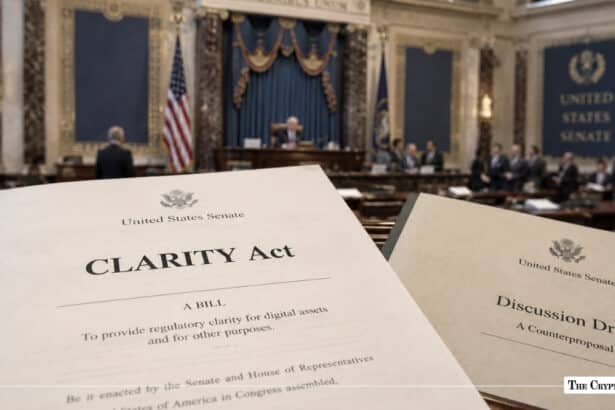
The CLARITY Act’s arithmetic assumes every Republican votes yes. At least one has signaled he might not.
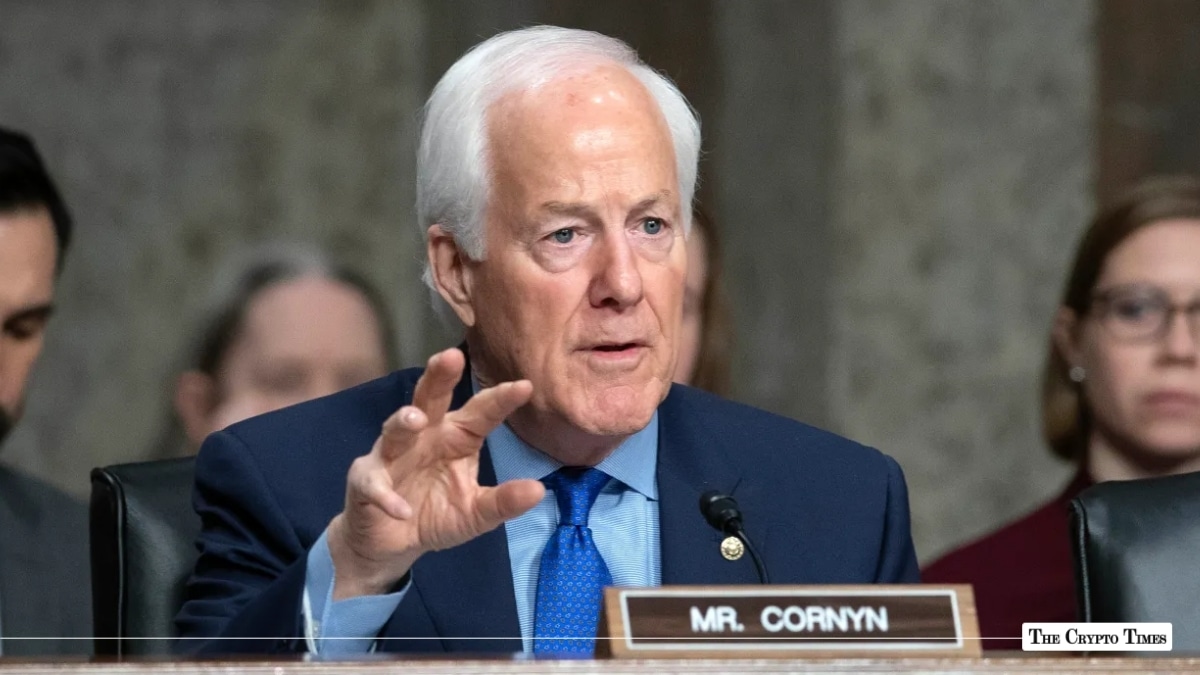
Senator John Cornyn of Texas said he is not sure the revised text addresses the issues he is concerned about, which he identified as the concerns of community bankers. With 53 Republican seats, each defection pushes the number of Democrats required above the seven the bill was already short of.
Cornyn spoke to Semafor on Monday night, adding that he was looking forward to having a conversation and seeing where the votes are ahead of the cloture vote at 18:15 UTC on Tuesday.
What Is Behind It
The objection tracks a campaign the banking lobby has run for months. Eight trade groups, including the American Bankers Association, the Bank Policy Institute, the Independent Community Bankers of America, and the National Bankers Association, wrote to Senate leaders John Thune and Chuck Schumer on September 14, saying they could not support the revised text.
They want the word “solely” struck from the reward prohibition, the functional-and-economic-equivalence test replaced with a stricter substantive-similarity standard, and the subsection permitting rewards calculated by reference to balance, duration, or tenure deleted outright—on the grounds that interest is calculated the same way.
They also argue the Treasury circuit breaker added to the final text is not a safeguard at all, because it only operates once substantial deposit flight has already happened.
Senator Josh Hawley has opposed the bill on similar grounds.
Thune Is Not Predicting
The majority leader did not sound confident. Asked about the bill’s prospects, Thune told Semafor that a week ago he would have said it did not look good, and that they would see whether that had changed.
Republican sponsors released the final text on September 14, describing it as their last, best and final offer.
The Other Flank
Democrats have their own objection, and it is not about banks. The Crypto Times reported this morning that Democratic negotiators sent Republicans a counterproposal overnight after meeting in Schumer’s office, with ethics enforcement the outstanding issue.
Senator Adam Schiff argued the provisions would functionally cover federal employees other than the president and would not apply, in their current form, to the first family. Senator Mark Warner said the ethics provision is not near enough. Senator Jon Ossoff, the only Democratic incumbent in a competitive race this cycle, was undecided on Monday night. “I haven’t read it yet,” Ossoff said. “I read things before I vote.”
The White House Answer
The administration spent Tuesday morning pushing back on the bank case. The Council of Economic Advisers published an interactive model putting the lending benefit of a stablecoin yield ban at $2.1 billion, or 0.02% of loans, with large banks taking 76% of it — leaving $500 million for the community banks the campaign is built around.
CEA Chair Chris Phelan told Semafor the tool lets users set the parameters, run the scenarios, and see for themselves why the council found no meaningful relationship between stablecoin growth and community bank deposit flight.
Patrick Witt, the administration’s lead negotiator, has argued that the bill contains real safeguards for community banks which disappear entirely if it fails.
The Vote
Cloture on the motion to proceed requires 60 votes. If it succeeds, the new Senate text would be offered as an amendment in the nature of a substitute. If it fails, floor consideration of a market structure law stalls sharply before the midterms.
The Senate Banking Committee approved the bill 15-9 in May 2026, with Ruben Gallego and Angela Alsobrooks the only Democrats in favour. The House passed its version 294-134 in July 2025.
Also Read: Senate Tests CLARITY Act at 2:15 p.m. ET: What Today’s Cloture Vote Can Change, and What It Cannot