The House Ways and Means Committee, the House panel that writes U.S. tax law, has released a 114-page digital asset tax package that would end federal tax on small network fees of $10 or less and extend wash-sale rules to cryptocurrencies.
The measure, titled the Digital Asset Tax Certainty Act, is scheduled for a committee vote at 10:00 a.m. Eastern Time on Wednesday, September 16, 2026, and consolidates work that began as several stand-alone drafts earlier this year.
Chairman Jason Smith, a Republican from Missouri, introduced the bill as H.R. 10357 late on Monday, September 14. Congress.gov lists Smith as the sole sponsor. The members named below sponsored the June stand-alone drafts that were later folded into this package; they are not confirmed as co-sponsors of H.R. 10357.
Replace the co-sponsor sentence with: The text draws on earlier bills from Representatives Jodey Arrington (R-Texas), Aaron Bean (R-Fla.), Mike Carey (R-Ohio), Steven Horsford (D-Nev.), Mike Kelly (R-Pa.), David Kustoff (R-Tenn.), Max Miller (R-Ohio) and Rudy Yakym (R-Ind.).
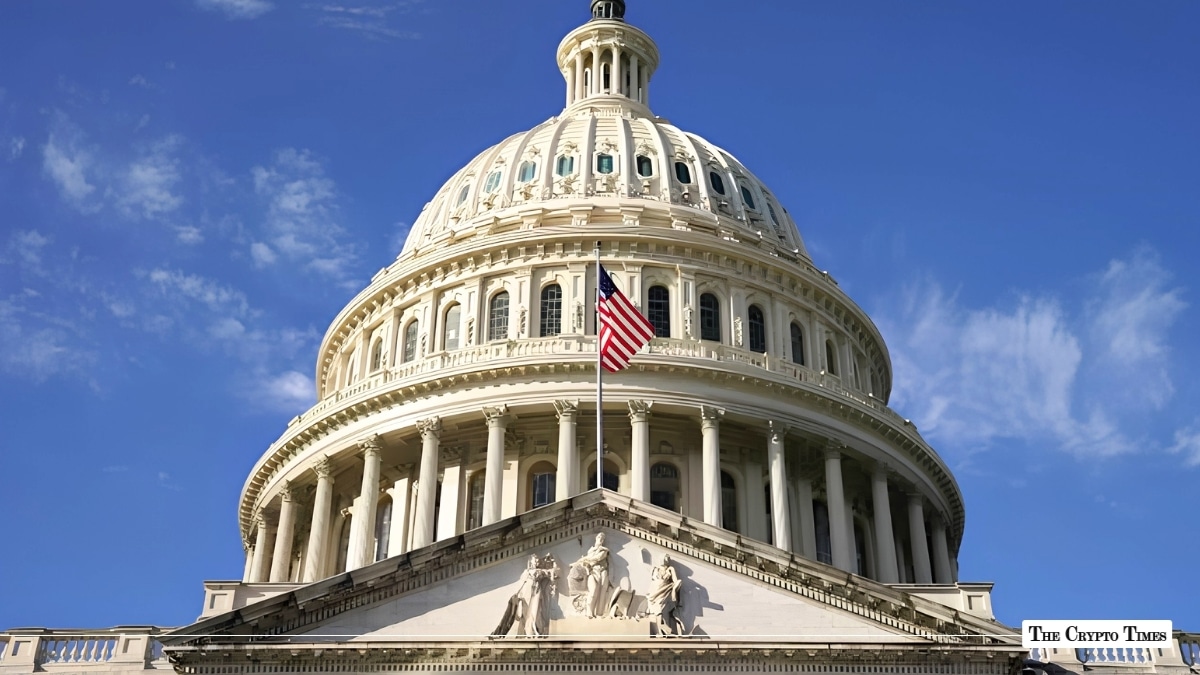
The committee has scheduled the markup, the formal committee session where lawmakers debate, amend and vote on legislation, in HVC-210 of the House Visitor Center on Capitol Hill.
What the $10 Fee Rule Actually Covers
The provision most ordinary crypto users will notice is deliberately narrow. Under the bill, a taxpayer would not have to recognize a gain or loss when they dispose of a digital asset to pay a qualifying network or validation fee of $10 or less.
The carve-out is aimed at gas fees, the small on-chain payments users make to have transactions processed on networks such as Ethereum, and similar validation costs that today force taxpayers to track paper-only tax lots on every routine action.
It is not a general de minimis exemption for coffee-sized crypto payments, exchange trading fees or wallet spreads. Industry groups have asked for a broader small-transactions rule for years. The current text does not give them that.
The relief also stops at active wallets. A taxpayer who completed more than 5,000 digital-asset transfers in the prior year would be shut out of the fee exclusion, and so would people who are traders, brokers, dealers, or in the business of validating or batching transactions. High-frequency desks and automated strategies would remain under full reporting.
Wash-Sale Rules Reach Crypto for the First Time
The revenue raiser inside the package is the extension of the wash-sale rule to digital assets. In securities markets, the wash-sale rule bars an investor from claiming a tax loss when they sell a stock at a loss and buy back a substantially identical position within a defined window, typically 30 days. Cryptocurrencies have never been covered by that statutory rule.
Under the bill, sale-and-repurchase trades in crypto would trigger the same restriction, with an exclusion for qualifying U.S. dollar stablecoins, tokens designed to hold a one-to-one peg with the dollar. The measure would also apply constructive-sale rules, which stop investors from locking in gains without recording them, to digital assets.
The Joint Committee on Taxation, the non-partisan tax-scoring arm of Congress, had estimated the earlier stand-alone version, H.R. 9172, would raise about $2.07 billion in revenue over ten years. That figure attached to the June bill and not to a fresh score for the consolidated package.
Mining and Staking Deferral Is Left Out
The most contentious question going into this week was how the bill would treat mining and staking. Mining is the process by which participants use computing power to validate transactions on proof-of-work networks such as Bitcoin and receive newly created tokens as a reward. Staking is the equivalent of proof-of-stake networks, where validators lock up tokens to help secure the chain and earn rewards.
Under current Internal Revenue Service, or IRS, guidance, such rewards are treated as taxable income at the moment the taxpayer gains control of the tokens, even before any sale. Industry lobbyists had asked lawmakers to defer that income event until the tokens are sold.
As The Crypto Times reported on September 14, Republicans were weighing three options going into this week: keep an open-ended deferral, cap it at five years, or drop it. Democratic members, including Horsford, had questioned the treatment during the June 9 legislative hearing on digital asset taxation.
The consolidated bill takes the third path on timing. Some mining and staking language remains, and validator income is clarified as ordinary income under the bill, but the cash-flow deferral the industry wanted is not in the text. Companion estimates circulated with the earlier drafts had put a full deferral at roughly $2.96 billion in lost revenue over a decade. That estimate applied to H.R. 9175, not H.R. 10357
What Else the 114 Pages Cover
Beyond the fee carve-out and the wash-sale extension, the package pulls in work associated with Representatives Horsford, Miller, and earlier Republican drafts.
Alongside the provisions above, the bill would create a special tax treatment for qualifying U.S. dollar stablecoins, allow qualifying digital-asset loans without treating the loan itself as a taxable sale, offer simplified accounting for widely traded digital assets, let qualifying investment trusts stake their holdings without losing trust status, address the treatment of tokenized assets and how ownership is measured on disposal, and set up a voluntary disclosure program for taxpayers who want to correct earlier digital-asset filings. It also directs the Treasury Department and the IRS to write the implementing rules.
Industry witnesses, including Coinbase Vice President of Tax Lawrence Zlatkin, had pressed the committee for a clearer framework at the June 9 hearing, which drew testimony from Coinbase, Fidelity Investments, Coin Center and the New York University Tax Law Center. Chairman Smith has framed the effort around the estimated 60 million Americans who own cryptocurrency.
Why a Committee Vote May Not Finish the Job
Committee approval on Wednesday would only send the bill toward the floor of the full House. House leadership has already compressed September, and members are expected to leave Washington after September 17 for a district work period, with the chamber not returning for regular legislative business until after the November midterm election. The runway for a tax package to reach the floor and clear the Senate this year is short.
That does not make the markup empty. A committee vote would be the first real movement on a consolidated crypto tax bill in this Congress and would lock in a text that a new Congress could pick up in 2027 without starting the drafting fight over again. The Ways and Means meeting will consider the Digital Asset Tax Certainty Act alongside H.R. 10334, the EFIN Verification Act of 2026, and five other unrelated tax and health measures.
Also Read: CLARITY Act: Democrats Send Counterproposal Hours Before Senate Cloture Vote