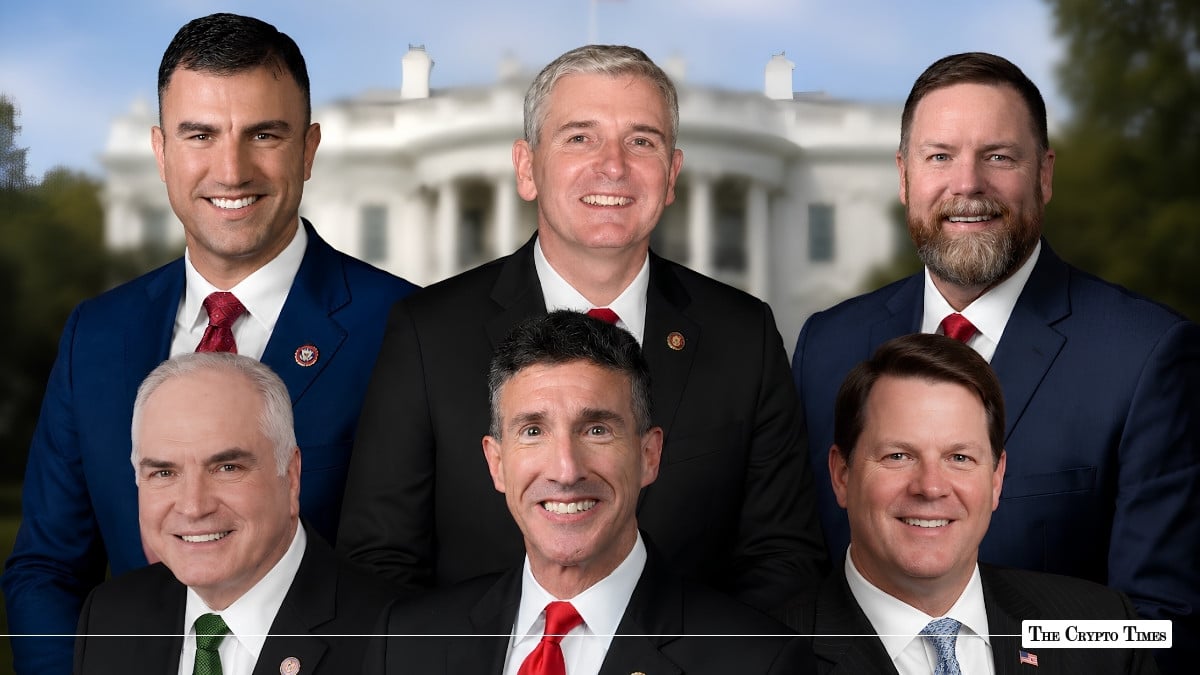
Earlier this week, the House Ways and Means Committee took a significant step toward resolving one of the most persistent headaches for American cryptocurrency investors. On June 8, 2026, committee members unveiled six separate tax bills that collectively aim to create the first comprehensive framework for digital asset taxation in U.S. history.
According to the official release, the legislation addresses accounting challenges that have frustrated an estimated 60 million American cryptocurrency owners for years. Ways and Means Chairman Jason Smith (R-MO) described the effort as “months of thoughtful discussion to build a lasting framework for digital asset taxation” that tackles “major challenges of clarity, parity, and administration in the tax code.”
For the average investor who has long struggled with confusing IRS guidelines and tedious paperwork requirements, this package could mark the transition to a more practical system.
The root problem: Why old tax rules are breaking down
The fundamental issue for cryptocurrency owners stems from how the IRS defines digital assets. Because the agency treats crypto as property rather than currency, using digital assets for routine transactions requires a separate capital gains reporting entry for every single action, no matter how small. Committee documents openly describe this standard as “punitively burdensome and administratively inefficient.”
Under the current code, the tax stakes are notable:
- Short-Term Capital Gains: Tokens held for under a year face ordinary income tax rates ranging from 10% to 37%.
- Long-Term Capital Gains: Tokens held for over a year receive more favorable rates of 0%, 15%, or 20%, depending on the investor’s overall income.
The system also contains major gaps that traditional financial markets don’t face. For instance, traditional wash-sale rules under Section 1091, which prevent stock investors from selling an asset at a loss and immediately repurchasing it to claim a tax deduction, do not apply to cryptocurrency. This loophole has allowed crypto investors to legally harvest losses during market dips and instantly buy back their positions.
Chairman Smith noted that this status quo is entirely unsustainable. The ambiguous rules invite exploitation by bad actors, while excessive micro-reporting requirements make crypto highly impractical for everyday commerce.
Detailed breakdown of six proposed tax bills
To fix these disparities, the legislative package isolates distinct friction points in the Internal Revenue Code across six standalone bills.
H.R. 9178: Less Tax Paperwork for Digital Asset Owners Act
Sponsored by Rep. Rudy Yakym (R-IN)
This bill directly targets the high volume of paperwork generated by routine, small-dollar on-chain activity. It introduces three primary updates to simplify individual tax tracking:
- Network Fee Exemption: It excludes capital gains or losses from tax reporting when digital assets are used strictly to pay network gas or verification fees under $10.
- Stablecoin Exclusion: It removes transaction-level gain or loss tracking for qualified, regulated U.S. dollar stablecoins, essentially allowing them to act as cash equivalents for daily purchases.
- Simplified Accounting Method: It gives taxpayers the flexibility to choose a single, combined annual income calculation for their digital assets, rather than calculating the gain or loss on every single transaction.
H.R. 9175: Tax Clarity for Mining and Staking Act
Sponsored by Rep. Mike Carey (R-OH)
This legislation addresses the ongoing tax confusion surrounding newly generated blockchain tokens. While confirming that the final acquisition of newly minted digital assets counts as ordinary income, it changes the timing of when that income is recognized:
- Self-Created Property Election: It allows validators, stakers, and miners to elect to treat newly minted assets as self-created property, legally deferring tax obligations until the tokens are actually sold or exchanged.
- Grantor Trust Protection: Consistent with recent IRS discussions, the bill permits institutional grantor trusts (like spot crypto exchange-traded products) to safely receive protocol-level staking rewards without jeopardizing their pass-through tax status.
H.R. 9173: Charitable Deductions for Digital Asset Donations Act
Sponsored by Rep. Mike Kelly (R-PA)
Under current rules, taxpayers who want to donate cryptocurrency worth more than $5,000 to a charity must pay out-of-pocket for a formal, professional “qualified appraisal,” even if the token has a highly transparent, publicly visible price on global exchanges.
- Appraisal Exemption: This bill removes the appraisal requirement for digital asset donations if the token is widely traded and its value can be easily verified using reliable market data.
- Asset Parity: This change gives liquid digital assets the exact same tax parity enjoyed by publicly traded stocks when donated to eligible non-profits.
H.R. 9176: Providing Analogous Rules for Digital Assets (PAR) Act
Sponsored by Rep. David Kustoff (R-TN)
This bill builds bridges between digital asset markets and long-standing traditional finance (TradFi) rules through three main avenues:
- Tax-Free Token Lending: It expands Section 1058 rules to crypto, allowing users to lend out their digital assets to platforms or liquidity pools without triggering an unintended, fully taxable sale event.
- Mark-to-Market Accounting: It officially allows professional digital asset dealers and active traders to opt into Section 475 mark-to-market accounting, treating the entire portfolio’s year-end value change as the taxable event.
- Foreign Investor Safe Harbor: It protects foreign capital entering U.S. markets by ensuring that foreign persons trading digital assets through a domestic broker are not inadvertently hit with U.S. trade or business tax status.
H.R. 9174: Digital Assets Voluntary Disclosure Program Act
Sponsored by Rep. Aaron Bean (R-FL)
Acknowledging that millions of taxpayers may have underreported past crypto transactions due to compliance confusion, this legislation sets up an official safety valve:
- Compliance Grace Period: It directs the Treasury to establish a temporary, structured voluntary disclosure program specifically for digital assets.
- Reduced Penalties: Taxpayers who voluntarily step forward to clear up past noncompliance receive reduced penalties and a clean slate, preventing the risk of severe IRS audits.
H.R. 9172: Applying Existing Tax Anti-Abuse Rules to Digital Assets Act
Sponsored by Rep. Jodey Arrington (R-TX)
Serving as the direct revenue-generating offset to fund the package’s tax cuts, this bill targets tax optimization strategies used by high-volume traders:
- The Wash-Sale Rule: It officially extends traditional Section 1091 wash-sale and Section 1259 constructive sale rules to cover digital assets.
- End of Loss Harvesting: Moving forward, crypto traders will no longer be allowed to sell a digital asset at a loss and immediately buy it back to claim a deduction, bringing crypto into absolute structural parity with stocks.
Partisan friction and proposed amendments
Though committee members broadly agree that retail paperwork relief is necessary, the June 9 legislative hearing highlighted distinct disagreements over wealth accumulation and corporate enforcement.
Committee Democrats introduced several key amendments to reshape the package:
- The 5-Year Staking Cap: Rep. Steven Horsford (D-NV) proposed an amendment to limit the staking and mining tax deferral under H.R. 9175 to a maximum of five years, ensuring large-scale operations cannot defer taxes indefinitely.
- Charitable Deduction Caps: This amendment restricts deductions for illiquid or thinly traded digital assets strictly to the final cash amount the charity receives upon selling them.
- The End Digital Assets Tax Shelters Act: Lawmakers also debated a separate draft aimed at closing loopholes that allow individuals to improperly claim digital asset gains as tax-exempt Puerto Rican source income.
How this framework affects Americans
The legislation addresses three key gaps in the tax code, according to Chairman Smith. First, it provides parity in tax treatment with comparable traditional financial asset transactions. Second, it creates clarity for tax situations unique to digital assets. Third, it reduces paperwork burdens for digital asset owners and brokers.
The committee’s goal is to “modernize our laws for the digital asset economy” and “ensure the United States remains the digital asset capital of the world.” Chairman Smith emphasized that other countries with clear, comprehensive tax policies could claim that title if the U.S. fails to enact clear rules.
For the 60 million Americans who own cryptocurrency, these bills would reduce paperwork and promote tax compliance for using digital assets in everyday commerce. The legislation clarifies rules for common digital asset transactions that currently create confusion.
Looking back at the 2026 filing reality
This legislative push comes immediately on the heels of a highly complex spring tax season that financial experts called a major compliance minefield.
Under current regulations, digital asset brokers were required to report gross proceeds for 2025 crypto sales starting in early 2026. However, because mandatory broker cost-basis reporting does not take effect until 2027, millions of Americans filing their taxes this past spring had to calculate their basis completely by hand, resulting in widespread compliance logjams.
While the IRS issued multiple warnings that taxpayers must account for every transaction on their 1099 forms, the complete lack of cost-basis data forced a heavy reliance on specialized tax software and professional accountants.
What’s next: Timeline and passage outlook
House Republicans have stated their intention to push the six bills toward a full House floor vote by August 2026. However, independent legislative analysts emphasize that passing the bills as standalone legislation remains a steep uphill climb.
The remainder of the 2026 congressional calendar is heavily occupied by high-priority debates over defense spending, appropriations, and the upcoming election cycle. Because standalone tax bills require significant floor time, policy experts anticipate that elements of this framework will only cross the finish line if they are ultimately bundled into a larger, comprehensive end-of-year tax reconciliation package.
For American crypto holders, the policy trajectory in Washington is unmistakable: while relief from tracking minor daily network fees is likely on the horizon, the era of using unregulated wash sales to offset capital gains is steadily drawing to a close.
Also Read: Crypto PACs Reshape US Elections: Trump’s Pro-Crypto Agenda Takes Shape