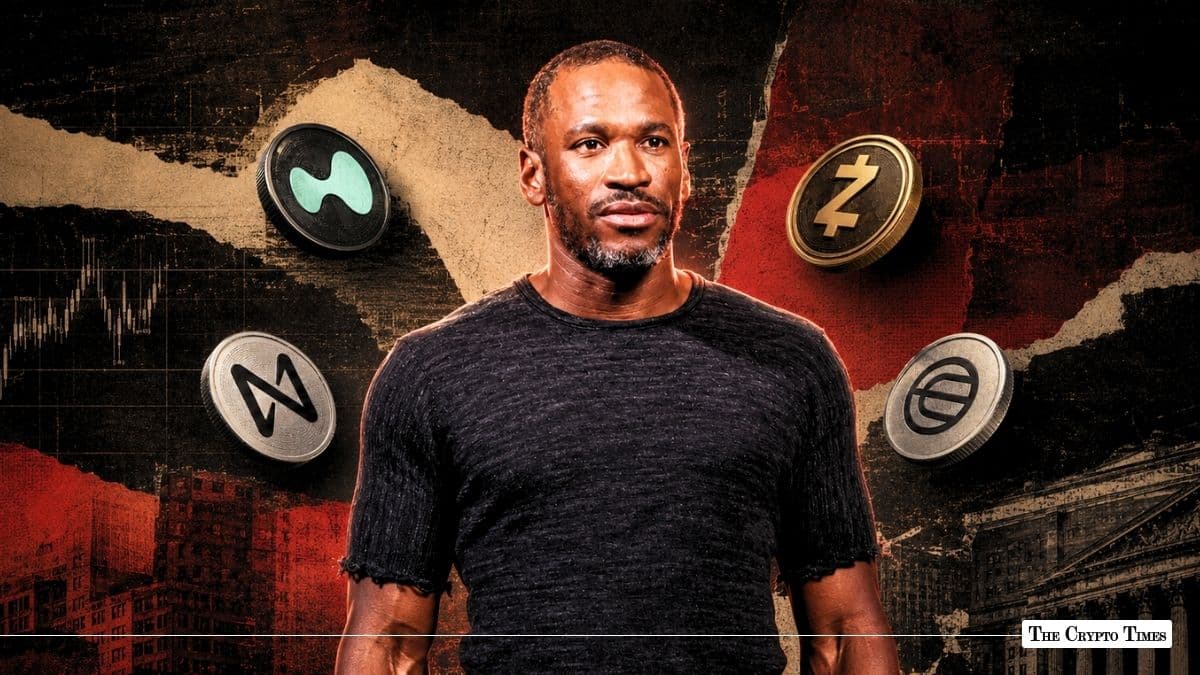
Arthur Hayes, the BitMEX co-founder and a prominent voice (why? we now doubt it) in crypto industry, has long cultivated a following with his unfiltered macro commentary and aggressive altcoin calls. Yet in the first week of June 2026, his reputation as a truth-telling trader took a significant blow.
On-chain investigator ZachXBT publicly spotlighted what many now describe as a troubling habit: loudly hyping select tokens with optimistic price targets, drawing in retail buyers, and then swiftly dumping large positions—effectively treating his own audience as convenient exit liquidity.
The episode has laid bare deeper issues in crypto’s influencer economy, where personal gain often clashes with the community trust that sustains it. While Hayes maintains he’s simply doing what any trader would—taking profits transparently—the pattern revealed this month suggests something more corrosive: using public platforms to inflate interest in assets he’s ready to offload.
The Spark: Hayes’ Sudden Exit from HYPE and NEAR
The latest controversy ignited on June 4 when Hayes announced via X that he had fully exited his holdings in Hyperliquid’s HYPE token and NEAR Protocol’s NEAR token. The move came shortly after he had positioned both as standout opportunities in a lackluster altcoin market.
For HYPE, Hayes had gone as far as placing a public $100,000 wager on its outperformance and floated ambitious targets reaching $150 by August, praising the decentralized perpetuals exchange’s genuine trading volume and revenue model.
His rationale for selling—escalating energy costs linked to Middle East tensions, looming AI IPOs draining liquidity, and an anticipated policy shift under Trump—arrived packaged in a familiar Hayes-style grand narrative. He teased a forthcoming essay titled “Reality Test.” Yet the proximity of the bullish commentary to the full liquidation raised immediate red flags.
On-chain records reportedly captured the sale of hundreds of thousands of HYPE tokens, moves that coincided with noticeable price slippage in the hours and days following his announcement.
This wasn’t framed as a minor trim. It was a complete unwinding, executed at levels likely boosted by the enthusiasm Hayes had helped generate. For his followers who entered on the strength of his endorsements, the reversal felt less like prudent risk management and more like a rug pull disguised as macro analysis.
ZachXBT’s Damning Timeline: Four Tokens, One Pattern
ZachXBT, whose forensic blockchain work has exposed numerous bad actors, escalated the scrutiny on June 6 by outlining a concise but damaging sequence involving at least four tokens: NEAR, HYPE, Zcash (ZEC), and Worldcoin (WLD).
According to the investigator, Hayes repeatedly followed the same script—build a compelling narrative, post bullish targets, attract capital, then exit within days or weeks.
In one compressed window of roughly 15 days, Hayes allegedly cycled through these positions. WLD was tied to SpaceX IPO speculation before being sold almost immediately after promotion. ZEC and others fit the template.
ZachXBT’s pointed query—asking exactly how much “exit liquidity” Hayes had extracted from followers in that short span—resonated because it highlighted the human cost. Retail participants, many of whom lack the capital or speed of a former exchange founder, buy the vision and absorb the subsequent drawdowns.
This approach, while perhaps legal in crypto’s Wild West regulatory environment, crosses an ethical line. By leveraging a massive platform to drive demand and then harvesting the resulting liquidity, Hayes turns what should be shared market insight into a personal liquidity event. The drops in all three token prices followed underscore the asymmetry: the influencer books profits, the audience shoulders volatility and losses.
The Hayes Playbook: Influence as a Trading Weapon
Hayes has never hidden his active-trader identity. Unlike long-term Bitcoin maximalists, he openly trades narratives and positions, often mixing geopolitics with token-specific praise. That transparency, however, does not absolve the conflict inherent in his method.
When an influencer with hundreds of thousands of followers floats high-conviction calls while holding sizable undisclosed or recently accumulated bags, the line between analysis and promotion dissolves.
Critics rightly label this shilling. The mechanics are straightforward and self-serving: public hype creates upward pressure, FOMO drives retail inflows, prices rise, and Hayes sells into that strength. The followers who provided the liquidity are then left watching support erode once the architect of the narrative steps away.
This isn’t victimless speculation—it distorts price discovery, fuels unnecessary volatility, and damages credibility for the broader ecosystem.
Hayes’ defense rings hollow under examination. Claims that buyers are “willing participants” ignore the power imbalance. His audience tunes in precisely because of his track record and BitMEX pedigree.
When that same voice pumps an asset and dumps it rapidly, it exploits the very trust that built his platform. True transparency would demand clearer, real-time position disclosures and warnings about personal exits, not after-the-fact macro essays that justify profit-taking.
What This Means for Crypto’s Influencer-Driven Future
This Hayes episode is symptomatic of a larger malaise. Crypto’s maturation has been hampered by reliance on charismatic voices whose incentives frequently diverge from those they advise. When profit motives drive the narrative cycle—hype, accumulate interest, dump, repeat—the industry’s reputation suffers and retail participation becomes riskier.
Regulators may eventually step in with clearer guidelines on paid promotions and material conflicts—though X did it before even they think of it—but self-policing through community accountability remains the more immediate lever.
For a realistic view, Arthur Hayes built an empire on bold calls and unapologetic trading. The June 2026 controversy won’t end his career, but it should force a reckoning—both for him personally and for an ecosystem that has too often rewarded those who treat their audience as liquidity providers rather than partners in a shared financial revolution.
Against this, what the industry needs is projects and platforms that could demand higher standards from their biggest supporters. Followers, meanwhile, should approach influencer calls with greater skepticism, treating them as entertainment or one data point rather than gospel
Until influencers internalize that their words carry real financial consequences for others, episodes like this will continue to erode the trust crypto desperately needs to achieve mainstream legitimacy.
Also read: Zcash vs. Monero: The 2026 Privacy Coin War Just Got Decided in One Week